Cambridge businesses concerned infrastructure delays will hurt growth
Report details concerns about whether the government will be able to reach its growth targets for the region

A new report, backed by some of Cambridge’s biggest businesses and institutions, has warned that infrastructure projects across the Oxford-Cambridge corridor need to move quicker for the government to create “Europe’s Silicon Valley”, according to The Times.
The report, produced by Oxford-Cambridge Supercluster, details that infrastructure delays, particularly with regards to the East West Rail (EWR) line, are causing concern among the region’s businesses.
The EWR line is set to connect the cities of Cambridge and Oxford via Bicester, Milton Keynes, Cambourne, and Bedford. However, the report warns that there is a risk that trains may not run the full route by the 2035 target due to a development consent order (DCO) not being submitted until 2027. A DCO is needed for the government to build infrastructure.
However, EWR told Varsity that they still expect the project to be completed by “the mid-2030s, subject to consents”. They added: “For several years, 2027 has been East West Rail’s target date to submit our DCO application and those plans haven’t changed. As we continue to refine our designs, we are looking to carry out further consultations with communities and local stakeholders this year and our finalised plans will then be submitted in our DCO application next year.”
The report is backed by 46 organisations, including AstraZeneca, Airbus, and the Ellison Institute of Technology Oxford.
Last year, Chancellor Rachel Reeves made the Oxford-Cambridge region a key target for boosting national economic growth. She claimed that investing in its infrastructure would add up to £78 billion to the economy. Sir Patrick Vallance was also announced as the “Oxford-Cambridge Growth Corridor Champion” to oversee the government’s growth ambitions.
The report makes further suggestions to boost economic growth in the region, including a dedicated governance structure covering the whole region. It also found that employment in the region has risen faster than the rest of the UK over the last ten years.
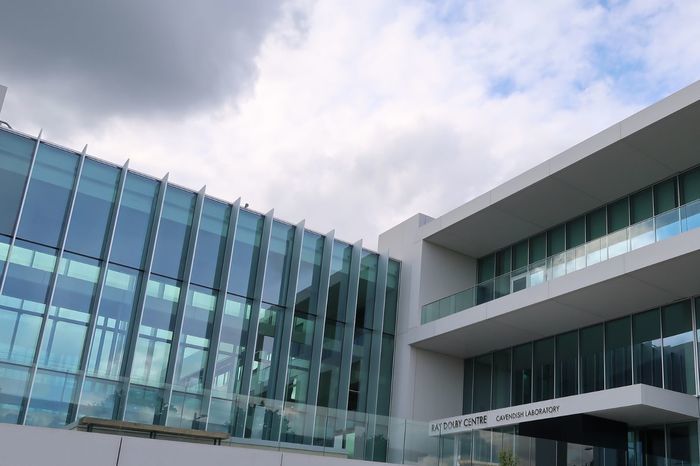
The government’s ambitions for economic growth in the Oxford-Cambridge region have received a mixed reception over the last year. Cambridge’s vice-chancellor Deborah Prentice has previously said that she is “excited and very encouraged by this shared commitment to supercharging growth in the Oxford-Cambridge corridor”.
However, Sarah Nicmanis, the former Green Party parliamentary candidate for Cambridge, previously told the BBC that the city’s growth so far has not been inclusive and wealth had “not trickled down”.
Oxford-Cambridge Supercluster have been contacted for comment regarding The Times’ reporting.
 Comment / Top of the slops: the competitiveness of college dining4 June 2026
 News / Two more women allege sexual harassment by classics professor Simon Goldhill 28 April 2026
 Comment / The Cambridge drift1 June 2026
 Features / One big happy (college) family?4 June 2026
 News / Cambridge psychologist warns against blanket social media ban for under-16s1 June 2026
 News / University begins divestment from banks financing fossil fuels5 June 2026
 Lifestyle / ‘Using me for sets’: navigating the politics of the room ballot5 June 2026
 Arts / Studying Study of a Sicilian Peasant5 June 2026
- Comment / Top of the slops: the competitiveness of college dining4 June 2026
 Interviews / Bible Scholar Mattie Mae Motl: “God is a woman”4 June 2026