AstraZeneca sues for £32 million over faulty construction at Cambridge Campus
The pharma company claims ‘widespread defects’ in the construction of their Discovery Centre cost them millions

AstraZeneca has launched a £32 million High Court claim against a fire consultancy for “failing to comply with its duties”.
The pharmaceutical giant has accused International Fire Consultants (IFC) of causing “widespread defects” in the construction of its Cambridge-based facility, according to The Times.
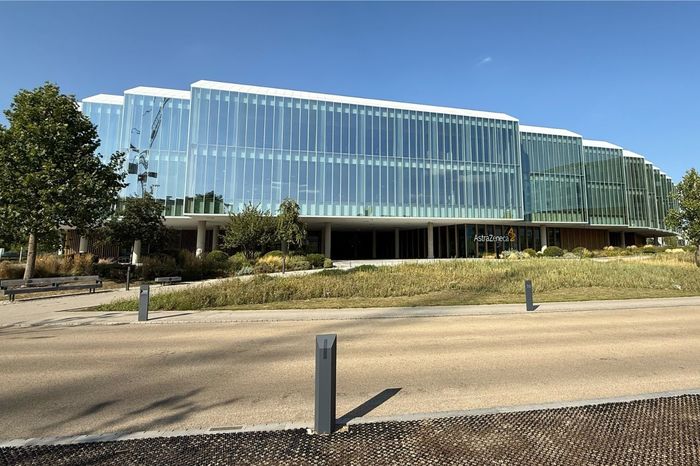
IFC is a Cheltenham-based fire engineering consultancy. The company was hired to work under construction manager Skanska on the development of AstraZeneca’s Discovery Centre, located in Cambridge’s Biomedical Campus.
In 2013, AstraZeneca revealed their plans to relocate their global headquarters to Cambridge. Since then, the multinational company has collaborated closely with the University of Cambridge. The partnership has produced over 260 university grants, spanned over 30 departments, and employed over 125 senior researchers and more than 160 PhD students.
In mid-December, the University’s relationship with AstraZeneca evolved even further, when both parties signed an agreement with Beijing BioPark. Part of this agreement focused on enhancing developments at AstraZeneca’s new R&D centre in Beijing, which will operate similarly to AstraZeneca’s Discovery Centre in Cambridge.
Originally due for completion in 2016, the Discovery Centre had its unveiling delayed until 2021. The building’s full opening was then further delayed due to an accidental electrical fire in December 2022.
The project was originally capped at £330 million. However, AstraZeneca ended up spending a total of £1 billion on the development, venturing £670 million over budget.
AstraZeneca has previously attributed the project’s severe delays and unexpected budget changes to the complexity of the build, construction cost inflation, and their investment in new technologies and equipment.
The company has also attributed the rise in costs to a change in management. In 2018, Mace replaced Skanska as the project’s construction manager, thereby taking over as IFC’s supervisor. AstraZeneca stated that a project review performed by Mace introduced factors which also altered the project’s budget.
On top of these previous explanations, AstraZeneca alleges in their recent claim that the project’s “critical delay” was mostly caused by IFC’s faulty work.
AstraZeneca’s claim alleges that “widespread defects were identified in relation to the fire dampers, smoke dampers, insulation and ductwork after they were installed”.
They go on to state that, although IFC identified several of these defects during a re-inspection of the building in 2021, the consultancy failed to do so during the preliminary stages of the build, which was a liability.
AstraZeneca stated that, between 2021 and 2023, the remediation work they carried out to address the defects cost them over £31.7 million.
IFC has filed a defence against the allegations. Their filing calls AstraZeneca’s claim “misconceived and incorrect”. It also suggests a possible motive for the false claim, referencing how AstraZeneca “entered into a final account settlement with Skanska that released it from its liability for latent defects in its works”.
AstraZeneca has issued a court reply to IFC’s defence, rejecting it and calling it “legally incoherent”.
This dispute follows the recent cancellation of AstraZeneca’s £200 million expansion project. The expansion of the Cambridge headquarters was anticipated to open up 1,000 new jobs. However, the funding was suddenly pulled this past September.
IFC was contacted for comment. AstraZeneca declined to comment.
 News / C4P vandalises University offices over divestment10 June 2026
 Lifestyle / A town with a view11 June 2026
 Comment / Top of the slops: the competitiveness of college dining4 June 2026
 Sport / The imperfect privilege of Cambridge sport12 June 2026
 Comment / ‘On the Poverty of Student Life’: sixty years on10 June 2026
 Music / Hejira: a jazzed tribute to Joni Mitchell 13 June 2026
 Film & TV / Lights, camera, Cambridge13 June 2026
 Lifestyle / Confessions of a May Ball crasher12 June 2026
 Lifestyle / May Week horoscopes12 June 2026
 Lifestyle / The finalist’s bucket list12 June 2026