The Fab Four fall out
Jess Williams on lyric address and interpersonal strife
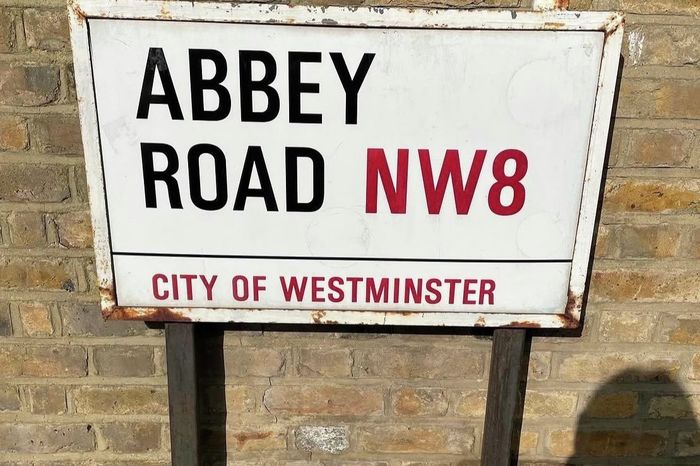
A world without The Beatles’ influence is unimaginable. Their impact on culture in the early 1960s was of Beatlemaniac girls screaming for a glimpse at the boys who made them swoon, and in the late 60s they forwarded the hippy phenomenon and a general anti-war, peace-promoting force for good that transcends music. However, with the break-up of the band, their ‘All You Need is Love’ sentiment soon became history, replaced with cruel attacks and an unearthing of long-standing gripes within the ranks of the Fab Four.
“Their ‘All You Need is Love’ sentiment soon became history, replaced with cruel attacks”
With songwriters hashing out their issues through music, the question remains: what can we as listeners take from lyrics that are directly addressed to someone else?
While George Harrison, lead guitarist, was firing one-sided attacks at his other bandmates and their egos – (‘Wah-Wah,’ ‘Isn’t it a Pity,’ and ‘Run of the Mill’) – John Lennon and Paul McCartney, the lead songwriters of the band, caught themselves in a direct battle of personal and musical insults in the early 1970s. Throughout the 1960s, the songwriting duo of Lennon-McCartney dominated the lyrical sphere. Therefore, when the band broke up in 1970, and it was revealed that their relationship was the opposite of the love they were preaching, a songwriting war began.
After the release of the 1970 documentary Let it Be, it was clear the relations between members were less than perfect. Lennon, in an interview from Lennon Remembers, rehashed this, complaining about the double standards McCartney pressed on the other members, assuming a leadership role after the death of their manager Brian Epstein.
“John opens the song by resurrecting the timeless conspiracy theory that Paul died and was replaced by an evil doppelganger”
But as petty shots between friends go, Paul bounced back. Feeling unnecessarily tied to the other Beatles, he filed a lawsuit in December of 1970 and swiftly after (in May 1971) released his second solo album – Ram – where he wrote ‘Too Many People’, his lyrical attack at John.
Paul claimed he was John’s ‘lucky break’ in 1957 after joining his first band The Quarrymen (which would soon become the global success of The Beatles) and continued by attacking John and his wife Yoko who preached spirituality and unusual practices. However, his most brutal attack comes at the expense of John’s problem with eating. Paul claimed, “Too many hungry people losing weight,” yet the casual dig went further than ex-bandmate banter. In 1965, a reporter called John the ‘Fat Beatle’ which he then internalised, from then on referring to this year as his ‘Fat Elvis’ era. As a result, he proceeded to lose significant weight throughout his life through disordered eating and bulimia.
It was little surprise, then, that in the same year John would release his Imagine album, with his titular, peace-promoting song a contrast to his cruel, angry response to Paul – ‘How Do You Sleep? ’ – adding George Harrison on slide guitar for an added jab.
John opens the song by resurrecting the timeless conspiracy theory that Paul died and was replaced by an evil doppelganger: “Those freaks was right when they said you was dead,” fuelling the fire of a theory that persists even today. He continues by slating Paul’s songwriting abilities, arguing Paul hasn’t written a good song since ‘Yesterday’ in 1965, and in earlier drafts John implied he plagiarised the melody anyway.
“These two songwriting greats revealed true representations of their daily lives outside of their musical contributions”
To cap it all off, John attacked Paul’s relationship with his wife Linda McCartney. John had, and would continue to face, public scrutiny on his marriage and relationship with Yoko Ono, yet John flipped the table: arguing that Paul was just as servile to Linda as Paul claimed he was to Yoko.
By putting their fight in the public light, these two songwriting greats revealed true representations of their daily lives outside of their musical contributions. The alluring charm of The Beatles was no more, and what was left were angry, public attacks.
Neither song has any immediate personal meaning to us – we haven’t gone underground into avant-garde with Yoko Ono, nor do whatever Linda McCartney tells us. However, the visceral anger is something many people can feel.
If Lennon-McCartney can fall out over a myriad of miscommunications, so can we – it makes our suffering and anger feel a whole lot more normal. So next time you listen to the whimsical tunes of Paul in Ram, or the soulful, utopian lyrics of Imagine, remember there were also songs filled with anger and personal vendettas. Although it’s strange to hear a song not written for us, it allows us to realise that we are all human – everyone falls out and argues… even The Beatles.
 News / C4P vandalises University offices over divestment10 June 2026
 Comment / Top of the slops: the competitiveness of college dining4 June 2026
 Lifestyle / A town with a view11 June 2026
 Theatre / The recipe to success this Easter term 10 June 2026
 Comment / ‘On the Poverty of Student Life’: sixty years on10 June 2026
 Lifestyle / Confessions of a May Ball crasher12 June 2026
 Lifestyle / May Week horoscopes12 June 2026
 Lifestyle / The finalist’s bucket list12 June 2026
 Theatre / All of Cambridge is a stage12 June 2026
 Music / ‘It’s feminine intuition’: predictions for OR312 June 2026