Straight outta Stockwell
Bix Ponte takes the time to review one they missed: The Streets’ A Grand Don’t Come For Free

No one listens to albums anymore. In fact, I have a friend who admitted to me that whenever she wants to hear a song, she listens to the album it’s on all the way through. Naturally, I quietly suggested she confine herself to an asylum. To write this article, I had to do the unthinkable: endure 50 minutes of listening to an album the whole way through. Worse, the album I had to listen to (the Streets’ A Grand Don’t Come for Free) is a concept album. Cue images of seventies guys with long hair singing about elves and cod pieces.
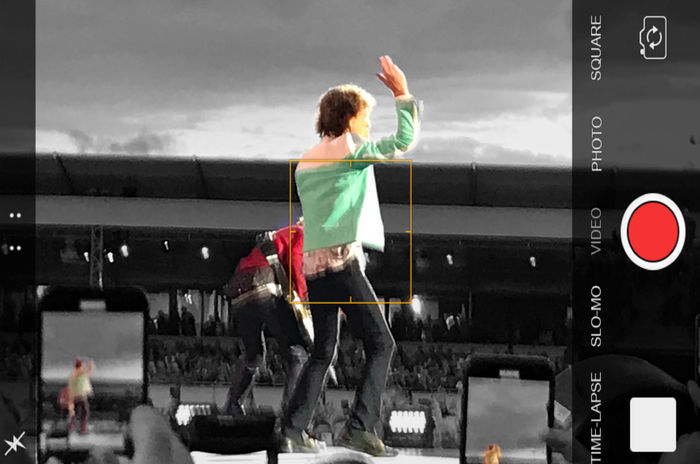
In fact, it is to my shame that I have never listened to A Grand Don’t Come for Free. For one thing, I went to see Mike Skinner a few summers ago and he was fantastic (he also crowd surfed so I have perhaps explored more of his body than I would want). I swore I would listen and I didn’t. Now a chance to undo the wrong. I consider listening to it in my room, but this feels wrong someone. I feel a need to walk the streets. Cue a nighttime walk to Cambridge train station. It’s a pointless trip to nowhere I feel Skinner’s alter-ego can get behind, even if provincial Cambridge on a Thursday isn’t the ideal backdrop to Skinner’s Stella-fuelled antics.
“It’s refreshing to say Skinner’s album is about nothing more than bumming around”
Having said the concept album is worthy of scorn, the concept of this album (such as it is) is brilliant. A guy loses a grand, gets with a girl, gets drunk, loses the girl and (potentially) finds the money. That’s it. Reviewers always want to say that music, literature and works of art are about more than they actually are, so it’s refreshing to say Skinner’s album is about nothing more than bumming around. As said, the concept album is one that should provoke ridicule only. Skinner leans into this heritage for all of about five seconds. The opening track (‘It Was Supposed to be So Easy’) has faux-grandiose violins in the background, Skinner consciously leaning into the concept album as the ridiculous vanity project. Then it descends into chaos. It’s hard not to pity Skinner as he stumbles about like an ecstasy-gobbling Pac-Man looking for the girl he fancies in ‘Blinded by the Lights’, whilst crazed synth music offers the listener a warped club sound.
The delivery is all in Skinner’s strange accent (Birmingham via Lambeth) and, fittingly, the album was basically recorded in a cupboard. His whininess can seem abrasive at times, as on ‘Get Out of My House’, and this is reinforced by the rigidity of the metre being used to sacrifice any semblance of ordinary delivery. Yet this staccato intonation arguably creates Skinner’s fast-talking persona, far more than his moronic, drug fuelled antics. What’s more, the strangeness of the delivery reminds one of how singular an event in 2000s music the album was, it still seems like something totally new.
“It’s an emotional presentation of a gentler masculinity, rather than the comedy of the vomiting journeyman”
There’s some excellent imagery (I particularly liked “I’ll never darken your towels again” and “shrapnel in my back pocket”). The cameos of Skinner’s girl Simone and sometimes friend Dan, the latter brilliantly delivering the line “I think I’m going to fall over” in the ridiculous (and ridiculously catchy) ‘Fit But You Know It’.
The comedy of the laddish troubadour may wear thin for some, but Skinner is attuned to this and spurns it in ‘Dry Your Eyes’, the best song of the album. Gita Langley’s violin soundtracking a melancholic portrayal of the useless cliches blokes use to deal with break ups (“there’s plenty more fish in the sea, dry your eyes mate/I know it’s hard to take but her mind has been made up”). It’s an emotional presentation of a gentler masculinity, rather than the comedy of the vomiting journeyman.
A Grand Don’t Come for Free’s depiction of personal catastrophe is one reminiscent of Adam Sandler’s character in the brilliant Uncut Gems, the constant sense that everything is falling apart around you. As someone who, in the past few weeks, dropped their phone in the Cam, set fire to a bag with a hob, and flooded his bathroom, this is a theme that somewhat resonates. More than that, the album’s influence on UK music is obvious. In Liam Williams’s brilliant series Ladhood, it is the Streets that inspires young Liam to start a loosely defined hip-hop music collective enabling an escape from suburban Leeds. This is rap that is self-effacing, and the likes of Jamie T, Deadletter, Yard Act, Sleaford Mods, and Life Without Buildings all clearly owe a massive debt to Skinner’s not-so-dulcet tones. I walked back from the train station happy; I won’t invoice the 50 minutes.
 Comment / Top of the slops: the competitiveness of college dining4 June 2026
 Interviews / What’s the story behind Pages coffee house?8 June 2026
 News / News in Brief: Cambridge crowns, council confirmations, and competitive cricket8 June 2026
 Comment / The Cambridge drift1 June 2026
 News / Cambridge researchers produce ‘world-first’ AI vaccine6 June 2026
 Arts / Don’t rush me – I’m reading!9 June 2026
 Lifestyle / Don’t Cry at Me, Argentina – a next-year abroad story8 June 2026
- News / News in Brief: Cambridge crowns, council confirmations, and competitive cricket8 June 2026
 Science / Failure is the foundation of science8 June 2026
 Fashion / The hidden gems of formal fashion8 June 2026