“The revolution will not be televised,” it will be sung
Lauren Quinn takes us through the songs that supercharged the French Revolution
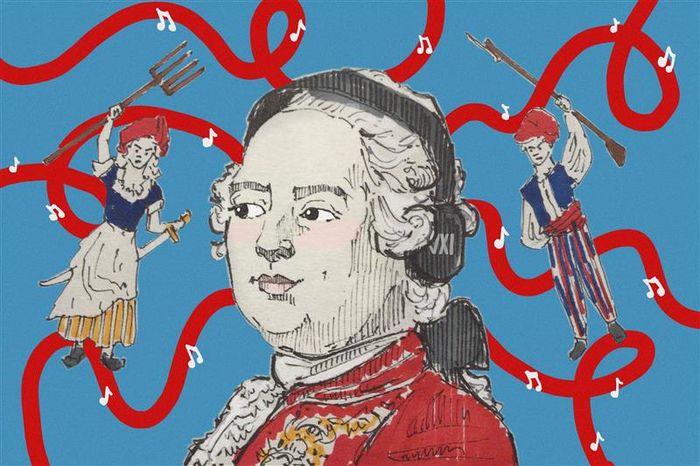
From 1789 to 1794, chaos reigned throughout France: violence, murder and pillage became the only way the oppressed peasantry felt able to voice their discontent – bar the power of song. Whilst the French court of Louis XVI and Marie Antoinette were being lulled into comfortable slumber by concertos and sonatas in every key imaginable, the French Sans Culotte were being roused to arms by anthems of such brutality that anger coursed through their veins and demanded change.
As Gil Scott-Heron proposed in his 1971 Civil Rights song ‘The Revolution will not be televised’, monumental change is not a change that can be captured in images or by sight, but rather, revolution stems from the mind. “The revolution will be no re-run, brothers, The revolution will be live” Scott-Heron claimed, and similarly to the Civil Rights movement (only much earlier), the French revolution certainly was enlivened by the power of its associated songs.
Imagine walking down the cobbled streets of Paris, defeated at yet another announcement of increasing taxation whilst the Queen had just built a whole fake village (le Petit Trianon) to cosplay being poor. All of a sudden, you hear the powerful chanting of a song that recognises your suffering and, even better, riles your sense of purpose by pinpointing the antagonist in the lyrics “Against us stands tyranny, the sanguine standard is raised!” (‘La Marseille’).
“‘La Carmagnole’ not only reflects the increased volatility of violence but also seems to echo the need for a collective ‘we’”
Or, in an equally rousing song with such a strong tune that it would definitely become the contemporary earworm, ‘La Carmagnole’ would strike a sense of camaraderie in any peasant. It noted that “Monsier Veto” (Louis XVI who used his right as king to refuse laws to improve the constitution) “has promised to be loyal to his country/ but he failed to be, let us show no mercy!”.
‘La Carmagnole’ not only reflects the increased volatility of violence but also seems to echo the need for a collective ‘we’. The jaunty repetitive song notes that “Madame Veto has promised to cut everyone’s throats in Paris, but she failed to do this thanks to our gunners”! This could be a justification of the stark number of deaths on both sides of the Storming of the Tuileries Palace on August 10th 1792 which lead to his replacement by the National Assembly. Often performed in a major key signature, it’s stirring cycle of tune would be fit for any motivation – whether that be to exult the violent massacre of entire groups or the perfect alarm to rouse the mid-Lent student from their bed.
Although the most famous revolutionary songs are linked to the suffering Sans Culottes or rural peasants, the nobility did combat the power of music with their own anthems too. The opera aria ‘O Richard, ô mon Roi’ furthered the royalist idea that the King (aka Richard) was being unfairly targeted for being elected by birth into power by God as indoctrinated by the Divine Right of Kings. This robusto aria was utilised in 1791 to directly rebuke (in full 18th century fashion by song as well as sword) the revolutionary concepts of the lively, repetitive ‘Ca Ira’. The song, ‘It will be ok’, headlined the declaration “the aristocrats, we’ll hang them all”, first utilised against priests who would not commit to the revolutionary government of 1791 – a song that the nobility would not want to infiltrate the passer-by’s new repertoire!
“21st century France still sings a national anthem that states the royal soldiers’ aims is ‘To cut the throats of your sons, your comrades’”
Overwhelmingly though, music of the French revolution is certainly rooted in the modern consciousness as triumphantly possessed by revolutionaries. In fact, France’s National Anthem today is ‘La Marseille’ a song first sung by French troops in revolutionary wars and composed by Claude Joseph Rouget de Lisle, a French army officer (with brass so brassy it would accompany well a march to Sidgwick site). 21st century France still sings a national anthem that states the royal soldiers’ aims is “To cut the throats of your sons, your comrades” and therefore “To arms, citizens… let’s march, that their impure blood should water our fields”. This may seem shocking, but in a Republic where a stable King has not existed since the guillotining of Louis XVI (quite a strong deterrent), the enlightenment ideals of freedom that rooted such chaotic revolution still remain as shown by their music.
Music in the French revolution not only created distinct comradery between each warring class but fuelled the anger and strife of the French people. Music in the French Revolution acted as a platform to hear your voice echoed by thousands going through the same level of uncertainty. Whether you were a rich, 2nd estate merchant who yearned for a return to your life of luxury, or an impoverished French peasant reduced to pillaging your landlord’s mansions to burn your feudal contract, songs reflected the fears of people and assured them they were not alone. A tune that echoed in the vacuum chamber of war and tyranny - a reassurance that “ça Ira” (it will be fine).
 Comment / The Cambridge drift1 June 2026
 Comment / Top of the slops: the competitiveness of college dining4 June 2026
 News / Cambridge psychologist warns against blanket social media ban for under-16s1 June 2026
 News / University support staff strikes end after month of action2 June 2026
 Music / We need to talk about Kendrick2 June 2026
- Comment / Top of the slops: the competitiveness of college dining4 June 2026
 Interviews / Bible Scholar Mattie Mae Motl: “God is a woman”4 June 2026
 Features / One big happy (college) family?4 June 2026
 Theatre / Bold beginnings in the Corpus Playroom 3 June 2026
- Music / We need to talk about Kendrick2 June 2026