Stumbling into a stranger’s lovestory
Francis McCabe goes down the rabbit hole of Warhaus’ heartbreak-throughs
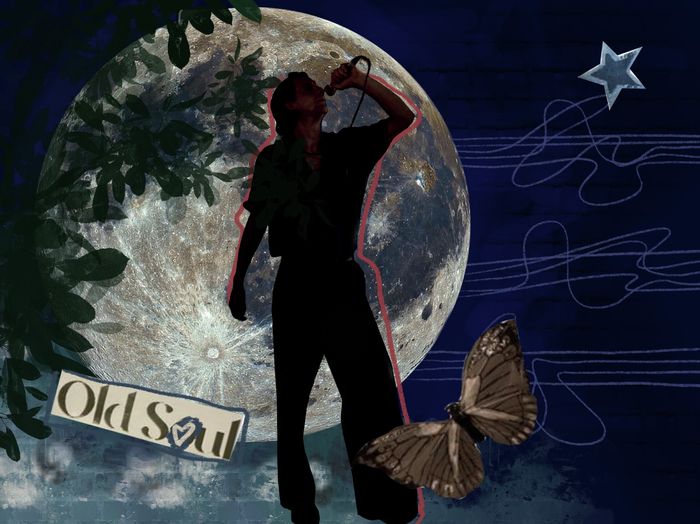
With seven glasses of sangria afloat in my stomach, the smug Belgian sun begins to pencil down in increasingly sharper rays on Rock Werchter Festival 2025. The steady flow of people around my sprawled position on the sun-bleached grass begins to wean as thousands and thousands are drawn into the large tent just beyond my feet.
The speakers seem louder than usual. Out there, in the dark, opens up the sultry and atmospheric sound of Warhaus: the attractive, dusky voice of Maarten Devoldere swarmed with the bombastic, cinematic sound of his band.
Next thing I know, cloaked in hot red light, microphone pressed to his upper lip, he’s descending into the crowd, clutching a karaoke machine. Mounting it halfway into the ten-thousand-strong swathe of people, he speaks in Belgian with sprinklings of English: ‘Frank Sinatra - “My Way”? or Whitney Houston - “I Wanna Dance with Somebody”? ’ The audience chooses the latter: out erupts a cacophonic rendition of Houston’s most famous song. How did we go from the reddened, temperamental love-haze of Warhaus to this? I’m hooked.
“This kind of musical longing doesn’t exist unrecognised: it’s self-referential, and there’s a shame in it”
Devoldere’s first album as Warhaus is strikingly titled We F**ked a Flame into Being (2016): so much for nuance. Now at home with headphones on, I prepare myself to listen to half an hour of solipsistic longing, abound with the howls of heartache. But I’m surprised by the first track: “I’m Not Him”. Yes, the soundscape is punchily dramatic, thunderous, moody and certainly love-sick– the addictive sonic cocktail the rest of the album continues to effectively employ – but Devoldere punctuates his closing lyrics with a glancing moment of exposure, of self-consciousness: ‘Who said you could stop? She’s worth four minutes of your time, isn’t she? ’
He proceeds, tortuously elongating the song with bassy agony as he counts: ‘Three thirty… Three forty…’ This kind of musical longing doesn’t exist unrecognised: it’s self-referential, and there’s a shame in it.
Even tracks like “Wanda”, in the absence of lyrics, construct an abnormal, interlayered – if initially obstructive – soundscape: tightly-tuned drums ride alongside seductive, punctuative exhales, symphonic strings and drawling vocal samples.
“Most painfully of all, the music is crushingly self-conscious”
The haunting feminine echo behind Devoldere’s lyrics on tracks like “Leave with Me” and “Machinery” is the whisper of Sylvie Kreusch, pictured next to Devoldere on the album’s cover in equal gloomy, enigmatic disinterest. Putting two-and-two together (and some internet investigation) pins her as Devoldere’s object of infatuation, which only becomes more apparent as the album develops.
Devoldere’s songs either recognise the desperation in himself, asking whether ’there[’s] something I could do / To involve me into you’, or yield the gasp of giving up, ‘I gave what I could’. Most painfully of all, the music is crushingly self-conscious – ‘So why not write such a grotesque song’ – countless songs existing as both a lustful panegyric and a self-directed elegy. The official music video for “The Good Lie” ends in a hollow note, as two trench-coated sleuths discover the burnt-out corpses of two lovers caught in the act, immortalised and immolated by the self-destructive burning of their love.
On the same video, one of the top comments from 6 years ago reads: ‘Warhaus definitely improved our sex life. Great and hot tracks’.
Following this first album with Warhaus (2017), Devoldere continues to mine Kreusch, consistently described in the media surrounding Warhaus as his ‘muse’. This sort of love is beautifully overwhelming. It can also be brutally overbearing. The album makes us painfully aware that in these atypical love ballads, we’re only hearing one voice.
Warhaus took a five-year silence after this, broken with the emergence of Ha Ha Heartbreak in 2022. It’s a breakup album. Kreusch had stepped away from the project somewhere along the ride: speaking to Sam Steverlynck, of Extra Extra Magazine, she says that “Warhaus was his story, not mine. […] It’s also about valuing yourself.”
“It’s a turn of the face out of the tear-stained dark and towards the sun”
Taking some time, Devoldere has stepped out of the emotional artistic tempest from which he composed his first two albums: this one is reflective, intermittently scathing, appreciatory, and, not least of all, hopeful. It’s a turn of the face out of the tear-stained dark and towards the sun.
Retaining the characteristic, often-stormily climactic build of the previous two albums, the sound becomes smoother, measured, more controlled. Tracks like “Open Window” and “Shadow Play” amuse the musical aesthete in their arrangement alone, whilst songs like “Batteries & Toys” and “Best I Ever Had” will chime with the fellow heartbroken listener.
With the release of Karaoke Moon (2024) a new, blurred figure steps into frame. ‘Emely’. And I’m quick to sigh – straight back to square one. But, continuing to listen, Devoldere reembraces his devotional beginnings but maintains his turn inwards, trawling through the memories that made him.
“It’s music that holds within it the suffocation of a muse”
Listening, it’s hard not to confront the existence of an unflinching transparency, a highly self-referential, honest brutality: ‘when pornography is looking back at us’. Devoldere declaims that ‘We’re a strip club, honey, where the names are real’: seductive sensuality needn’t come at the cost of a loss of identity.
I’m not too surprised when I read that Devoldere had been experimenting with hypnotism whilst writing, attempting to capture the creations of his subconscious in real-time. Whilst the roots of Warhaus’ music often lie in destructive passion, Karaoke Moon is soundtrack to the slow, self-sickening realisation of ageing rockstardom - that “when you’re 35, it becomes sad if you’re hanging on to that lifestyle.” (Talking to Brize Ezell of PopMatters)
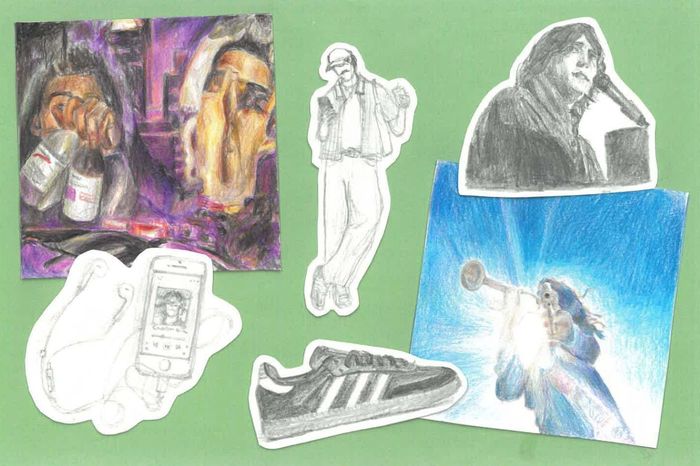
Somewhere within Warhaus’ coming-on 10-year range of discography is a lesson about passion. It’s music that makes you double over at the sullen symphonic culmination of each song, a face twisted with pain that isn’t even yours. It’s music that holds within it the suffocation of a muse, the catastrophic pain of her loss, and the glittering hope for self-growth.
Perhaps We F**cked a Flame Into Being got something right in its abrasively desirous and in-your-face concept: capturing the flickering, momentary, breathless beauty of an artistic flame and all the creative catastrophe it can come to ignite.
 Comment / Top of the slops: the competitiveness of college dining4 June 2026
 Interviews / What’s the story behind Pages coffee house?8 June 2026
 News / News in Brief: Cambridge crowns, council confirmations, and competitive cricket8 June 2026
 Comment / The Cambridge drift1 June 2026
 News / Cambridge researchers produce ‘world-first’ AI vaccine6 June 2026
 Arts / Don’t rush me – I’m reading!9 June 2026
 Lifestyle / Don’t Cry at Me, Argentina – a next-year abroad story8 June 2026
- News / News in Brief: Cambridge crowns, council confirmations, and competitive cricket8 June 2026
 Science / Failure is the foundation of science8 June 2026
 Fashion / The hidden gems of formal fashion8 June 2026