Hope, retrospectively
Jake Harper on nineties nostalgia, escapism, and ‘lost futures’
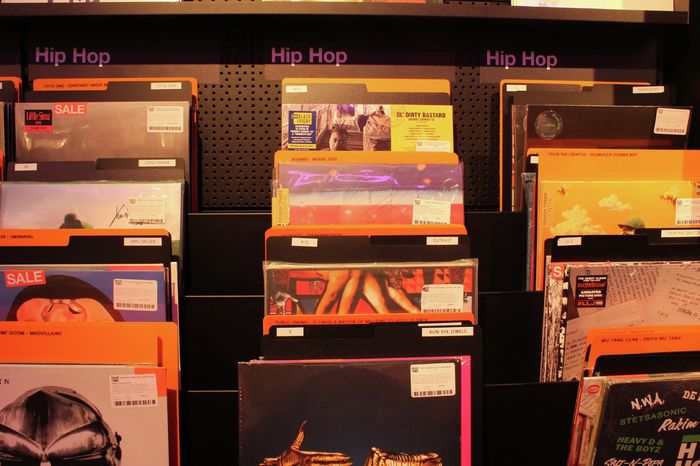
A quarter of the century has now passed since the turn of the millenium. To teens or twenty-somethings today, the 90s and the decades preceding it are generally a cultural moment predating their own lives, somewhat indistinct and yet fairly consistently portrayed in a positive light compared to the present. And in a fascinating way, often among the biggest proponents of nostalgia for the culture and trends of these decades are those who weren’t even there to experience it themselves: more than two thirds of Gen Z express nostalgia for the 1990s, despite being either no older than three or not yet born by the millennium. Why exactly are some of the biggest fans of these eras of culture those who weren’t even alive to experience them firsthand?
Take the resurgence of vinyl and digital media among young people, for instance, which has occurred very much in conjunction with wider focus on nostalgia in all aspects of popular culture (fashion and music taste come to mind in particular). Remarkably, recent research found that those of the 18-24 age group were by some margin the largest consumers of music in physical media format (vinyl, CD, or cassette) in the UK in 2024. Bearing in mind the fact that vinyl was largely out of fashion by the late 80s, it’s also quite significant that Gen Z (all born post-1997) reportedly account for 35% of all vinyl purchases today, and those under the age of 35 make up half.
“The biggest proponents of nostalgia for the culture and trends of these decades are those who weren’t even there to experience it themselves”
So where does this nostalgia for a time pre-dating our own lives all stem from? In the case of digital media, it’s obviously little to do with habit or convenience, nor (given the generational gap) a case of childhood tradition or lived memory. From those dissatisfied with modern music finding solace in past subcultures, to bad-faith grifters misrepresenting the ‘good old days’ to grumble about modern social change, it seems as if we are all seeking in different ways to attach ourselves to romanticised framings of the past.
Much research seems to suggest that escapism from the anxieties of the present is at the core of this historical, trans-generational nostalgia. Modern forms of media, and by extension, the popular culture linked to them, have almost subconsciously become associated with the alarming and seemingly crisis-ridden events of the present moment. The rising cost-of-living and a bleak job market, climate change, the isolation of a global pandemic, the Russo-Ukrainian war and the United States, the Middle East, the resurgence of the far right… all of these relentless causes of fear and alarm drive collective perceptions of a troubled present and no brighter a future.
I would also point to the anxieties of the digital world, specifically social media and the constant need to project a positive framing of self upon it. Research is reflective of this: a 2023 survey conducted by the Harris Poll, for instance, found that 60% of Gen Z adults wished to return to a time before everyone was ‘plugged in’ (as well as ¾ of millennials, for what it’s worth).
“Modern Western popular culture, unable to produce new cultural forms and distorted by blanket commercialisation, simply rehashes and recycles the past”
In this context, the culture and trends of an idealised past, envisioned as somehow free from these troubles, appear an ideal escape; a means to live in the past to disassociate from the present. The website of Pion, a marketing company specialising in targeted online advertising to youth and Gen Z, argues that the generation’s strong tendency for nostalgia arises from the accelerating rate of change in both forms of digital media and current affairs as a whole: “their worlds have simultaneously got bigger and been crushed into a touch screen”. That this insight comes from those who carefully commodify, manipulate, and manufacture youth culture in the pursuit of profit and commercial gain is rather telling.
The latter point here speaks to the brilliant cultural theorist Mark Fisher’s ideas on nostalgic ‘hauntology’ and what he considered the “slow cancellation of the future”: the theory that modern Western popular culture, unable to produce new cultural forms and distorted by blanket commercialisation, simply rehashes and recycles the past. Gen Z, in the context of all of the seemingly world-ending doom and gloom of the present, is able to retrospectively construct a picture of the 1990s and the decades before as optimistic ‘lost futures’, disconnected from the crises of the present, mythologised through romanticised cultural depictions and second-hand media. When the future appears bleak and able to offer little cultural novelty, connecting with an aestheticised and idealised past frozen in time before it failed to translate into the present seems natural.
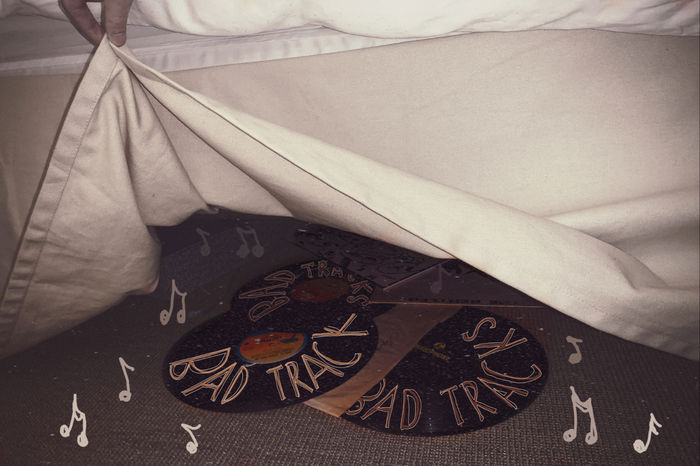
The cross-generational nostalgia Gen Z is so drawn to, then, appears far less a longing for previous personal lived experiences as it is an attachment to an artificial, aestheticised construction of the past, translated to our generation only through sentimentalised second-hand experiences, archives, and popular culture. Presented with a bleak and ‘cancelled’ future, the trends and culture of this memorialised past represent a perfect break from the contemporary anxieties of performance in the digital world and the world-ending headlines we are confronted with day-by-day. In this way, through a carefully curated and commercialised framing of the past, hope and identity can be retrospectively located. With the present a constant source of worry and unease, and the future seeming to offer little but uncertainty, it seems little wonder that so many of us cannot help but look back wistfully at the past.
 Comment / Top of the slops: the competitiveness of college dining4 June 2026
 Interviews / What’s the story behind Pages coffee house?8 June 2026
 News / News in Brief: Cambridge crowns, council confirmations, and competitive cricket8 June 2026
 Comment / The Cambridge drift1 June 2026
 News / Cambridge researchers produce ‘world-first’ AI vaccine6 June 2026
 Arts / Don’t rush me – I’m reading!9 June 2026
 Lifestyle / Don’t Cry at Me, Argentina – a next-year abroad story8 June 2026
- News / News in Brief: Cambridge crowns, council confirmations, and competitive cricket8 June 2026
 Science / Failure is the foundation of science8 June 2026
 Fashion / The hidden gems of formal fashion8 June 2026