‘It’s always originality they’re looking for’: Katie Burge on all things film
Hannah Burfield sits down with Katie Burge to explore her rising film career
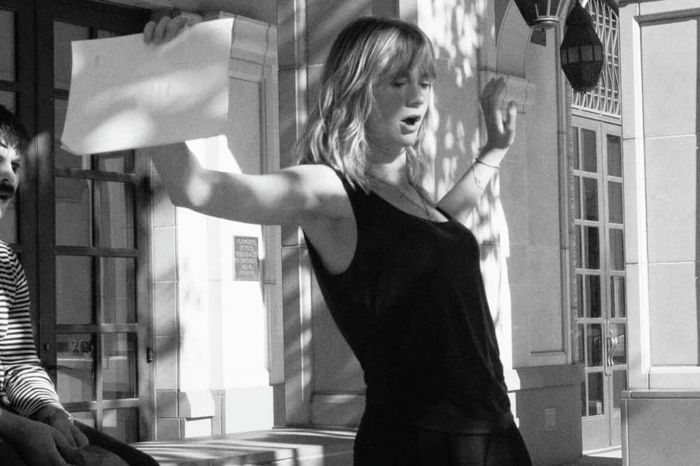
From directing Watersprite and Cambridge University Film Association (CUFA) to meeting Steven Spielberg, Katie Burge’s blossoming career in film production is certainly an interesting one. Having recently graduated from Christ’s College with a BA in English, she is currently pursuing a MFA at the University of Southern California. I recently sat down with Burge to learn more about her experiences.
What was your favourite thing about the student film scene in Cambridge?
How willing people were to just muck in and do whatever and form a community. It was a great training ground just fueled by caffeine, enthusiasm, and lots of stumbling around. Currently, I’m trying to battle with location permits and actor agreements, and that was just never a thing. It was really freeing that you could just go and make something and there were no barriers down the line.
What is your favourite film project that you worked on in Cambridge?
“I’ve met George Lucas and Steven Spielberg”
I have two. Firstly, setting up ‘Take in 8’ (shooting analogue film on Super 8 cameras; no editing, no retakes, all done in the 8 weeks of Michaelmas) is my proudest achievement. Everyone in Cambridge can be such perfectionists and want to get everything right the first time. But here there’s no room for that.
Secondly, shooting ‘Bright Young Thing’ was really fun because it was the first thing I’d written that I got to properly make that was slightly bigger. All my friends were extras, shoved into our tiny student house and it was very bootleg.
Can you tell me more about your time as an Events Officer for Watersprite?
I absolutely loved the events team – the greatest crew ever. I did a lot of theatre and I loved that, but it was always project based. So it was nice having something that stretched over the whole year as opposed to a quick, fiery, blazing project that was over in the blink of an eye. Also, it made being in proximity to people actually working in film seem possible. They weren’t shadowy figures super far away, and I could suddenly email them and maybe they’d respond, and maybe they wouldn’t, but it was a good mindset to adopt.
If you could give one piece of advice to people looking to get involved in Watersprite, what would it be?
Just do it. There are so many ways to get involved depending on what kind of commitment you want. What’s so great about Watersprite is that there are so many entry points. Also, all the events are free, so just go on the actual weekend and meet people!
As co-president of CUFA, what was the most rewarding part of leading a film society?
Creating more visibility and space for film in Cambridge because theatre has a physical presence, obviously, because there’s the ADC, there’s the Corpus Playroom. I felt that theatre naturally has more of a hub for people to gravitate towards. It was nice to at least go some way towards creating more hubs for film. I found it personally fulfilling meeting all these people, but it was also cool seeing people meet each other and then go off and do their own projects.
How did your English degree at Christ’s prepare you for a master’s in Film?
It trains you to have thoughts really quickly, which sounds basic, but people often watch a film and all they can say is “I liked that.” Whereas the nature of supervisions is you’ve got to have a strong opinion and then back it up. I feel like film is storytelling, and so studying what works – from Chaucer and beyond – gives you a better overview of why you keep coming back to stories, and what works beyond film.
What’s the most interesting thing you’ve learned so far from your MFA programme?
“I’m trying to work out a world whereI can be based in London and jetting off to LA”
I think the main thing is that the industry is always changing. Everyone’s trying to work out what works, but there’s no one answer. And it just goes to show that it’s always originality that people are after. So, I know it’s cheesy, but truly all you can be is yourself. All you can do is create work that only you can create, and that’s what will attract other people. It’s like moths to a flame; if you’ve got any brightness to burn, then people will notice.
Have there been any interesting figures you’ve met since you’ve moved to America?
Well, in my first couple of months I’ve met George Lucas and Steven Spielberg. What’s exciting is that premieres felt like this far away, inaccessible dream, but they need people in the audience and so they’re actually not that impossible to get to. They’re just working professionals and they need to get their work seen, and they need people to see it. A personal fangirl moment is when I went to a Q&A with Harris Dickinson and got to ask him a question.
Looking ahead to post-graduate plans, do you envisage staying in America, or moving back to London?
It’s hard because a lot of jobs won’t give you the time of day when they learn that you’ll need a visa down the line. But what’s exciting about creative industries is that you’ve got to be crafty and wily. There are lots of ways in and UK-US film ties are awesome. I’m trying to work out a world where, ideally, I can be based in London and jetting off to LA, but who knows? We’ll see.
Do you have any upcoming film projects that you can talk about?
I just finished shooting a short I wrote and directed. It’s called ‘It’s Fine, It’s Fine’, and it’s loosely inspired by the new Lily Allen album, West End Girl. Keep your eyes peeled!
 News / C4P vandalises University offices over divestment10 June 2026
 Lifestyle / A town with a view11 June 2026
 Comment / Top of the slops: the competitiveness of college dining4 June 2026
 Comment / ‘On the Poverty of Student Life’: sixty years on10 June 2026
 Sport / The imperfect privilege of Cambridge sport12 June 2026
 Lifestyle / Confessions of a May Ball crasher12 June 2026
 Lifestyle / May Week horoscopes12 June 2026
 Lifestyle / The finalist’s bucket list12 June 2026
 Theatre / All of Cambridge is a stage12 June 2026
 Music / ‘It’s feminine intuition’: predictions for OR312 June 2026