Anthony Gong on what politicians can learn from competitive debate
Anthony Gong reflects on competitive debate and the evolution of public discourse with Giovanni Lacroix
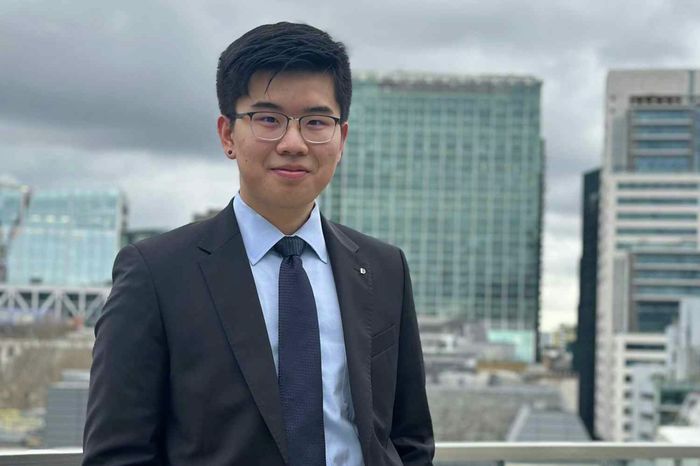
Anthony Gong discovered debate at just 12 years old. Since his school days, he’s been passionate about offering more people the opportunity to debate. Today, Gong is the Competitive Debate Officer (CDO) at the Cambridge Union. His role allows him to host competitions for young debaters while still excelling in prestigious events like the Oxford Inter-Varsity (IV). Throughout our conversation, he speaks with fervour about debate’s connection with the wider issues of public discourse, free speech, and even political campaigns. At its core, Gong argues that debate is an effort to understand others, a perspective of reconciliation in our increasingly polarised world.
Name, Year, Subject, College.
Anthony Gong, third year Law student at Downing College.
What is your favourite memory from debate competitions?
Something pretty recent, the Oxford IV. This year, I made the semi finals! Last year, I don’t even think I made the top half. It’s a great marker of improvement, dedication, and hard work. But it’s also just something to celebrate, because I was finally debating against the kinds of teams that you would look up to and watch recordings of.
“Debates, by nature, force you to confront and defend opinions that you do not have”
Is competitive debate helpful in defending free speech?
If you don’t have free speech, you can’t do competitive debate. It represents the boundaries of what we deem acceptable. Conversely, if you don’t have debate, you lose that ability to question the outer fringes of free speech. It is therefore a useful tool in defending free speech and should be preserved.
How can debates help us to understand the opinions of others?
Debates, by nature, force you to confront and defend opinions that you do not have. That’s what I think best allows people to understand others! Moving out of the monotony of their own thought and engaging in the experiences of others.
What is one piece of advice you would give to novice debaters?
Many people who get into debating are very smart and can come to conclusions about whether or not something is true. However, what’s important is the implications of true statements. That is to say, what does an argument do? A lot of novices fail to ask themselves this question. When we write essays or we make arguments, we do it in isolation, in a vacuum – but people aren’t just persuaded by truths. They are persuaded by truths that are utilised for specific purposes.
“What does an argument do? A lot of novices fail to ask themselves this question”
What truly makes a good debate?
This is a very subjective question! For a lot of people, entertainment is a pretty central factor. But really, debate is at its best when people are engaging in the ‘meta debate’: why are those arguments important? How do they weigh up against each other? It’s a nerdy answer, but that kind of debate is the most exciting and stimulating.

Do you think political debates have something to learn from debate competitions?
If the purpose is to actually hash out policies and promises? Then yes, there’s a lot to learn because those debates often resort to ad hominem, to fallacy. In competitive debate, you’re actually engaging with analysis, justifications, reasoning. But of course, that’s only if you think that political debates are made for discussing policies. There’s room for the argument that they are just about the person behind the promises, that it’s a show.
 News / News in Brief: Pokémon, planting, and the plague21 June 2026
 News / Simon Goldhill resigns following sexual misconduct investigation16 June 2026
 Lifestyle / Not a pub, not a club: Cambridge nightlife’s best third spaces22 June 2026
 News / Join Varsity’s editorial team this Michaelmas22 June 2026
 Comment / How do we find exambiguity?22 June 2026
 Music / Liverpool vs Manchester: the musical derby23 June 2026
- Lifestyle / Not a pub, not a club: Cambridge nightlife’s best third spaces22 June 2026
 Fashion / Academic prestige or aesthetic appeal?22 June 2026
 Sport / Martina Abels Marti leads Newbroke to Cuppers victory against SJK amidst transgender ruling controversy22 June 2026
- Comment / How do we find exambiguity?22 June 2026