The Wicked consequences of film marketing
Ellie Smith explores how fan relationships are weaponised to encourage parasocialism
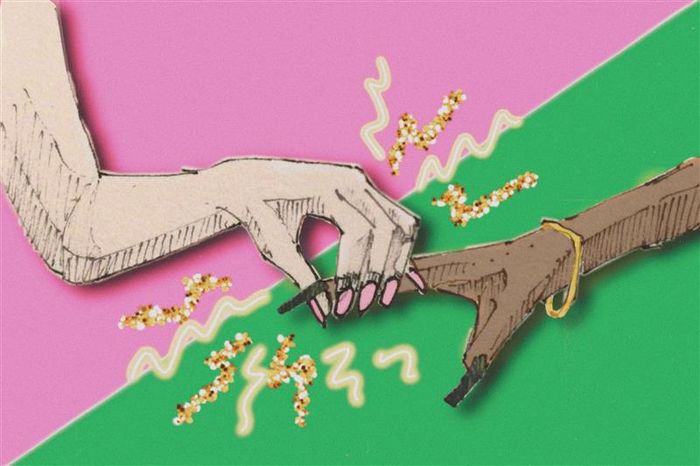
Another year, another Wicked press tour. It seems strange that next November will not bring another “wickedly talented” performance, gimmick or interview moment to the mainstage (unless the cast of The Hunger Games: Sunrise on the Reaping will be working with comparably ludicrous publicists). Over the past month, social media has been saturated by reposts of Michelle Yeoh’s famous catchphrase, Jonathan Bailey’s flirty interviews, and Cynthia Erivo’s ‘curious’ dynamic with Ariana Grande. Yet, despite these iconic press tour moments, it’s integral to remember that the line between the light-hearted culture of memes and unhealthy parasocialism is growing increasingly blurry.
‘Parasocial’ was Cambridge dictionary’s word of the year, and rightfully so. With the ever-growing capabilities of social media, the public seemingly have boundless access to their favourite celebrity icons. Their accomplishments become ours and their losses become personal. These are unreciprocated relationships that range from the ‘entertainment-social’ category (where celebrities are mere sources of entertainment) to ‘borderline-pathological’, (where someone becomes so involved in a celebrity’s life their own self is lost). These are terms that were coined in 2006, but in 2025 those distinctive categories have become less discernible.
“the Wicked marketing team has ensured that we could not escape the film’s existence”
This is because parasocialism is often encouraged. For example, the Wicked marketing team has ensured that we could not escape the film’s existence. The film holds the title for having the largest brand campaign for any film ever, with over 400 global partners, including notably obscure collaborations with Absolut, Le Creuset, Hovis (yes, the bread), and, even closer to home, the Cambridge Satchel Company. Over Michaelmas, you could not enter any shop without seeing Wicked-related merch, or Cynthia/Ariana’s faces. They (quite literally) became household products – something to purchase and have jurisdiction over.
This never-ending engagement provokes two types of behaviour. Either you love the film and its stars, and wish to maximise engagement through material and mental consumerism, or you grow to loathe every aspect of it. Both forms of parasocial participation can lead to unhealthy behaviours however, that in some ways could harm the actors or members involved. Taking Ariana Grande as the lead example, comments on her weight and general appearance have been bred out of both types of dynamics. Remarks range from an empathetic, yet misplaced “we care about you, please seek help” to mean-spirited caricatures exaggerating her figure, such as “give this girl a cheeseburger”.
“Perhaps we should also be more mindful in our consumption”
Instead of making a direct statement discouraging these behaviours, the post-production team, with profits ever in sight, have seemingly decided to deflect, trying to turn up the noise in alternative directions. Michelle Yeoh’s (probably satirical) catchphrase appears to be an attempt to recreate the social media whirlwind incited by last year’s ‘holding space’ phenomenon and its finger holding. However, the arguable detraction of Yeoh’s deflection, and other moments like it, work to undercut serious commentary on the film for cheap and easy laughs, forever trying to hold the window of popular attention.
Wicked: For Good was one of the most highly anticipated films of 2025. Its media coverage was always going to be intense and immense – not least because its prequel was so successful. But the film’s marketing team, and future teams of future films, should be more cautious in their approach. The avaristic pursuit of capital, encouraged through absurd collaborations, sensationalist exaggerations around the actors’ lives, and a perpetual stream of interviews, both detracts from the entertainment of the film and facilitates harmful habits. Beyond the virtual world of social media, we have already seen several troubling moments with pushy photographers and fans running at the cast, types of practices that will likely only increase if publicists make similarly concerted efforts down the line. Perhaps we should also be more mindful in our consumption. It is our responsibility as a fan and a viewer to not only point out moments of corrosive parasocialism, but also remember to not get lost in all the noise and become drawn into the problem ourselves. Films capture and extend our reality, they should not become it.
 Comment / Top of the slops: the competitiveness of college dining4 June 2026
 Interviews / What’s the story behind Pages coffee house?8 June 2026
 News / News in Brief: Cambridge crowns, council confirmations, and competitive cricket8 June 2026
 Comment / The Cambridge drift1 June 2026
 News / Cambridge researchers produce ‘world-first’ AI vaccine6 June 2026
 Arts / Don’t rush me – I’m reading!9 June 2026
 Lifestyle / Don’t Cry at Me, Argentina – a next-year abroad story8 June 2026
- News / News in Brief: Cambridge crowns, council confirmations, and competitive cricket8 June 2026
 Science / Failure is the foundation of science8 June 2026
 Fashion / The hidden gems of formal fashion8 June 2026