Beyond the porters’ lodge: is life better outside college?
Sophia Bosworth-Gerbino talks to students living off-site about its benefits and disadvantages
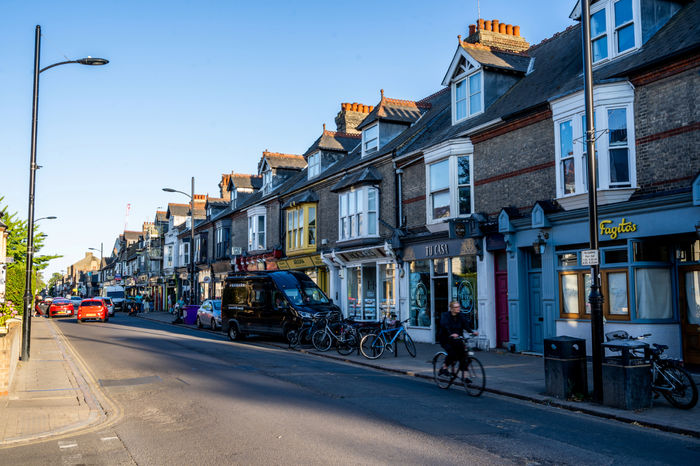
Following first year, many colleges offer the possibility of living off-site. But is this worth it? For some, it provides greater freedom and a more ‘normal’ university experience. After a year of cooking whole meals in microwaves, having parties shut down by the porters, and missing out on seeing your friends due to a lack of communal spaces, the appeal of off-site living is clear. Trading in the historic grandeur of college is seen by some as a worthy exchange for newfound independence.
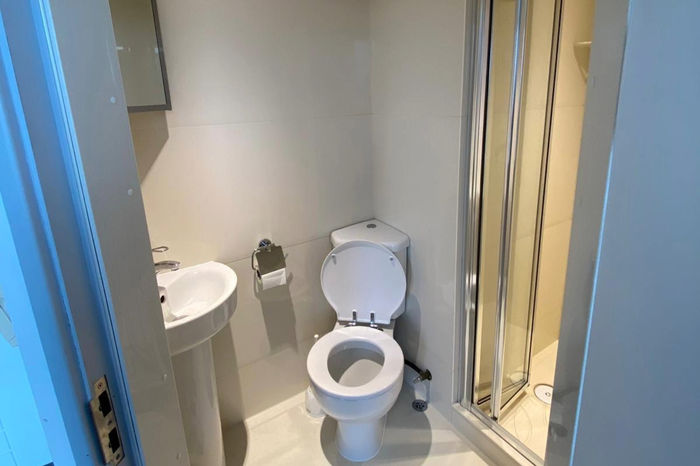
However, it is also true that not all out-of-college accommodation is created equal. Some, such as Emmanuel and Jesus, provide big houses with outdoor space, while others like Girton have more modern apartment buildings. The quality of facilities like kitchens, bathrooms, and communal areas varies not only from college to college, but also from house to house.
Living off-site is also not always a choice for students. At Caius, for instance, out-of-college accommodation is required for most freshers and second years. Conversely, Christ’s has outside housing for only around seventy undergraduates, mostly taken up by second years. This makes living out of college more of a novelty, experienced for just one year out of a typical three year degree.
“Colleges can feel more like boarding schools than components of a university”
For those who choose to live off-site, the appeal often centres on escaping the all-encompassing nature of college life. While students appreciate and are grateful for their mini-ecosystem within a college, they can inevitably come to feel like they are in stifling environments. Indeed, for Sirous Nekovee-Fitzgerald, a second year at Girton, living in a flat away from “the institutional feel of the college” gives him a “stronger sense of freedom and independence”. He now does not “feel quite so contained by the college environment, which makes daily life feel more flexible and self-directed”. It is certainly hard not to feel contained when you live, eat, socialise, and study all within the same walls. This is why, for many, colleges can feel more like boarding schools than components of a university.
The location of off-site accommodation is also central to their allure. Accustomed to living in the least central college, another advantage of Sirous’s new flat is being closer to Cambridge and its everyday amenities. Unlike Girton’s main site, which in his view, “often felt remote and isolating,” his new accommodation feels “more connected to everyday life and the rhythms of the wider world”.
Florence Gibson, a second year at Caius, holds the same view despite being further from the city centre than her college. Her house is next to Mill Road, giving her access to “a million different cafes, international supermarkets and restaurants”. She is finally “no longer limited to the Mainsbury’s-Cafe Nero rotation,” a type of inescapable purgatory many students can attest to being stuck in. In Florence’s words: “living outside the university bubble is fantastic”. Miri Newman-Kemp, a Christ’s second year, echoes Florence’s sentiment about breaking free from Cambridge’s insularity. She remarks that the University’s dominance over the city centre makes it difficult to “separate your downtime and work when living in college”. Living outside the academic atmosphere of the centre has allowed her to enjoy her precious free time, without feeling she should be working instead.
That said, there are downsides to living out of college, such as the stark disparities in housing across colleges. While Christ’s and Girton provide well-equipped kitchens in their out-of-college accommodation, most of Caius’ lacks even basic cooking facilities. Although Florence lives in a huge four-storey house, she complained that her kitchen was “smaller than my en-suite at Harvey Court last year”. This means when her housemates want to “simply sit around a table together and talk about our day, we need to go to a cafe or pub which, as enjoyable as it may be, is tough on the bank account”. It can also be more expensive to buy all your meals in college than to batch-cook. As Florence says, not having a communal space like a kitchen or living room in your accommodation makes it harder to have spontaneous, low-key interactions with your housemates. While these may seem insignificant, they are what make shared-living worthwhile in the first place. Tanya Gupta, a Christ’s second year, told me that her favourite part of the day is coming back from lectures and having dinner in the kitchen with everyone.
“You have to actively make time to feel like you’re part of the college community”
The quality of houses can differ within a college just as much as between them. Christ’s, for one, has a number of renovated houses with modern appliances alongside older apartments with more basic facilities. The result is that some people pay the same rent for a house with a living room, laundry room, and garden, while others pay for accommodation without any of these features. Although these differences are partly down to the nature of the ballot system, they can certainly create resentment among students who draw the short straw. These inequalities extend beyond facilities to safety as well. Stephanie Penny, another second year at Christ’s, described occasionally feeling unsafe when coming home at night, because the entrance to her house is down an alley. However, this is not an issue for the other Christ’s housing, which is “in a perfectly acceptable and safe residential area”.
Another disadvantage of off-site accommodation is that it can make it harder to see your wider circle that you don’t live with. Sirous recounted how, walking around college “you could easily fall into conversation with people you had not planned to see,” which is not the case in a building that “does not encourage chance encounters in the same way”. This is why, as Tanya mentions: “you have to actively make time to feel like you’re part of the college community”.
Clearly, Cambridge undergraduates are very fortunate to have housing guaranteed every year, whether in college or not – especially given the state of the city’s current housing market. Either way, accommodation both in and outside college has its ups and downs. While living off-site can be liberating and exciting, much of the final experience depends on varying factors from your college to ballot luck and personal priorities.
 Interviews / ‘You have to take it as it comes’: discussing content creation with Auden Barnes17 May 2026
 News / Science Park to ‘triple’ in size with £3bn investment21 May 2026
 News / Sons of imprisoned Saudi scholars urge Cambridge to call off deal with Saudi defence ministry22 May 2026
 Science / Forked over: dish-parity between college cafeterias17 May 2026
 Theatre / Crossing Points devastates the Corpus Playroom20 May 2026
 Arts / The modern, Cambridge ‘Paragone’23 May 2026
 Sport / Fitzwilliam narrowly regain Cuppers trophy in tight affair with Selwyn22 May 2026
 Comment / The personal cost of reporting sexual violence at Cambridge22 May 2026
- News / Sons of imprisoned Saudi scholars urge Cambridge to call off deal with Saudi defence ministry22 May 2026
 Science / CamGraPhIC’s crusade to curb the AI energy crisis22 May 2026