‘Unity through diversity’: fighting for human rights in Afghanistan from Cambridge
Daisy Stewart Henderson speaks to those working towards a better future for Afghanistan from Cambridge
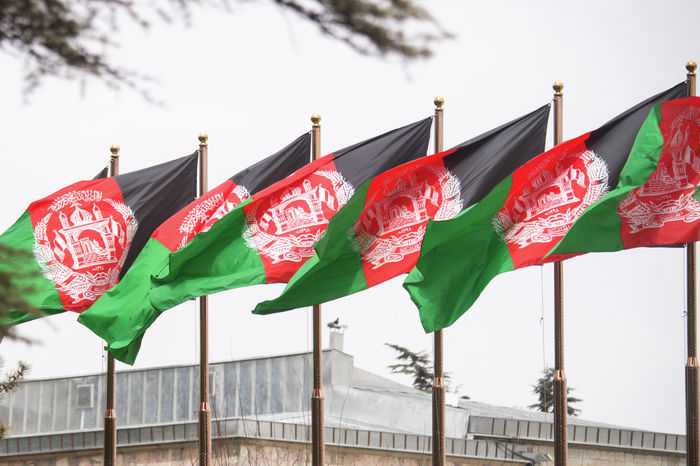
As a university student, it’s easy to feel powerless in the face of the atrocities taking place in the world. In 2021, the Taliban took full control of Afghanistan, resulting in an ongoing humanitarian crisis in which human rights, particularly those of women, have been horrifically violated. We all saw the headlines. But from our position in Cambridge, almost five years after the Taliban takeover, what on earth can we do about it?
Mosaic Global Foundation is a charity dedicated to promoting peace and cooperation in Central Asia. Zalmai Nishat, the organisation’s founder and executive chair, describes its vision as one of “state institutions unbound by any one religion, ethnicity, or language; we believe true unity is attainable through the embracing of diversity.” Indeed, Nishat believes: “pluralism, secularism, and coexistence form the essence of the state and its institutions.” Mosaic’s efforts to amplify the voices of civil society and promote human rights in the region have involved creating an “inclusive, diverse and democratic civil society platform for Afghanistan”. The charity also focuses on empowering “women leaders to effectively campaign for recognition of ‘gender apartheid’ in Afghanistan.” In the UK, Mosaic supports the integration of Afghan refugees. “Our name, Mosaic, reflects this spirit of unity through diversity,” says Nishat.
“If you don’t know anything about Afghanistan, perhaps you should”
Much of Mosaic’s work is far more local to us than you might imagine. Mosaic runs an annual conference in the city, called the Cambridge Afghanistan Series (CAS), and hopes to hold an additional conference on Afghanistan’s ‘gender apartheid’ at Girton College this year. Mosaic also runs underground schools in Afghanistan, combating the Taliban’s repression of girls’ education. Remarkably, the charity is “in the process of starting a lasting partnership with Impington Village College” to operate these programmes across Afghanistan. Nishat’s vision is “to expand [this] to other schools in Cambridge and beyond”. The thought of local secondary schools contributing to the fight against the Taliban for girls’ education is a stunning one. It’s also a powerful reminder that there are ways for normal people to do their bit; it’s nigh-on-impossible to picture what the situation would be without the support of organisations like Mosaic.
Given its connection to Cambridge, Mosaic is always seeking volunteers from the University. “A number of University of Cambridge students have remarkably assisted Mosaic to deliver its mission in Cambridge,” Nishat says. The organisation’s founder unequivocally encourages students to “get involved in any areas of Mosaic efforts in Cambridge” that interest them. Peter Murphy, a third year from Trinity College, stresses how beneficial Cambridge students’ skills – “organisation, written English, lobbying” – are to the project. For third year King’s student Rade Meech-Tatic: “It was really exciting to witness – and play a small part in facilitating – such bold, history-shaping discussions,” through volunteering at Mosaic’s conference. Murphy believes that by becoming involved, students can become “lifelong friends of Afghanistan,” and develop experience “pertinent to any career with any global slant, which is pretty much any job that anyone in Cambridge will be doing in two years time.”
“True unity is attainable through the embracing of diversity”
Meech-Tatic describes being “immersed in the heart of the discussion about Afghanistan’s future” as a volunteer. Meanwhile, Murphy was particularly drawn to Mosaic because he sees it as a “solutions-driven organisation rather than a political organisation.” In his words, Mosaic is “building a future for Afghanistan by building a future for refugees in the UK,” while simultaneously counteracting the refugee crisis by “helping countries develop on their own two feet to prevent the traumatic act of movement”. He saw this as a refreshing alternative to a recent “emphasis on regime change rather than regime building”. For Murphy, Mosaic’s approach is “culturally-sensitive” and not all about imposing “Western values on Afghanistan”. Instead, the Trinity student highlights how they prioritise transcending “culture wars” and “holistically working towards Central Asian and Afghan people at home, through international development to promote stability.”
But what if you have no connection to, or knowledge of, Afghanistan or the surrounding region? Murphy suggests: “If you don’t know anything about Afghanistan, perhaps you should.” He believes: “We have a duty as Brits who have been so involved in the region to understand Central Asia.” Meanwhile, Meech-Tatic “found I was able to put some of my ‘ivory tower’ tripos knowledge to meaningful practical use,” as a volunteer, “and that was an empowering feeling.” Cambridge University Mosaic Afghanistan Society (CUMAS) has been founded as the organisation’s student branch, which Nishat envisions as a platform to “invite speakers to deliver talks” and help remedy this absence of knowledge.
There’s a real eagerness to get anyone willing to help on board, and an appreciation of their involvement regardless of who they are, or what experience they bring. It’s heartening to see that, even in the face of a crisis which often feels hopeless – and remote in more ways than one – there are small ways of making a difference from right here in Cambridge.
 Interviews / How sustainable is your college? CLOC on their college ranking system24 May 2026
 News / Cambridge researchers warn of ‘underestimated brilliance’ if AI grades essays26 May 2026
 Lifestyle / Blind Date: ‘I should’ve changed my socks’24 May 2026
 Comment / The no man’s land between triposes25 May 2026
 News / News in Brief: ducks, dinosaurs, and drama series25 May 2026
 Theatre / A letter to the student writers of Cambridge 27 May 2026
 Film & TV / The Saab’s long road to Hollywood27 May 2026
- News / Cambridge researchers warn of ‘underestimated brilliance’ if AI grades essays26 May 2026
 Music / Soundtrack your life26 May 2026
 Arts / Does Cambridge lack spaces for creative freedom? 26 May 2026