Perfectionism and social media: digital technologies are leading to more young people experiencing OCD symptoms
As digital life accelerates our fears and feeds our fixations, Gregory Gibbons examines the ways internet culture can amplify OCD’s patterns and pressures
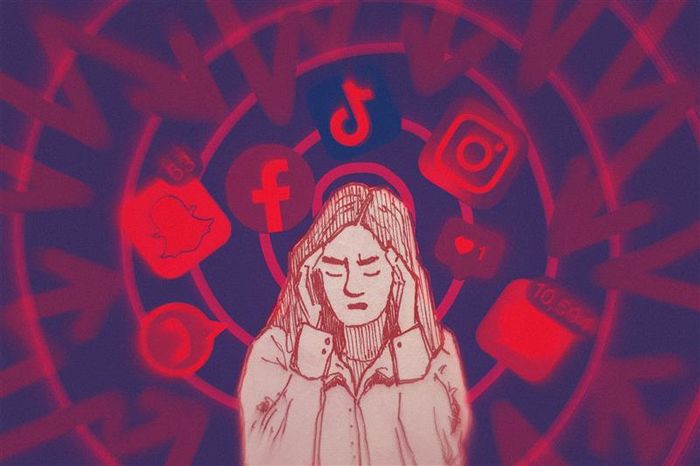
The mantra that the internet should be feared rather than embraced is one which all of us have had drilled into us since a young age. Indeed, my primary school life was one wrought with Smartie the Penguin’s “Before you click, click click…” epigram. With the advent of cultural phenomena like doomscrolling and how omnipresent the internet has become, experts are becoming increasingly concerned that internet usage is normalising the kinds of obsessive behaviour associated with OCD.
A study of preteens (9-10 years old) found that for each hour of playing video games the odds of developing OCD over two years increased by 13%, and for each hour of watching videos, by 11%. There is increasing evidence that the internet worsens symptoms for those who already have OCD. This is due to the constant stream of information it holds, encouraging reassurance-checking through behaviour such as compulsive research or constantly checking likes on a post.
“There has been a notable increase in the prevalence of the disorder in recent years, rising from 1.3% of the population in 2007 to 2.6% in 2023/24”
Beau Roberts, head of student wellbeing at Darwin College, described digital habits as “acting as both a coping strategy and a pressure point”. She said, “the constant availability of information, notifications, and comparison loops can intensify stress. For students already navigating anxiety or perfectionist thinking, the digital sphere can become another space where worries gather and spiral”. Scientific research has shown clear links between behaviours associated with OCD and trends linked to social media use. One study found that “problematic internet use” was significantly associated with higher checking and dressing/washing compulsions.
OCD is often trivialised in shows such as Friends. Monica Geller’s control-orientated fixations are presented through a comedic lens which neglects the realities of a debilitating anxiety disorder. It is a condition which is concealed by one societal definition but bears a distinct, real one. The National Institute of Mental Health defines it as being “marked by uncontrollable and recurring thoughts (obsessions), repetitive and excessive behaviours (compulsions), or both”. This leads to an endless cycle of reassurance-seeking and ritualistic behaviours in search of relief from the anxiety of the intrusive thoughts. There has been a notable increase in the prevalence of the disorder in recent years, rising from 1.3% of the population in 2007 to 2.6% in 2023/24, according to the NHS. Has social media been a key factor in this development?
Trevor Robbins, professor of cognitive neuroscience and director of research at the BCNI, explained that compulsivity exists on a spectrum, measured even in normative individuals by “questionnaire instruments such as the Obsessive-Compulsive Inventory”. He said, “this scale can be used to show some level of compulsivity in all of us [...] [such as] scientists and proof editors”.
“Compulsivity is the reflection of out-of-control habits producing OC symptoms in OCD,” he said. Therefore, “behavioural addictions” such as gambling, drug addiction, and internet addiction, can be seen to foster OCD-like tendencies and thus play a role in the disorder.
“Digitalisation has meant that academia, a domain already dripping with the pursuit of perfectionism”
However, Jenna Overbaugh, a counsellor specialising in OCD and anxiety with a large online platform, highlighted the benefits of the internet, which she claimed to have seen firsthand as a content creator. She pointed out that digital technology means, “there’s more accessibility out there for individuals who aren’t able to get 1:1 therapy”. She emphasised the importance of discernment: “It’s important to understand that there’s only so much information that can go in a single post, or a 1-minute video. A lot of nuance gets lost, and it’s especially important that people aren’t outsourcing their comfort or mental health needs to things like ChatGPT or creators online who are not ethically able to respond”.
The hyper-academic environment of Cambridge doesn’t just facilitate this intersection: it fuels it. This is reflected in Beau’s experience. She said, “students often tell me they feel they must “keep up” and digital spaces amplify that feeling: emails, group chats buzzing with academic updates, or social media showcasing others’ achievements”. She continued that, “it can create an atmosphere where rest feels like a risk rather than a necessity”.
Trevor highlighted “the cumulative build-up of stress”. He said, “it is well established that stress enhances the bias towards habits and highly focused attention over (more flexible) goal-directed behaviour”. Here, where there are often multiple essays set in one week, work is scrutinised in intimate and intense supervisions, and a disquieting pursuit of perfectionism pervades the hallways, academia and digitalisation synergise to foster the exacerbation of OCD symptoms.
Digitalisation has meant that universities, a domain already dripping with the pursuit of perfectionism, has become centred around compulsivity-catering features, such as online deadlines, e-mails and study apps. A study by the National Library of Medicine found that undergraduate students had an average daily screen time of over 10 hours. The use generative AI chatbots like ChatGPT only threatens to intensify this.
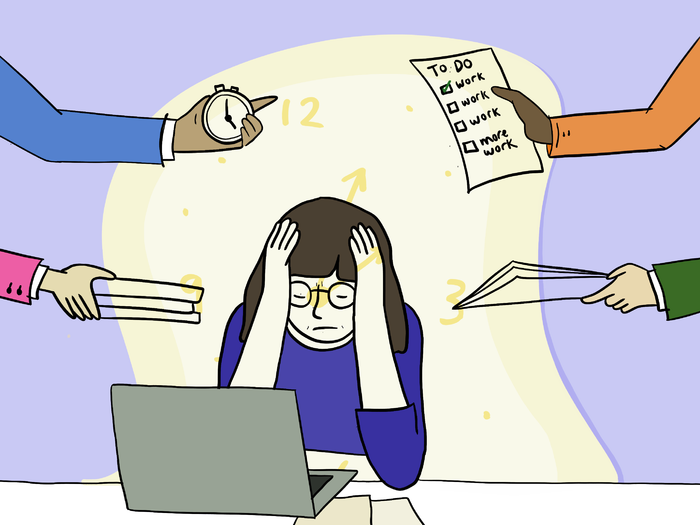
The internet has had profound consequences on the prevalence of OCD. and OCD symptoms. When combined with the acutely academic environment of Cambridge, it can create conditions that are insidious for those suffering from the illness. However, for the same reasons it intensifies OCD, it may also help to alleviate it. More than just a source of information, the internet can be a lifeline for those with the illness. By offering recovery tools, community, and guidance, it holds powerful potential as a means of overcoming the condition. Perhaps the challenge for our generation is therefore not to escape the internet, but to learn how to use it as a tool for recovery rather than reassurance.
 News / C4P vandalises University offices over divestment10 June 2026
 Comment / Top of the slops: the competitiveness of college dining4 June 2026
 Lifestyle / A town with a view11 June 2026
 Theatre / The recipe to success this Easter term 10 June 2026
 Comment / ‘On the Poverty of Student Life’: sixty years on10 June 2026
 Lifestyle / Confessions of a May Ball crasher12 June 2026
 Lifestyle / May Week horoscopes12 June 2026
 Lifestyle / The finalist’s bucket list12 June 2026
 Theatre / All of Cambridge is a stage12 June 2026
 Music / ‘It’s feminine intuition’: predictions for OR312 June 2026