Fashion for the future
Matilda Billinge muses on how 20th century futurism actually relates to where fashion is headed
As 2026 fast approaches, now is as good a time as any to consider the future, both of our world and of the fashion we consume. With recent estimates suggesting that the fashion industry produces approximately 20% of global wastewater and 10% of global carbon emissions, the question of the future – and if we will even have one at all – is more pressing than ever. It seems that the ever-revolving cycle of trends and microtrends is determined to distract us from the important question: Where is fashion actually headed?
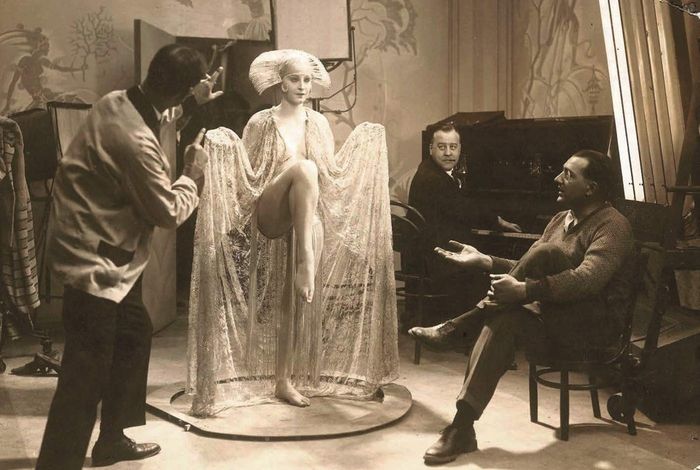
In order to answer this question, first we must look to the past, where designers have long been speculating on what the fashion landscape of the future might look like. In the early 20th century, the artistic movement known as futurism first surfaced in Italy. Focused on the dynamic energy and movement of newly emerging mechanical processes, futurist painters such as Giacomo Balla revoked strait-laced societal norms by promoting asymmetrical clothing in loud, bold colours, which was comfortable and gave the wearer room to move. Inspired by modernist and futurist aesthetics, in 1913 designer Sonia Delaunay began making her ‘simultaneous’ dresses, floor-length gowns consisting of a colourful patchwork of fabric swatches. Although futurism as an artistic movement effectively ended in 1918, designers continued to be captivated by its influence. Unsurprisingly, these musings on the future are well exhibited in the world of science-fiction; Fritz Lang’s 1927 dystopian film Metropolis showcased the darker side of futurism, with metal chest-plates and extravagant headdresses designed by Aenne Willkomm.
“Nowadays, visions of future clothing are less about aesthetics and more concerned with materials and processes”
As the Space Race unfolded, the 1960s ushered in a new era of futuristic fashion, with designers such as André Courrèges and Paco Rabanne taking inspiration for their sleek, structured garments from satellites and rockets. This space-age aesthetic was solidified by films such as Barbarella (1968) which saw Jane Fonda wearing a Rabanne-inspired metallic minidress, as well as showcasing bodysuits, bikinis and thigh-high boots. Designers of today frequently hark back to these visions of futures past. For example, Miuccia Prada’s S/S 25 womenswear collection was clearly influenced by the space-age ’60s, with metallic textiles and rounded cutouts capturing the distinctive aesthetic we now recognise as retro-futurism. Whilst this aesthetic movement was characterised by optimism and innovation, the transition through the 1970s into ’80s diverged from the utopian ideals of the space-age, presenting a grittier, dystopian vision of the future. Influential films of the era such as Blade Runner (1982) embraced overblown proportions, excessive fur, and exposed skin, leaning into a more cyberpunk aesthetic.
Although a far cry from the interstellar flight attendants of 2001: A Space Odyssey (1968) or the glowing skintight bodysuits of Tron (1982), it seems that the fashions of science fiction may well become our reality, as advances in synthetic biology and sustainability reveal themselves to be valuable steps towards the industry’s continued survival. Nowadays, visions of future clothing are less about aesthetics and more concerned with materials and processes. For example, textile company Bolt Threads have developed a technique to bio-engineer protein fibres which mimic the structure of spider silk using genetically modified yeast, doing away with the pesticide, land and water use associated with conventional fibre-farming. Furthermore, biotechnology company Colourifix are on a mission to revolutionise colour through their pollution-free method of dyeing by genetically modifying microorganisms which can then produce, deposit and fix dyes to fabrics.
“It seems that the fashion industry’s priority for the future should focus on sustainable growth”
Advances in generative AI have also taken hold, with companies such as Mango and Valentino using it to design campaign imagery, and H&M and Puma utilising AI models in the promotion of their products. However, given the environmental concerns associated with AI use, as well as the threat to the livelihoods of real models, the question arises as to whether this is truly a step in the right direction. AI fashion might be the future, but is it the future we want? Luxury brands like Burberry have begun to utilise AI in an arguably more sustainable way, using it to predict trends and thus optimise their inventory and reduce waste.
The ultimate guide to gig fashion
Although aesthetics and trends will continue to evolve, it seems that the fashion industry’s priority for the future should focus on sustainable growth and investment into alternative, non-extractive materials. However, whether these techniques will be widely adopted remains to be seen. In an industry driven by profit and dominated by fast-fashion giants, the utopian dreams of the sixties seem far away as we verge ever closer to something resembling dystopia. Therefore, whatever your goals for the new year, consider making sustainable fashion a part of your 2026.
 Comment / Top of the slops: the competitiveness of college dining4 June 2026
 Interviews / What’s the story behind Pages coffee house?8 June 2026
 News / News in Brief: Cambridge crowns, council confirmations, and competitive cricket8 June 2026
 Comment / The Cambridge drift1 June 2026
 News / Cambridge researchers produce ‘world-first’ AI vaccine6 June 2026
 Arts / Don’t rush me – I’m reading!9 June 2026
 Lifestyle / Don’t Cry at Me, Argentina – a next-year abroad story8 June 2026
- News / News in Brief: Cambridge crowns, council confirmations, and competitive cricket8 June 2026
 Science / Failure is the foundation of science8 June 2026
 Fashion / The hidden gems of formal fashion8 June 2026