The (Dys)functions of student politics at Cambridge
Teddy Graham and Benjamin Warner draw on their experience to highlight the inherent flaws of Student Union politics at Cambridge and its potential solutions

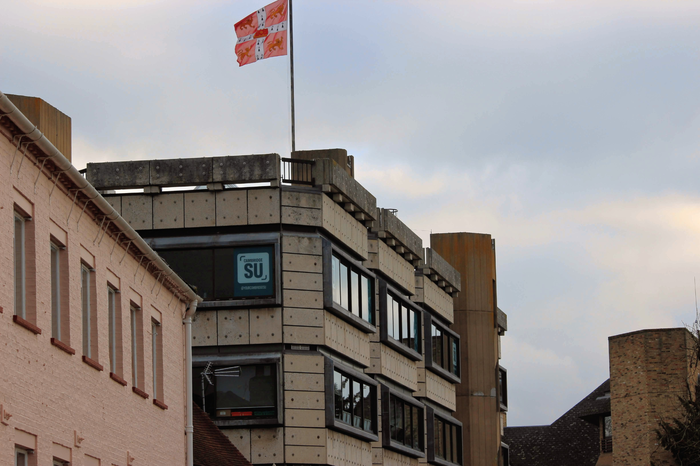
As a collegiate University, Cambridge has a unique form of student governance. By default, each student is a member of both a collegiate Student Union (a ‘CR’, standing for ‘Combination Room’) and the University-wide Cambridge University Students’ Union (the ‘SU’). Yet as former CR Presidents, our two years of experience in student politics at Cambridge taught us that this dual-layering also creates dangerously unique issues. On the one hand, the SU is a centralised organisation at a fundamentally decentralised university. On the other hand, CRs rarely have the resources to operate effectively or have their voice heard by university leadership, despite being the most immediate representative bodies for students.
The SU is the closest thing Cambridge has to a conventional Student Union. They represent student interests to the University as a whole, and run university-wide campaigns and events. Yet most people know very little about what the SU actually does. For many, SU engagement is limited to the Freshers’ fair, free sexual health supplies, or SU-funded societies. A very small portion of students actually vote in their regular elections and referenda.
“The problem is simple: CRs have engagement but very little scope or capacity, while the SU has resources at its disposal, but lacks engagement”
Notably, CRs do not report into, nor are they directly (legally) affiliated with the SU – a fact SU representatives are very willing to cite when CRs discuss ‘disaffiliation’. These two forms of representation are supposed to operate in parallel, sitting on committees at their respective level of engagement. In practice, however, the SU relies heavily on CRs as its primary mechanism for generating engagement, principally through the Student Council: a rather tedious bi-termly meeting of sabbatical officers and CR representatives from each college.
This council has two dire problems. First, council attendance is consistently poor. Even though council is quorate with a turnout of just 25% of its undergraduate and postgraduate voting members, the council failed to meet even this low bar at the first meeting of this academic year. Second, most motions presented to council come directly from the SU’s sabbatical officers. While typically well-intentioned and ambitious, these motions are often passed without sustained engagement from the college bodies that are expected to legitimise and implement them.
This is not an attack on the SU or the hard-working staff who keep it afloat. Rather, we want to highlight that trying to unilaterally represent a student body at a university in which the demos is siloed into colleges is a limited model of representation. Students are far more likely to engage with the college-level organisation that, for example, negotiates rent increases on their behalf, rather than the abstract SU, which floods their ‘other’ inbox with various campaign updates.
“Without considered reform, [student politics at Cambridge] will remain a dysfunctional network of overlapping and under-utilised channels for thousands of student voices”
Yet, CRs also face structural constraints in this system. Compared to the SU, they have far fewer resources at their disposal to fully deliver on being a student organisation. In our experience, CRs must simultaneously be campaigners, representatives to the College, community-builders, and funding structures for societies, all managed by time-pressed Cambridge students alongside their studies. Without adequate resources, CRs cannot deliver effectively on all these goals at once. So the problem is simple: CRs have engagement but very little scope or capacity, while the SU has resources at its disposal, but lacks engagement.
An additional difficulty for CRs that is worth highlighting is that not all of them have the same legal status. Some colleges recognise their CRs as separate Student Unions under Section 22 of the Education Act. This comes with more duties and responsibilities, but, valuably, guarantees the independence of the CRs from the College’s caprices better than a non-Union CR, including financial independence. However, not all CRs have this status, and plenty of them continuously struggle with what they see as overreach by college officers that prevents them from realising the interests of students.
So, what is to be done? While the SU cannot become a financially enabling institution for CRs, as both are distinct charities, there are ways to facilitate better communicative flow between them. One such option is to make the Student Council more CR-led, allowing college representatives, rather than ‘sabbs’, to set the agenda and chair the meetings. Another would be to facilitate better CR representation at a university level, for example, by coordinating statements for the Senior Tutors’ committee.
We want to end this loose diatribe by making it clear that we do not want to see the SU or CRs dismantled. Rather, we want to emphasise the limitations of the current structure of student politics at Cambridge, and to express our fears that, without considered reform, it will remain a dysfunctional network of overlapping and under-utilised channels for thousands of student voices.
 Comment / The Cambridge drift1 June 2026
 Theatre / CUMT’s The Wind in the Willows brings a classic to life 31 May 2026
 Features / The language of optimisation and the architecture of merit30 May 2026
 News / Venue cancels Cambridge talk by right-wing commentator Matt Goodwin after backlash28 May 2026
 News / News in Brief: Corpus climbing, climate cash, and commendable contributions1 June 2026
 Arts / To the letter2 June 2026
 News / Cambridge psychologist warns against blanket social media ban for under-16s1 June 2026
 Sport / Caius beat Magdalene in last-minute thriller to clinch mixed netball Cuppers final1 June 2026
- News / News in Brief: Corpus climbing, climate cash, and commendable contributions1 June 2026
- Comment / The Cambridge drift1 June 2026