Plastic pubs: the problem with Cambridge alehouses
Ivo Morrey explores the inhumane nature of Cambridge pubs and why it should be taken seriously
The college bar is a true gem of the Cambridge experience, but I like to escape the student bubble when I can. Disappointingly, though, the pub scene in Cambridge is poor: JD Wetherspoon and Greene King have overseen a McDonaldisation of pub culture across the city. These tacky ‘McPubs’ have brutalised these once homely third places for the community and coughed up a plastic facade of British pub culture. As a Manxman, this is a miserable development I’ve seen across England.
The Regal is the antichrist of British pub culture. The bouncers present more of an abrasive ‘eff off’ than a warm invitation. You don’t get to meet the owners, and the maltreated staff welcome you not with a smile but a hurried sigh as they race to attend to the army of students storming the gates. After ten minutes searching for a seat, you can sit back and soak up the atmosphere of a rowdy school canteen, watching the overworked waiters rush around serving cheap pints subsidised by their own exploitation. That’s not British pub culture. That’s capitalistic crap.
“Most young Brits don’t know what they’ve lost”
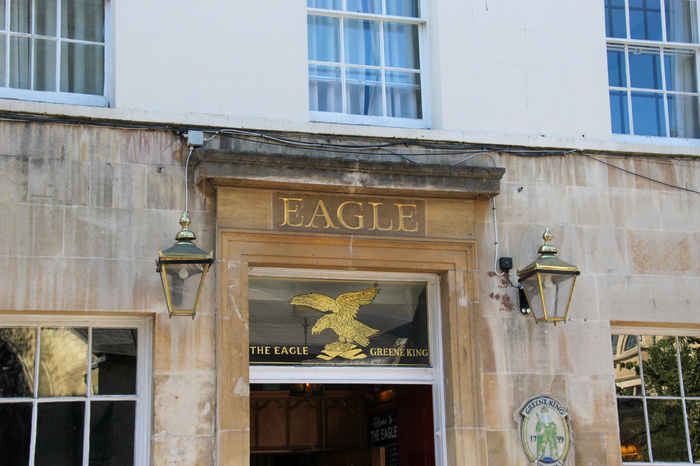
But we all know that ‘Spoons’ isn’t really a proper pub: the real heresy in Cambridge is the insidious Greene King. Their ‘local’ names are devised in boardrooms, their menus identical, their vibe equally mundane. The ‘Greedy’ King has even gobbled up The Eagle; the historic pub is now just another jurisdiction of the chain: same menu, same drinks, same vibe, same soullessness. From the Granta to the Baron of Beef, the chain has quietly warped the characterful public house into a one-size-fits-all house of private profit, creating a dry monoculture of pub experience across the city. Ripping the soul out of a pub not only takes away its charm, it undermines its locality. You become just another customer at an inconceivably large corporation with no sense of ownership – hardly a comfortable space to break out of your social bubble.
The soullessness of inconceivably large corporations isn’t anything new: lowest-common-denominator shops pervade the Grand Arcade, fast-food chains like Taco Bell and McDonald’s serve up addictive but bland food for students after a night out. But there’s something particularly symbolic about the McPub: the pub as the ‘public house’, a home away from home, has been stolen. There’s a lot of discussion about pub closures in England but very little about their declining quality, which suggests that this is going on largely unnoticed. I’ve even heard many people who describe themselves as socialists talk fondly of The Regal as if it isn’t the very antithesis of what they stand for.
“By surrendering the public house to an extremely wealthy elite we’re giving up on what unites us”
This is perhaps a good glimpse into the world AI has in store: the passive erosion of human feel coupled with the complete loss of a sense of ownership and control. Wetherspoons is particularly hailed as a beacon of British culture, but that’s largely because most young Brits don’t know what they’ve lost. According to Finder, the standard British pint is £5.50 compared to a global average of £2.76; the chain isn’t good, it’s affordable.
The Isle of Man, my home, is a bastion of conservatism, and occasionally that’s a damn good thing. We’ve received our own branch of Tim Martin’s Frankenstein, but we continue to defend our locals tooth and nail. The pubs on the Island have heart: each has its own vibe, its own gossip, its own character. The service isn’t perfect, the pints aren’t always the best, but that’s how it should be: human. In each you can chat to the owners, get to know the local crowd, and above all: feel at home. In England the war effort is faltering. Soaring booze prices channel students into bland corporate pubs which feel closer to a nondescript place to get drunk than a place to actually enjoy the experience.
This brings serious political implications. The surge of populism across the west has its roots in a lost sense of community feeling epitomised in the decline of the classic British pub. I like to chat to people in the pubs at home, randomers, and if the topic ever comes to politics there’s usually some heavy disagreement. But in the context of a homely third place it feels unimportant. In a proper pub the community you see is the reality of the world, not the whinging of Elon Musk or Nigel Farage. I’ve seen conservative finance bros form bonds with non-binary left wingers, people who do OnlyFans chatting happily with traditionally-minded Manx sailors. Conversation in a pub as a third place makes forming bonds across political lines feel more like bonding with a quirky relative than an angry reactionary online. By surrendering the public house to an extremely wealthy elite we’re giving up on what unites us: common humanity and a genuine sense of belonging. To watch the decline of the British pub in a city as historic as Cambridge is severely disappointing to say the least.
 Comment / The Cambridge drift1 June 2026
 Theatre / CUMT’s The Wind in the Willows brings a classic to life 31 May 2026
 Features / The language of optimisation and the architecture of merit30 May 2026
 News / Venue cancels Cambridge talk by right-wing commentator Matt Goodwin after backlash28 May 2026
 News / News in Brief: Corpus climbing, climate cash, and commendable contributions1 June 2026
 Arts / To the letter2 June 2026
 News / Cambridge psychologist warns against blanket social media ban for under-16s1 June 2026
 Sport / Caius beat Magdalene in last-minute thriller to clinch mixed netball Cuppers final1 June 2026
- News / News in Brief: Corpus climbing, climate cash, and commendable contributions1 June 2026
- Comment / The Cambridge drift1 June 2026