News in Brief: planetariums, plaques, and plastic pollution
A light-hearted round up of this week’s stories, from a new planetarium to a Doctor Who-themed Sunday service
University unveils new immersive planetarium
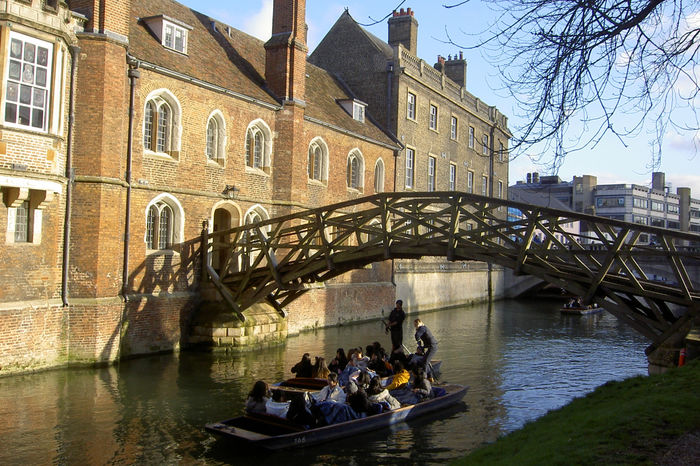
The University of Cambridge has announced the creation of a new “universe in a box” planetarium, which is believed to be the first free planetarium in the east of England, and one of only a few in the UK. The planetarium creates an immersive experience, with fully rendered 3D space environments, and can hold a class of 30 pupils. The resource will support the work of the University’s Institute of Astronomy’s AstroEast schools outreach team. Dr Matt Bothwell, an astronomer at the University, said: “The planetarium will transform our work in schools – it’s an entirely different way of engaging with the universe.”
Plaque to be installed for former Cambridge athletics coach
A blue plaque in memory of a former coach at the Cambridge University Athletics Club has been unveiled in Cambridge. Alec Nelson, chief coach at the club from 1908 to 1940, sent 50 athletes to the Olympic Games over his career. Among these was the sprinter Harold Abrahams, whose 1924 Paris gold medal win is the subject of the 1981 film Chariots of Fire. The plaque, part of a scheme run by civic charity Cambridge Past, Present & Future, will be installed on All Saints Passage. The Cambridge Blue Plaque Scheme recognises people and events that have significantly impacted the area. Nelson was nominated by Professor Stone, an alumnus of St Edmund’s College, who said: “He became the country’s leading coach in the inter-war period, guiding Cambridge to crushing victories against its rival.”
Cambridge researchers turn plastic waste into clean hydrogen fuel
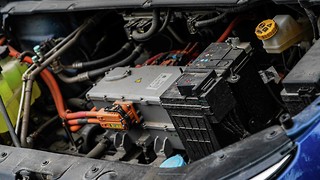
Scientists at the University of Cambridge have developed a new solar-powered reactor that uses recycled car battery acid to break down hard-to-recycle forms of plastic waste into clean hydrogen fuel and valuable industrial chemicals. The process, designed to be commercially profitable, could provide a new solution to growing levels of plastic pollution, while also creating renewable energy. Professor Erwin Reisner of the Department of Chemistry, who led the research, described the discovery as “almost accidental,” adding: “We used to think acid was completely off limits in these solar-powered systems, because it would simply dissolve everything. But our catalyst developed didn’t – and suddenly a whole new world of reactions opened up.”
Cambridge church holds Doctor Who-themed service
The Zion Baptist Church in Cambridge unveiled a Tardis it recently acquired in a Doctor Who-themed service on Sunday (12/04). The replica box from the BBC science fiction series had been sitting by a farmer’s field near Ipswich for years, before it was moved to the church and renovated. Peter Purves, who played the companion to the first Doctor, attended the service to officially unveil the box. Reverend Jason de-Vaux, a fan of the series, said the show had similar themes of regeneration seen in the Christian Bible, commenting: “Jesus Christ himself was regenerated in the way he came alive again and in which way he saved mankind. Doctor Who saves mankind.”
 Comment / Top of the slops: the competitiveness of college dining4 June 2026
 Comment / The Cambridge drift1 June 2026
 News / Cambridge researchers produce ‘world-first’ AI vaccine6 June 2026
 News / Two more women allege sexual harassment by classics professor Simon Goldhill 28 April 2026
 Features / One big happy (college) family?4 June 2026
 Science / Failure is the foundation of science8 June 2026
 Fashion / The hidden gems of formal fashion8 June 2026
 Interviews / What’s the story behind Pages coffee house?8 June 2026
 Theatre / ‘Where does actor begin and puppet start?’7 June 2026
 Music / T.S. Eliot meets Eurovision: LYR + Natalie Wildgoose at The Storey’s Field Centre7 June 2026