Rethinking bird brains
New research shakes belief that forethought is unique to humans
Some birds can recognise the future and plan accordingly. New findings by Cambridge scientists have sparked speculation among ornithologists over just what else our feathered friends may be capable of.
In order to determine whether animals plan for future meals or are simply acting on instinct, Professor Nicky Clayton and her team at the Department of Experimental Psychology performed tests on the western scrub-jay. In research published yesterday they demonstrated that the birds will hoard food items if they believe that they will be in short supply in the future.
Over the period of research, eight scrub-jays were up with the lark each morning to choose between the compartment with ‘no breakfast’ or the compartment with ‘breakfast’. They were then allowed to gorge themselves all day. After several days of feasting, the birds were provided with pine nuts suitable for caching (hoarding) in the evening. In anticipation of a morning without a tasty breakfast, the scrub-jays consistently hid food in the ‘no breakfast’ compartment rather than the ‘breakfast’ compartment, demonstrating an understanding of future needs and no small amount of cunning.
In a similar experiment, the scrub-jays had the choice of a dog-food breakfast served up in one compartment or a peanut-based gastronomia in another. On being allowed to cache either food in location of their choice in the evenings, they yet again astonished scientists by demonstrating an understanding of future needs, and a commendable desire for a varied diet, by hoarding peanuts in the dog food compartment and dog kibble in the peanut compartment. Had they been caching merely for current hunger they would not have discriminated between the types of food or the location of the succulent cache.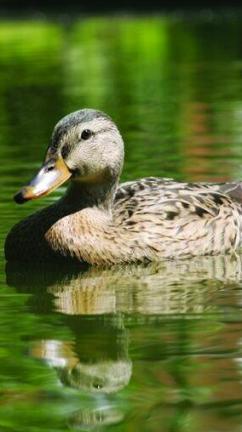
Professor Nicky Clayton said, “The western scrub-jays demonstrate behaviour that shows they are concerned both about guarding against food shortages and maximising the variety of their diets in the future.” Not only committed to getting their variety of five fruit and veg a day, these wondrous creatures appear to have a “sophisticated concept of past, present and future”.
Together with her colleague Professor Tony Dickinson, Professor Clayton and her team have published a number of papers demonstrating the remarkable memories of the scrub-jay. Some forms of memory and future thinking are believed to be linked in the human brain and the scientists were interested to see if the same might be true of these birds. This could cause scientists and students alike to rethink the popular derogatory idiom “bird brain”.
astonished scientists by hoarding peanuts in the dog food compartment
Forward planning of this kind is a complex skill that was previously believed to be unique to humans. Certain other animals have been thought to be incapable of dissociating themselves from the present and any current motivation.
Bruce Martin, bird enthusiast and former secretary of Cambridge Bird Club, was unsurprised by the news. “The more you delve into birds, the more questions you need to ask”, he told Varsity. He went on to outline his fascination with “how they don’t hit each other when roosting” and “how the birds communicate with one another”. A second year historian, who asked not to be identified, described himself as “positively flapping” when the news broke.
The news will come as no surprise to Cambridge’s literary elite. The albatross in Samuel Taylor Coleridge’s Rime of the Ancient Mariner displays a similar culinary aptitude to that of the modern scrub-jays, as he “every day for food or play / Came to the Mariner’s hollo!”
Elliot Ross and Georgia Artus
 Comment / Top of the slops: the competitiveness of college dining4 June 2026
 News / Cambridge researchers produce ‘world-first’ AI vaccine6 June 2026
 Comment / The Cambridge drift1 June 2026
 Interviews / What’s the story behind Pages coffee house?8 June 2026
 News / University begins divestment from banks financing fossil fuels5 June 2026
 Lifestyle / Don’t Cry at Me, Argentina – a next-year abroad story8 June 2026
 News / News in Brief: Cambridge crowns, council confirmations, and competitive cricket8 June 2026
 Science / Failure is the foundation of science8 June 2026
 Fashion / The hidden gems of formal fashion8 June 2026
- Interviews / What’s the story behind Pages coffee house?8 June 2026