
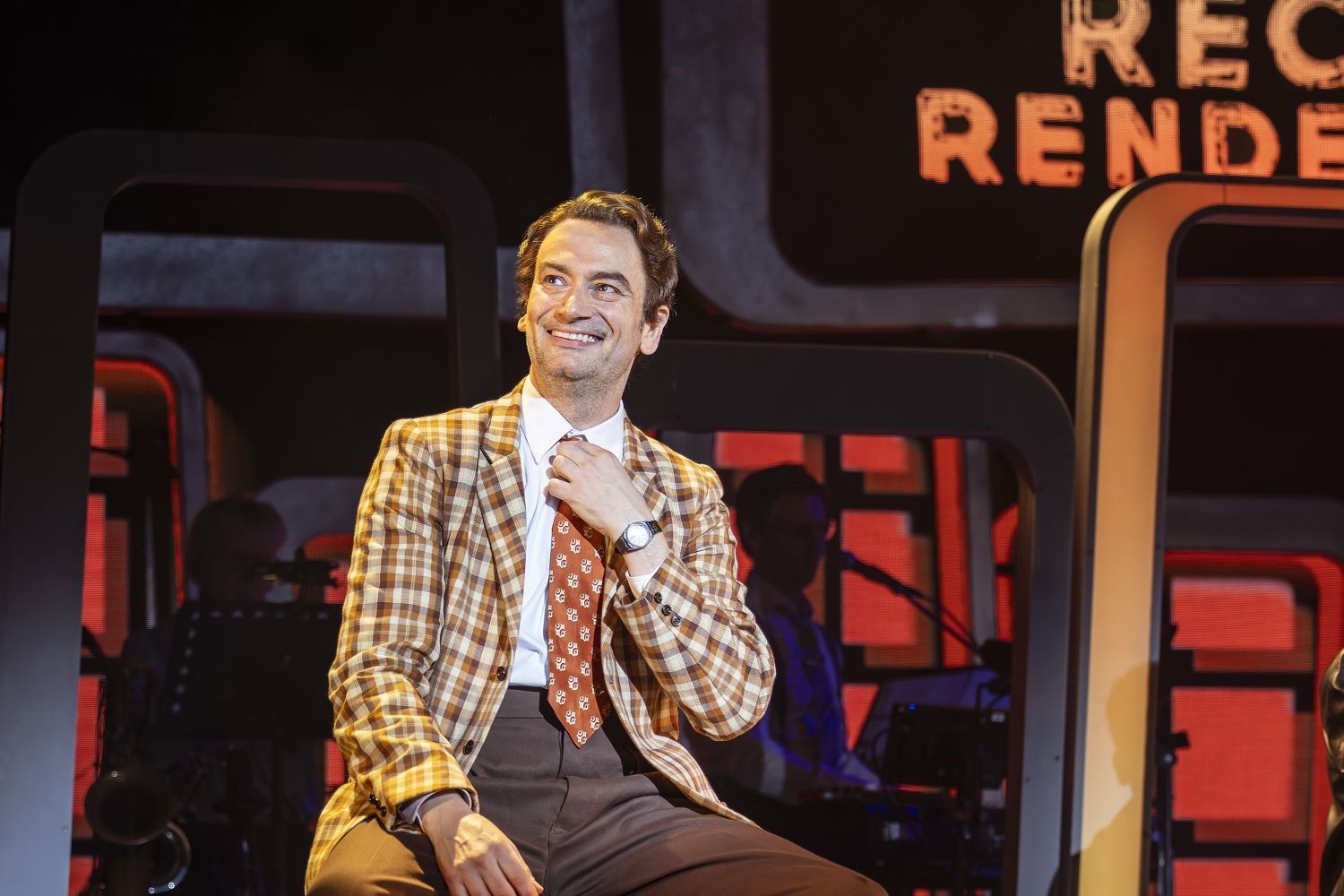
“Energetic, fun, rockin’” – these are the three words Rock & Roll Man performer and musical director Dominique Scott uses to describe the new American musical currently touring the UK. After seeing the show in Cambridge myself, there is no disagreement. I had the pleasure of speaking with members of the creative team of the five-star show, including its eight-time Tony award-winning producer and co-book writer Rose Caiola, and director Randal Myler. The musical follows the story of Alan Freed, the white American radio DJ who carved the path of what became known as Rock and roll, transforming it into a sweeping cultural phenomenon.
Drawing out the social and political power of music, the show illustrates its capacity to instigate change with both nuance and exuberance. Caiola describes it as “a fascinating story about the genesis of Rock and roll and how it stands the test of time,” adding: “We want to satirise racial tropes and shine a light on things that have changed.” The creative team are deeply passionate about Freed’s legacy and his role in breaking down racial barriers. Freed’s love for music is the pulse of the show, portraying how it was considered a threat to J. Edgar Hoover’s administration, with Freed being considered, as Myler states: “Dangerous,” and a “bad boy”.
“Freed’s legacy survived and it’s really everywhere, informing all the music the current generation listens to from Buddy Holly to Beyonce”
“There is something for everyone in this piece,” says Caiola: “Alan Freed was an instigator; people need to know about a rebel and a visionary. The show is compelling, with an abundance of incredible music from the Rock and roll classic canon and also an original score, which tells the story of Freed’s life through a traditional musical theatre sense.” Highlighting its cross-generational appeal, she mentions that “Freed’s legacy survived and it’s really everywhere, informing all the music the current generation listens to from Buddy Holly to Beyonce.” The musical is gifted with a truly contagious score, which had me humming along to all the Rock and roll classics long after leaving the performance. Myler also talks about the show’s exploration of how Rock and roll music crossed the ocean, influencing the 1960s UK music canon. He says: “I am very interested in the cross pollination of American music coming to England. The Beatles first heard of Chuck Berry and Little Richard through Alan Freed’s radio show; there were riots in England when Rock and roll hit.”
Discussing the process of reimagining the show from its original Off-Broadway run in 2022, both Myler and Caiola express their excitement about bringing it to new audiences here, with a new UK cast and design team. Myler emphasises: “The musical is a fresh animal to me now, I’m not looking to do it how we did it in New York as the UK cast have their own energy” – he likens the process to “sculpting in ice: as soon as you do it, it melts and you can’t attempt to recreate it exactly.”
Caiola also highlights the challenges of making art in the US in recent years: “There are roads in the UK that we don’t have in the US at the moment. It is a pleasure and honor to work with the UK collaborators. The show looks completely different, it is an ethereal dream landscape. We want elements of the set to look like portholes into the past and the future, it is not as literal as the previous production.” Both Myler and Caiola stress that this is not a straightforward biopic nor a traditional jukebox musical but rather a hybrid. One of its unique elements is that Alan Freed sings original songs, despite not being a singer in real life. “We want the feel of the musical to be like the split second before all your life passes before you,” Myler says, gesturing towards its illusive fever-dream quality.
“We need art more than ever now. You have to find ways to remove the constant stress of your brain and that’s art, you escape in it”
In conversation with Dominique Scott, I learned that he’s the show’s Musical Director, arranging and orchestrating the music every night, while also playing the part of Jerry Lee Lewis and multiroling over nine different characters. I ask him about his experience of maintaining the same explosive energy and wearing so many hats: “I love what I do and it is not easy to be in this profession so I always try to keep perspective and stay grateful for these opportunities. My energy comes from interacting with audiences every night!” Watching the show, the cast’s talent is inspiring; I was particularly taken with the phenomenal vocals and Stephanie Klemons’ dynamic choreography. The audience’s enthusiasm, cheering along and immersing themselves in the story was also a pleasure to witness. Reflecting upon the show’s international reception, Scott articulates: “I see more similarities in audiences than differences. People love to escape, have a good time and be entertained.” Caiola adds: “We need art more than ever now. You have to find ways to remove the constant stress of your brain and that’s art, you escape in it. What means the most is sitting at the back of the theatre, watching the faces of the audiences immersed and raptured.”
“There are no rules in respect to creativity, but can you run a show long enough for people to see it and speak about it? That’s the big question”
Scott also points to one of the show’s messages which he believes resonates most with our society today. Acknowledging the persisting challenges with discrimination across the world and the necessity for striving for social change, he relates to Alan Freed’s work: “He saw the music and believed in it. If you love something, what other people think about it doesn’t matter, and that is the most profound thing that I relate to; having the courage to be who you are.” In light of the show being awarded the AUDELCO Award for Best Musical of the Year in 2023 – an award recognising excellence in Black theatre – Caiola articulates that while “it was stressful at first to think how do we pay service to this story as a mostly caucasian creative team, this award is one of my most cherished prizes in my career. We built the story with our cast and creative team and it is a great achievement, as we feel like we delivered on an authentic level.”
Considering the nature of Rock & Roll Man as a brand new musical in an age of revivals, I end with asking the team about their thoughts on the 21st-century musical theatre industry; reflecting on the need to have an immediate star or immediate brand in order to secure profits and a successful run. Myler states: “There’s no rules in musical theatre any more and I look for those kinds of musicals when I direct. Rock & Roll Man breaks a lot of rules.” Caiola refers to the “impossible running costs” in the US: “There are no rules in respect to creativity, but can you run a show long enough for people to see it and speak about it? That’s the big question.”
Myler mentions that “Alan Freed’s son Lance came aboard and said we could do whatever we wanted with the story,” a creative freedom that clearly paid off. Having had the privilege of meeting Lance Freed at the Cambridge opening night, the sense of legacy and personal investment in the production felt palpable. Rock & Roll Man shines a light on an often-overlooked part of music history, offering a fresh take on the way rock and roll has shaped the industry and rippled through societal structures across generations. As Myler puts it: “Music can change lives and opinions, and the show’s story is all about that” – I could not agree more.
