
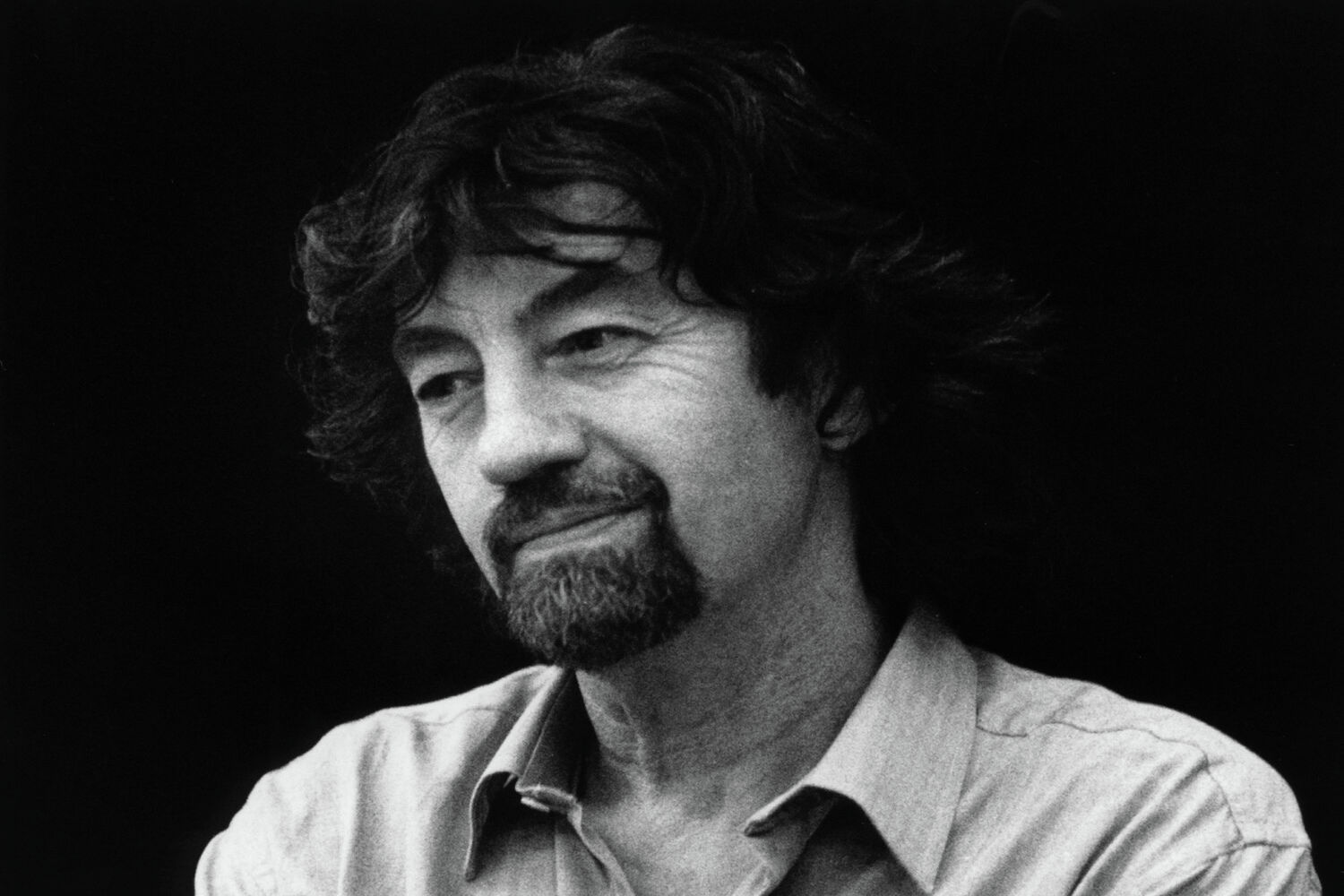
I speak to Sir Trevor Nunn three days after the press night for his latest show: Noël Coward’s Easy Virtue at the Cambridge Arts Theatre. Now 85, Nunn is no stranger to opening a show, heralding credits from Cats and Les Miserables to all 37 of Shakespeare’s plays. He talks with an expected wisdom, vividly recollecting a life spent in theatres, but he surprises me with a continued playfulness and love for directing. “Nothing has changed at all, really,” he tells me. Amongst these constants, it emerges, is a life-long passion for Cambridge and its vibrant dramatic scene.
Nunn is, surely, the master of Cambridge theatre. He began, as many Cambridge thespians do, with a prolific run of undergraduate productions at the ADC Theatre, as well as at the Arts Theatre with the Marlowe Society. He laughs as he lists his ADC peers: Ian McKellen, Derek Jacobi, Miriam Margolyes, Humphrey Barclay, and John Cleese, amongst others. “There we all were, together in Cambridge, and it was a very, very exciting time,” he tells me. He has returned on several occasions over the years, whether to direct Marlowe’s Arts Showcase, or to watch his daughter act in her own student shows. But now, via 18 years leading the Royal Shakespeare Company, seven years at the National Theatre, three Tony awards and four Olivier awards, Easy Virtue marks his grand return to Cambridge.
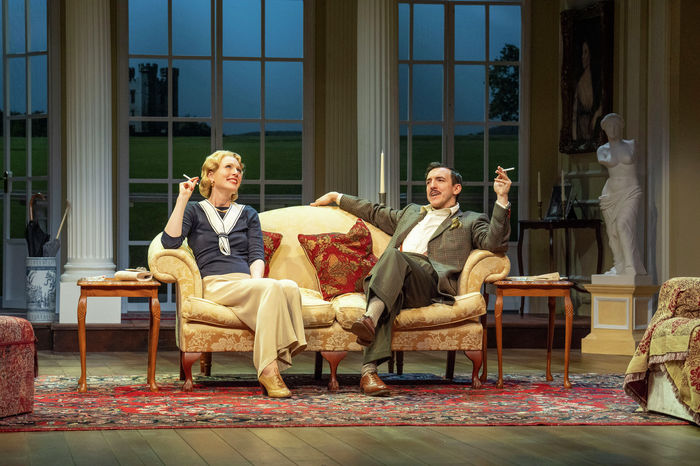
I ask why he chose Coward’s 1924 play – which Nunn describes as a “serious comedy” – for such a sentimental project, which marks the official re-opening of the Arts Theatre after its renovation. Nunn expresses an interest in the “revolutionary” qualities of this play: “Coward wrote Easy Virtue when he was 24 years old, and when he offered the play to a London management, they discovered that it was banned by the Lord Chamberlain’s office. It was too risque, too sexual.” Nunn admires the “extraordinary” nature of Coward’s young, daring writing.
I’m reminded, in these descriptions of Coward, of a young Trevor Nunn and experiments with theatre, starting at Cambridge. Like Coward, Nunn’s career started early – he was appointed as Artistic Director of the Royal Shakespeare Company in Stratford when he was only 27 years old. I describe this as unprecedented in today’s climate, to which he responds: “I do assure you, it was unheard of then too.”
A mixture of luck and diligence appears at every stage in Nunn’s blazing career. Take, for example, his admission into Downing College to study English in 1959. “I came from a very working class background, and my parents couldn’t possibly have afforded me to have a university career,” he says, but an open scholarship subsidy allowed him to take up his place. He used his time between school and university to establish a youth theatre company, setting his mind on directing.
His transition into professional theatre took a similar degree of luck. “One day, I was walking back from the ADC to my college, past Senate House,” he tells me. “I found two or three people on platforms and an audience of dons and teachers. Sitting on stage was the don George Rylands, who looked after the Marlowe Society.” Also on stage was Peter Hall, the newly-appointed leader of the RSC. He delivered a speech, outlining a shift towards an ensemble-based theatre model that would revolutionise British theatre. He tells me: “As I crept out of the Senate House that day, I thought all I ever wanted to do with my life was to work for that man. And I got incredibly lucky, because three or four years later, I was working for him, and then shortly after that, he asked me to run the RSC. Coincidence and luck plays a great part.”
He attributes much of his career to luck – even discovering a young Hugh Jackman when he directed Oklahoma! (“He did okay, didn’t he?”). At another time, Nunn “needed to transfer small-scale theatre to London” from Stratford. He recalls: “I found – literally – a warehouse called the Donmar Warehouse, and went to the owners to ask their permission if we could set up a small-scale auditorium in their warehouse. And they said yes.” Still running today, the Donmar is one of London’s most popular off-West End venues, taken over in following years by fellow Cambridge alumni Sam Mendes and Josie Rourke. Such is Nunn’s influence and legacy that this anecdote is merely brushed over in our conversation.
“What has carried Nunn through all these years of luck and hard work is a consistent directorial ethos”
He is frank in admitting varying degrees of success across his career. He describes how “there are times when Cambridge student theatre is more flourishing than other times, and there are good-luck periods for all theatre companies.” His ‘good-luck periods’ have been plentiful: “18 years I ran the Royal Shakespeare Company, and I had the most wonderful time.” His tenure at the National Theatre appears more challenging: “I didn’t even apply for the job, I was begged and urged by the board.” Some projects have been more mixed: while he describes the continued success of his Les Miserables as “thrilling,” he feels that recent changes in the set design and acting style were simply to “make the show that much more commercial and cheaper to run”.
What has carried Nunn through all these years of luck and hard work is a consistent directorial ethos: “It’s very important to create the world of the ensemble, where everybody involved feels equally involved and everybody is interdependent. I passionately believed in that as a student, and my student groups all responded to that. The rehearsal process isn’t a director saying ‘do what I tell you’ … it’s a dialogue. It’s two-way traffic. The director learns from the acting company just as the acting company learns from the director.”
It is easy to see how much Nunn cherishes his theatrical education at Cambridge: “I acted in shows at the ADC: the brother of Grusha in the Caucasian Chalk Circle, that was a terrific experience. And we did new plays – I directed Serjeant Musgrave’s Dance by John Arden, the first and only production after it opened at the Royal Court Theatre in London.” Easy Virtue is sentimental to him, not just as a return to Cambridge but also to his beloved Arts Theatre, where he directed three plays for the Marlowe Society: The Taming of the Shrew, Much Ado About Nothing and “the Scottish play”.
“I would have to say – be as daring as you possibly can. Don’t take no for an answer”
Now in its final weekend at the Arts, Easy Virtue is almost a medley of Nunn’s entire career, balancing a Shakespearean central figure with the slapstick comedy of his musical theatre work. Significant, also, is the inclusion of several Cambridge students as ‘supernumeraries’ – demonstrating his focus in looking forward to the next era of theatremakers.
In this spirit, Nunn praises the current state of Cambridge theatre: “I went for nostalgia walks during Easy Virtue to the ADC, and saw that there were lovely posters and the ADC was flourishing. It’s just so exciting that the ADC is still going full blast – how wonderful.” Now the Arts Theatre is re-opened, he celebrates new creative director, Rachel Tackey: “She’s very daring and very bold - a brilliant, brilliant manager.” The Arts Theatre has plans to open a 200-seat studio space in Phase Two of their redevelopment; Nunn tells me that “it would be thrilling to have the big and small theatre on the same premises, absolutely thrilling.”
Easy Virtue is not intended as a swansong for Nunn. He tells me about future projects: American transfers of new musical The Third Man and the Brian Cox-led play The Score, as well as an immersive experience presenting the life and work of Andy Warhol, which he hopes to stage over the next few months.
As he looks back, I ask for his advice to Cambridge students, particularly those looking to follow him into the theatre: “I would have to say – be as daring as you possibly can. Don’t take no for an answer. Pursue the ideas even when management bodies say ‘no, no, I’m not sure we can afford that.’ That’s what we had to do on so many occasions when I was part of the ADC.”
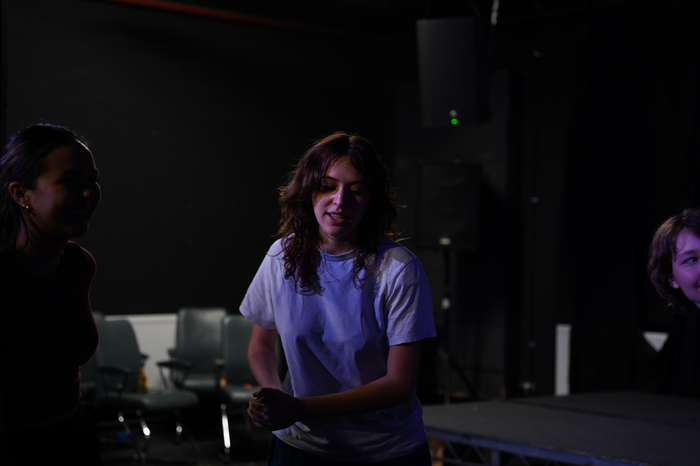
I imagine that his legacy will be characterised by this “daring,” Noël Coward-like mission that Nunn took from Cambridge to the international stage. As he points out, the potential for today’s students to take on his mantle is rife, with the re-opening of the Arts, the continued thriving of the ADC, and the ongoing work of his former societies: CUADC, Marlowe and the Footlights. “Have the courage,” he tells me as we end our conversation, and I am certain that this courage is what has driven Nunn forwards, from his first ADC show in 1959 to Easy Virtue and beyond.
Easy Virtue is on until March 7th at the Cambridge Arts Theatre.
