
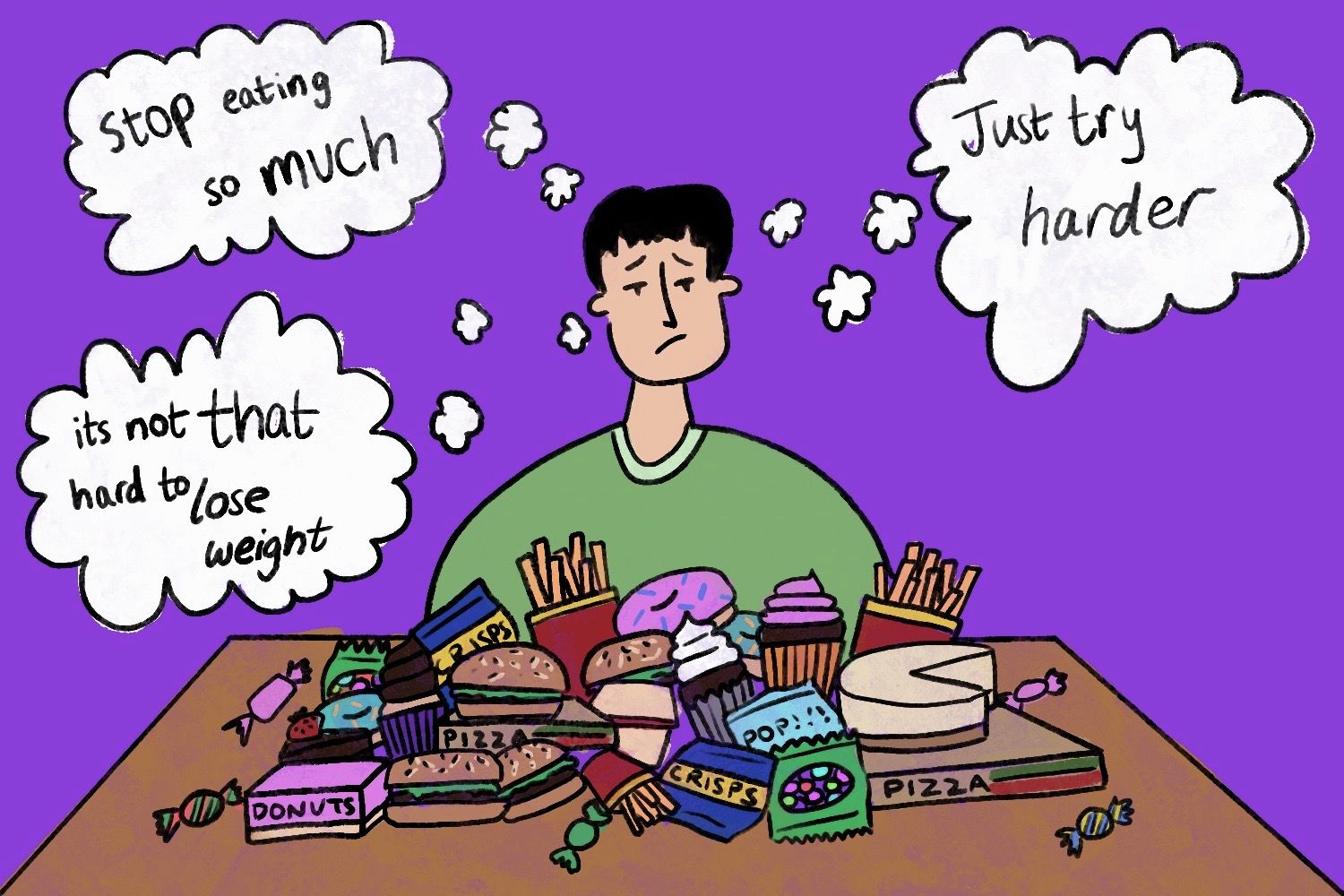
How many times have you followed a strict diet, restricting cravings for weeks, only to feel guilty when a single snack seems to undo your progress? For many people, this cycle is painfully familiar: initial motivation, disciplined effort, a moment labelled as ‘failure’ and the lingering belief that success ultimately comes down to willpower we somehow lack.
But is body weight really just a matter of discipline and self-control? Scientific research increasingly suggests that this perspective captures only a small part of a far more complex story.
Modern conversations around diet and weight are shaped by an overwhelming flow of information – especially on social media. Calorie deficits are presented as universal truths. Meals are tracked as if their complexity can be reduced to a single number.
How much protein is enough? Too many carbohydrates? Is fasting the answer? Each new trend promises a quick fix. Yet in this crowded – and often contradictory – landscape, failure to achieve lasting change can start to feel like a personal flaw rather than a reflection of biological complexity.
In reality, appetite and body weight are regulated by intricate physiological systems that evolved to maintain energy balance and protect survival. Hormones such as leptin, ghrelin, insulin, and glucagon-like peptide-1 (GLP-1) coordinate communication between the gut, brain and metabolic tissues, shaping hunger, satiety and energy expenditure.
“Failure to achieve lasting change can start to feel like a personal flaw rather than a reflection of biological complexity”
When calorie intake decreases, the body often pushes back. Hunger signals increase, and energy expenditure may slow. These are not signs of weakness – they are adaptive mechanisms that once protected against starvation, but now complicate sustained weight loss.
Insulin resistance offers another example of how metabolism extends beyond simple calorie balance. Insulin, a hormone central to glucose regulation, helps cells absorb energy from the bloodstream. Over time, factors such as genetics, chronic stress, sleep disruption, dietary patterns, and sedentary lifestyles can reduce the body’s sensitivity to insulin.
The result is a cascade of compensatory changes that influence hunger, fat storage, and energy utilisation. While insulin resistance is frequently discussed in the context of diabetes, it plays a broader role in metabolic health. Importantly, its development cannot be traced back to a single food choice or moment of ‘poor discipline’. Instead, it reflects long-term interactions between biological susceptibility and environmental exposure – again challenging the idea that willpower alone determines weight outcomes.
“These are not signs of weakness – they are adaptive mechanisms that once protected against starvation”
Understanding obesity, therefore, requires moving beyond the notion of personal responsibility as the sole driver. Researchers increasingly describe it as a multifactorial condition shaped by genetic predisposition, neuroendocrine regulation, psychological influences, socioeconomic context, and environmental exposure.
Large-scale genetic studies have identified variants associated with appetite regulation and reward pathways, suggesting that individuals begin from different biological starting points. At the same time, social determinants – income, access to nutritious food, cultural norms, and time constraints – quietly influence daily choices in ways that are often invisible in behaviour-focused narratives.
The environment itself has changed dramatically over recent decades. Many researchers describe modern societies as ‘obesogenic’, characterised by the widespread availability of energy-dense, highly palatable foods engineered for convenience.
Often referred to as ultra-processed foods or UPFs, these products are formulated with refined ingredients, additives and textures designed to enhance reward. They are not inherently harmful in isolation. But their accessibility and sensory properties can interact with biological reward systems in ways that encourage overconsumption.
Epidemiological studies consistently associate high intake of UPFs with increased risk of obesity, cardiovascular disease and metabolic disorders. While causality remains debated, the patterns are difficult to ignore.
Environmental influences extend beyond ingredients. Socioeconomic inequalities shape food environments. Marketing strategies influence preferences from an early age. Even food packaging – which may contain endocrine-disrupting compounds – has become an area of scientific investigation.
“The idea that health outcomes depend solely on individual choice becomes increasingly difficult to defend”
Together, these factors create a landscape in which biological vulnerabilities intersect with environmental pressures. In such a context, the idea that health outcomes depend solely on individual choice becomes increasingly difficult to defend.
Against this backdrop, the rise of GLP-1 receptor agonists such as semaglutide has sparked intense public and scientific debate. Originally developed for diabetes management, these medications target physiological pathways involved in appetite regulation, helping individuals feel fuller for longer and reducing food intake.
Their effectiveness challenges long-held assumptions. If altering hormonal signalling can significantly reduce hunger and facilitate weight loss, then biology clearly plays a more central role than traditional narratives suggest.
At the same time, these therapies raise important questions. Many individuals experience weight gain after discontinuation, reflecting the body’s tendency to defend its energy balance. Moreover, medications do not automatically transform dietary habits. If previous patterns remain unchanged, weight regain is almost certain once treatment stops.
This mirrors what is often observed after conventional calorie-restricted diets. Sustained weight loss appears less like a one-time behavioural victory and more like an ongoing biological negotiation.
Debate surrounding these medications highlights deeper societal tensions: is obesity a moral failing, or a chronic condition influenced by biology and environment?
“Sustained weight loss appears less like a one-time behavioural victory and more like an ongoing biological negotiation”
For students juggling busy schedules, financial constraints, and an endless stream of health advice online, these conversations can feel overwhelming. Simplistic narratives are appealing because they offer clarity. They promise control.
Yet science increasingly suggests that there is no universal strategy – no single diet, fasting protocol, or nutritional rule that guarantees success for everyone. Instead, effective approaches often require acknowledging individual variability, environmental context, and the powerful regulatory systems that shape appetite and metabolism.
Equally important is cultivating greater awareness of ingredient labels and the broader health implications of UPFs – not only for weight, but for long-term metabolic wellbeing.
Reframing obesity through this lens does not remove personal agency. Rather, it challenges the idea that success or failure reflects character alone. Understanding the interplay between biology, behaviour, and environment allows for more compassionate conversations – both socially and internally.
Ultimately, the question is not whether willpower matters, but whether it tells the whole story. As scientific understanding evolves, so too must our narratives around health. Recognising obesity as a complex interaction of biological systems and societal structures may allow us to replace simplistic blame with informed understanding – and reshape how we think about responsibility, wellbeing, and modern nutrition.
Can insulin resistance be improved through lifestyle changes? Yes. Can we move towards a more intuitive and sustainable relationship with food? Absolutely. Can nutrition be used strategically – to support fat loss, muscle development, or healthy ageing? Again, yes.
But none of this is possible without a deeper awareness of our biology, the physiological pathways that regulate metabolism, and the food environments that shape our choices.
