
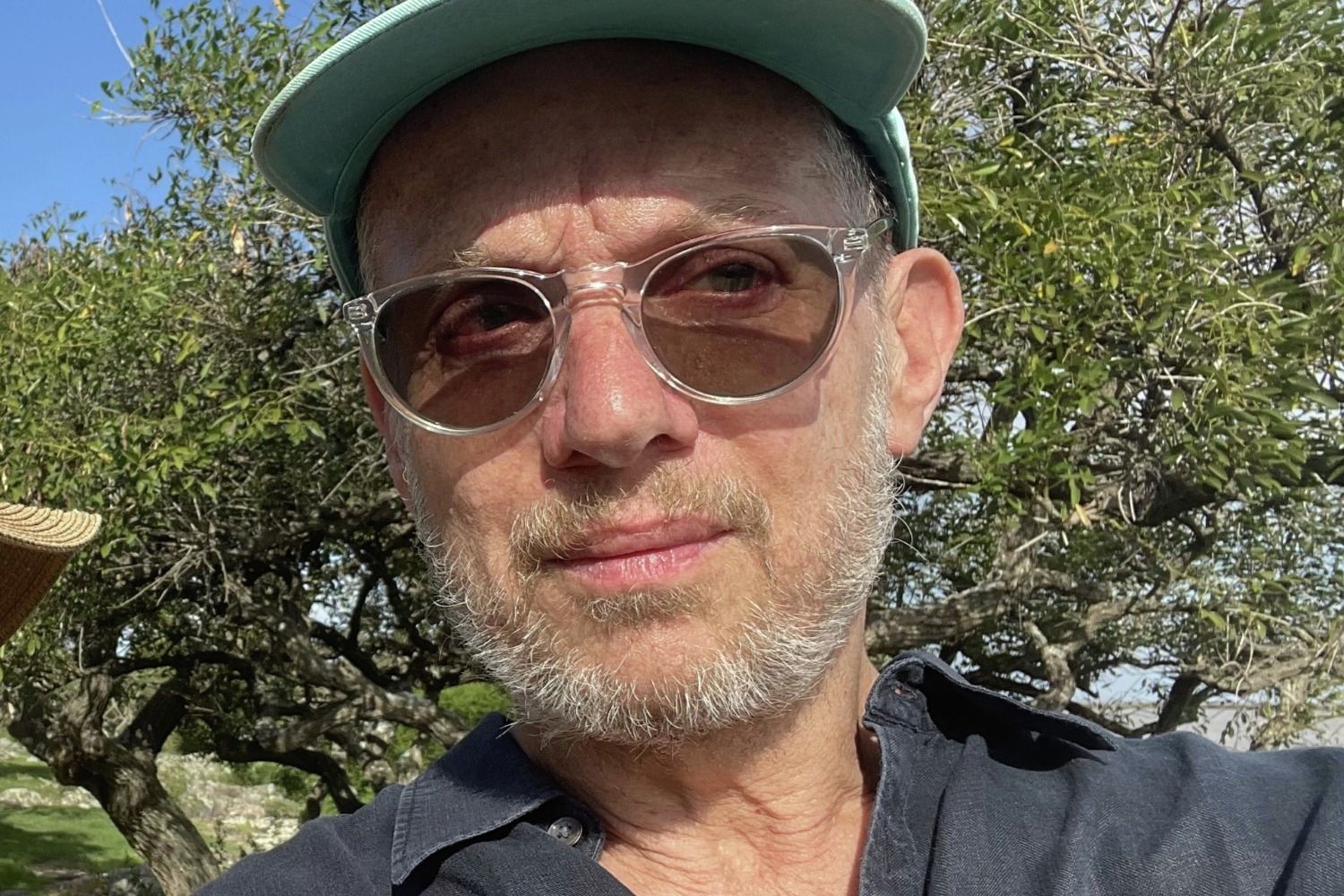
Editor, journalist, author, and teacher: D.D. Guttenplan has worn many hats over the last few decades. From his book The Holocaust on Trial to his recent column on Zohran Mamdani in The Nation, the subject matter he has covered is similarly broad. Now based in New York – “the political centre of the nation,” as he calls it – Guttenplan has brought an international perspective to his illustrious career.
Born in Virginia, Guttenplan came to study at Clare College on a Kellett fellowship from Columbia University. He tells me about the elitism he thought Cambridge fostered, recounting when he was first shown his ‘rooms’: “It made me realise the difference between going to a university that, in theory, was an elite institution, and going through a university that had been catering to the upper classes for generations.”
Guttenplan had graduated with a joint-honours in English and Philosophy from Columbia, and came to Cambridge to study English. He describes the experience as transformative: “I had a very fixed view of literature at the time, which was that it was mostly soft, and repressed.” On his supervisor’s advice, he read Henry James’s short stories. “I fell in love with Henry James, and that love has only grown over the years. It definitely decentred my view of what fiction could do and what English language could do in the hands of a master.”
“As a Jew in Cambridge at that point, I felt very out of place”
He mentions the influence that his Jewish identity had on his dissertation choice – the King James Bible, focussing “essentially on its debt to Hebrew prosody.” Why did he choose that? “I think I did it because, as a Jew in Cambridge at that point, I felt very ‘out of place’ – to use my Columbia teacher, Edward Said’s phrase. I really felt like this was not an institution that I fit into or that was really interested in having me fit in.”
He contrasts attitudes to student life in Cambridge and Columbia: “People would always say, I’m so busy working. And I thought, at Colombia, I took 30 credits a year, so that’s six courses a term… And I still had plenty of time to become a punk rock musician and explore New York and do all the things the students do. But people at Cambridge were so serious about their work. Maybe this was the compensation for being so obviously pampered.”
Moving on from academia to a storied journalism career, Guttenplan recounts the article he wrote for the New York Times on David Irving, the English historian found to be a Holocaust denier as a result of a libel case against Deborah Lipstadt. He interviewed academic historians to ask their view on the matter. “To me, one of the virtues of journalism is that you can go into things head on, and without a lot of theory.” After the piece was published, he was offered a contract to write his book, The Holocaust on Trial – a breakthrough which “opened the door to British literary and journalistic life”.
I ask him about the thorny questions of censorship and free speech that the libel trial raised. The former Pulitzer Prize finalist says that he is against the criminalisation of political speech: “America has the First Amendment, which I think is a good thing, and Britain has an almost equally robust tradition of free speech. That’s an artefact of our histories, and the Austrians and the Germans have very different histories.”
“We have a saying at The Nation: if it’s bad for the country, it’s good for The Nation”
Guttenplan compares this to the culture of today: “At the time, the danger of fascism in either of our countries seemed remote. I’m still in favour of robust free speech in the Anglosphere. But you could probably argue the other side with more cogency these days. My views haven’t changed, but the culture has certainly shifted.”
Over the last six years, Guttenplan’s time has been occupied by his editorship at The Nation – a period that has seen the backend of Trump’s first term and the beginning of his next. “In 2019, Trump was president, and I felt like my main task was to help organise how to keep him from being re-elected.”
Guttenplan then describes how Covid and movements like BLM changed things, making running a left-wing magazine as a “white guy” a “high wire act”. He particularly laments the move to remote and hybrid working that followed Covid: “I think journalism is a contact sport – it’s much better when you have people face to face.”
During the Biden years, Guttenberg feels the Democrats became “complacent”. He goes on to assert: “We have a saying at The Nation: if it’s bad for the country, it’s good for The Nation.” Guttenplan thinks that Biden should have stepped aside in the 2024 Presidential Campaign. Additionally, he believes that Harris “lacked the moral courage” to break with Biden over Gaza, asserting: “They wouldn’t even let a Palestinian speak at the convention. That demobilised a lot of people, including a lot of people who read The Nation.”
“I think the first obligation of any journalist is not to lie. So, I try and keep that in mind”
Last year, Guttenplan decided to leave his editorial position. He said to Katrina Venhueel, who hired him as The Nation’s editor: “if Harris wins, I’d stay on for another year, and if Trump wins, I’ll go”. He tells me he feels that he “did that once,” and it was a “great honour”.
Shifting to the future, the conversation turns towards what is perhaps a sign of hope for the Left in the United States. Tasked with endorsing a New York Mayor, Guttenplan went to a Mamdani fundraiser, skeptical of the Democrat’s chances. He explains: “He’s pro-Palestine and New York is the largest Jewish city in the world. And I still didn’t think he had much of a chance, but he came in and asked for our endorsement and was tremendously charismatic and impressive.”
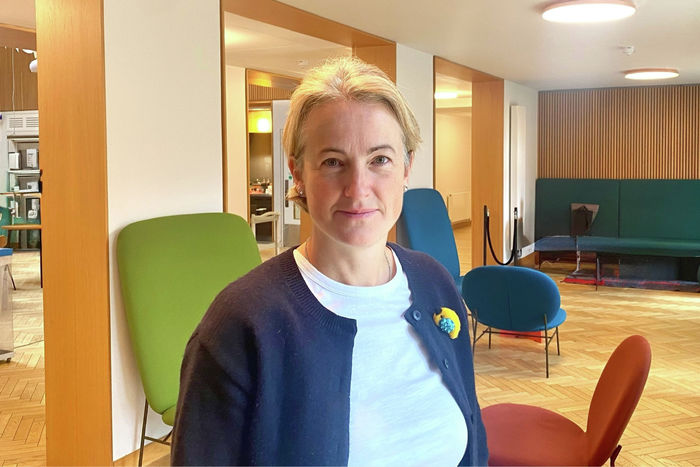
Guttenplan is now writing a weekly column on Zohran Mamdani from City Hall. “If [Mamdani] keeps what he said in his inaugural address – ‘I was elected as a Democratic Socialist, and I intend to govern as a Democratic Socialist’ – then that could have huge political repercussions. Particularly in a country which I hope is getting fed up with authoritarianism.”
Our discussion concludes with a reflection on integrity and self-discipline in journalism; I get the sense that this is central to Guttenplan’s ethos. “If (Mamdani) does [keep to his convictions], I’ll be there to write about it. If he doesn’t, I’ll have to write about that, too, because as I think Trotsky said in the Balkan Wars, ‘the first job of a foreign correspondent is not to lie’. And I think the first obligation of any journalist is not to lie. So, I try and keep that in mind.”
