
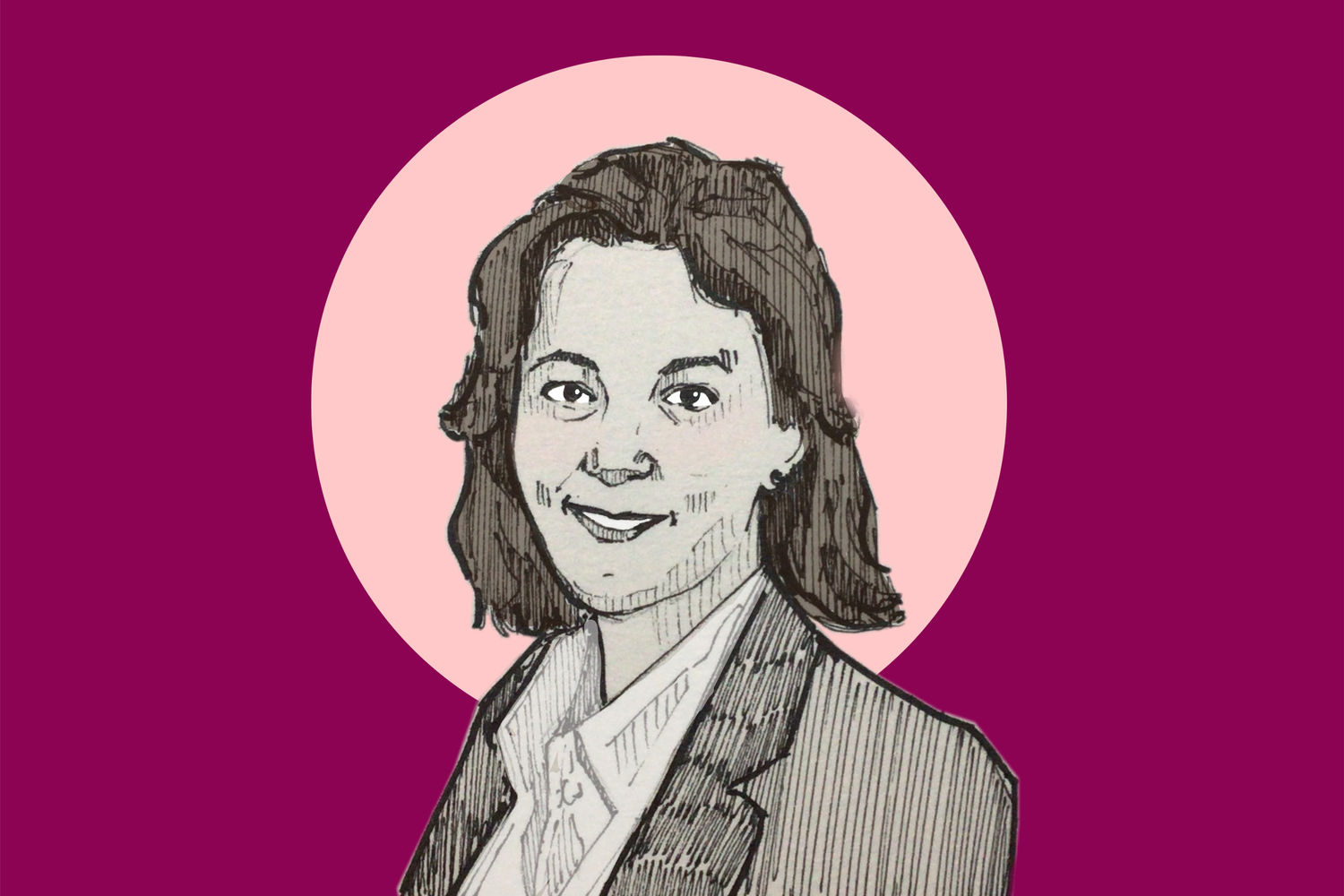
What would it take for you to share your most traumatic experience with the world? For Susanna Stanford, stasis wasn’t an option. The systemic flaws in obstetric care were too entrenched to keep her pain buried. After her anaesthesia failed when she was delivering her son via caesarian-section, Stanford became one of the most impactful patient advocates of our time. From co-authoring new guidelines in the medical journal Anaesthesia to featuring on the New York Times podcast ‘The Retrievals’, Stanford has transformed her excruciating experience into a force for change. But what was going public with her story really like?
Wait – let’s backtrack. Calling Stanford’s experience a “story” is loaded, as she points out. We often praise the strength of those who ‘share their stories’, but Stanford notes how this phrase “implies fiction”. She describes the “duality in the language that’s used for patients and clinicians: patients complain, clinicians report”.
We don’t discuss Stanford’s lived experience of intraoperative C-section pain directly – I want us to focus on systemic issues rather than situational details. But for context, what you need to know is this: Stanford’s epidural block didn’t work during her C-section surgery, so the area meant to be numbed wasn’t numb at all. She could feel the entire operation. As shocking as it sounds, pain during a C-section is surprisingly common: a study in Anesthesiology finds that patients report pain in 7.6% of C-sections across the USA and Canada (that’s over 100,000 people per year). Stanford predicts that the Snapshot Obstetric National Anaesthesia Research (SONAR) study, currently underway in the UK, will likely find a higher number.
“Any discomfort I might’ve felt […] has been worth it because of the responses from women”
However, like many, Stanford didn’t know how widespread this problem was at first. After her delivery, the trauma impelled her to search for other women who had suffered similarly. 150 women disclosed their comparable experiences, which gave Stanford the conviction to act: “I thought, I know it’s not just me”. “The other women had given me the confidence, but they also created the situation where I felt like I had to come forward”. What arose for Stanford was a feeling of duty: “you think, I’ve got to stand up for you, and somehow, I thought I had the ability to”.
But, after the survey, Stanford describes the way that her actions accumulated unexpectedly, like some sort of advocacy avalanche. “‘I’ll write a letter a letter and that’ll be it’ became ‘well, I’ll speak once’, and then, ’holy moly, well they really need guidelines… so we’ll do that’”. At first, contributing to medical literature in Anaesthesia felt understandably daunting. Stanford has a degree in psychology, but she isn’t a medic, so “being asked to critique a very big systematic review by very big names in the biggest of the anaesthesia journals” was a baptism by fire.
The systematic review used 54 studies from across the globe, studying the data of 3,497 patients. Although 14.6% needed extra anaesthesia or analgesia with their epidural block, the study only counted cases as ‘genuine failure’ if they required general anaesthetic (a measure often avoided in C-sections), lowering that figure to 0.06%. Crucially, Stanford points out that all 54 studies had taken “clinician-determined interventions as surrogates for patient pain,” with not one of them asking the patient themselves.
These interventions depend on a clinician “hearing a patient, believing them, and acting,” all fallible factors. Stanford emphasises that, when you chart patient-reported pain with clinician’s reports, false positives and false negatives arise, thus: “you can only know if you ask patients”. There lay the subject of Stanford’s editorial: “you cannot adequately evaluate pain without your patient-reported experience measures”.
“There is no other surgery where intraoperative pain is ever accepted. None”
But how did Stanford go from changemaking within healthcare systems to sharing her experience on a worldwide scale? “I’ve done very little on the casually consumable media side of things,” she tells me, just ‘The Retrievals’. Beforehand, she had to earn the trust of the establishment by not going to the press. “If you’ve got the seat in the room, you can’t jeopardise [it], so, if you like, you’re the second journalist who has ever interviewed me!” (I blush, journalist who?). After the guidelines were published, however, the patient advocate realised the necessity of communicating it to the public. “Any discomfort I might’ve felt […] has been worth it because of the responses from women”.
Nevertheless, the difference between sharing your pain with medical professionals and an unseen audience of NYT listeners was sharp. Stanford recounts: “In a confined room, maybe there are 600 anaesthetists, but nobody even knows you”. The memory of going “public public” still makes her wince, but her core remains strong: “it’s not about me, it’s about the message”.
Off the record, Stanford had mentioned that she didn’t feel “match-fit” to discuss this issue with me, but throughout our conversation, she’s practically Chloe Kelly. Citing studies and statistics from memory, her indignation fuses with her expertise to form consistently compelling arguments. She mentions a target published by the Royal College of Anaesthetists in 2012 (not removed until 2020) which suggested that pain was acceptable in up to 20% of emergency caesarean cases. “There is no other surgery where intraoperative pain is ever accepted. None. That can only have occurred with the systematic dismissal of women’s voices”.
Pressing this point further, Stanford observes that a far rarer phenomenon, accidental awareness under general anaesthesia (AAGA), is taken incredibly seriously. I remark that I’d heard about AAGA far more, and Stanford exclaims: “because it’s sensational, right?!”. Studies suggest that AAGA’s severity of harm is similar to that of intraoperative C-section pain. But as Stanford argues, the “tragically universal” culture which tells women ‘if the baby’s alright, that’s all that matters’ encourages society to accept pain during C-section as ‘more natural’.
“It’s not just getting into the room where it happens, it’s reading the room”
Stanford remembers a woman who publicly reached out to her, who thought she was going to “die on the operating table” from intraoperative pain. Then, the following day, her baby passed away. This woman had never spoken to anyone about her intraoperative pain – what had happened to her baby had made her feel like she couldn’t, even though “those two experiences would’ve been compounding trauma,” Stanford observes. Her experience, says Stanford, proves the danger of the messaging that women having babies are expected to “shut up and put up”.
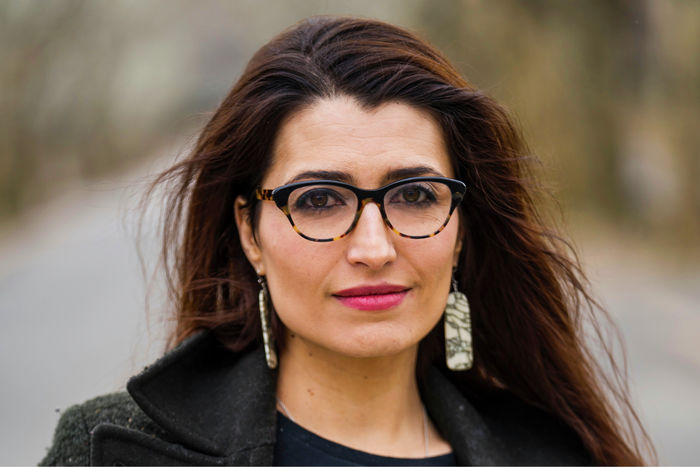
In the Cambridge landscape, Stanford works with The Healthcare Improvement Institute (THIS). There, she contributes to teams that research the reduction of avoidable brain injury in childbirth and the development of intrapartum fetal monitoring systems. Involved with the Public and Patient Involvement (PPI) team, Stanford ensures that maternal concern stays a consideration. “Midwives will tell you, mothers are often half an hour ahead of their clinical signs”. So, by devaluing maternal concern in obstetric medical research, it often “completely undermines what you are trying to achieve”.
Nearing the close of our conversation (which, planned to be twenty minutes, had now lasted well over an hour), I ask Stanford for her takeaway wisdom on patient advocacy. She stresses the significance of careful communication: “it’s not just getting into the room where it happens, it’s reading the room”. It’s paramount, too, to be “absolutely up-to-speed with” the issue you want to change, otherwise you “risk diluting yourself,” Stanford notes. “If you’re the patient coming in as an outsider, you have to get it right”.
