
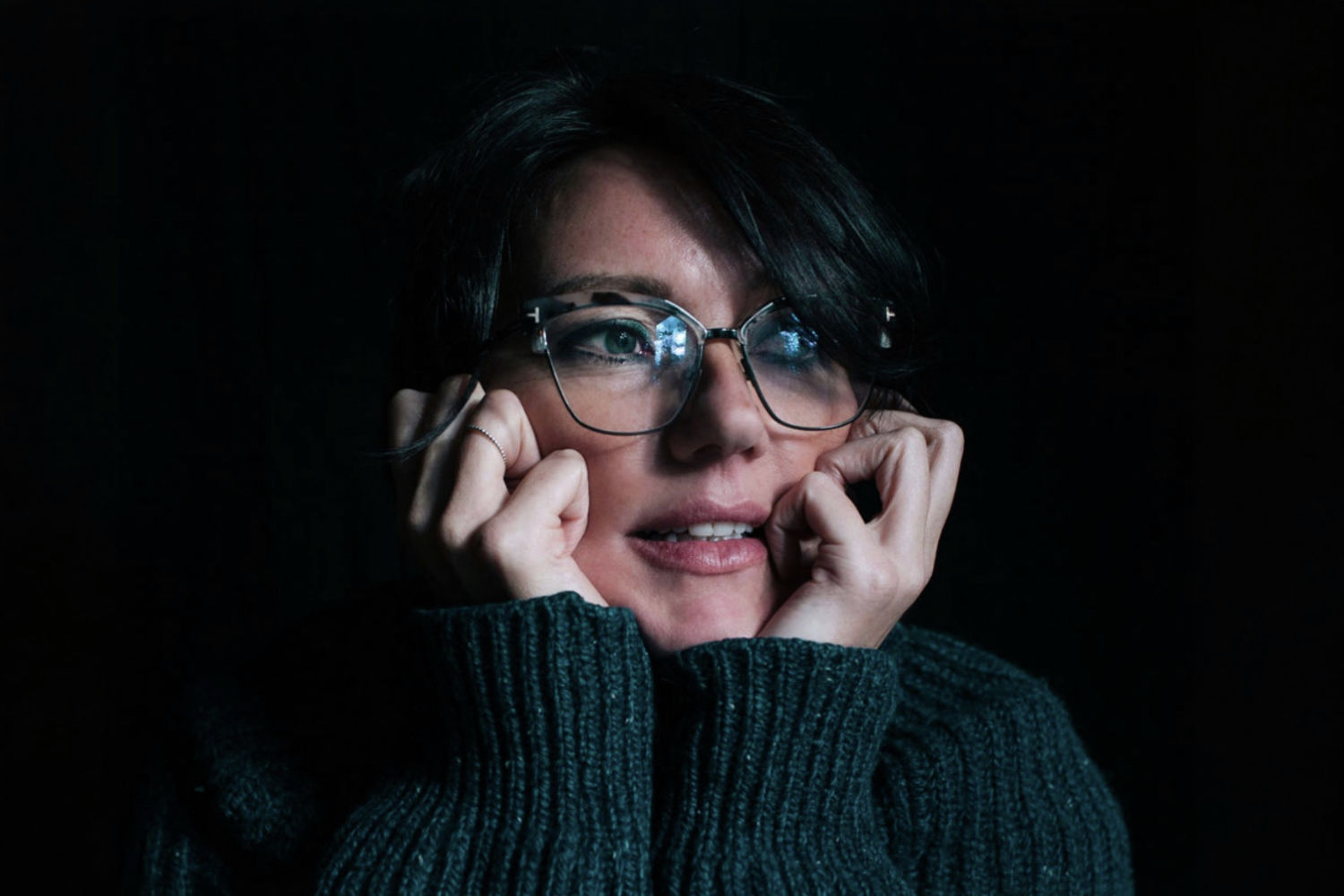
“It’s the worst torture because you never switch off.” ‘Torture’ is not often the first word people use to describe their line of work, but perhaps for Cambridge students it’s rhetoric that will resonate when they next lie awake thinking about diss proposals, or having visions of integrals dancing in the shadows cast by branches on their bedroom walls. For writer and television producer Helen Serafinowicz, this manifests as “everything [becoming] a possible line”.
“Once I painted a wardrobe while I was on hold to BT – I always wanted to have an episode of Motherland where one of the characters was on hold for a long time, and we managed it when Julia’s on hold with the Verlux window people when she’s falling in love with her builder.” Unsurprisingly, Motherland, like many sitcoms, is based in reality – “embellished situations that have actually happened” – and listening to Serafinowicz only revealed more and more scenes in the show that have been directly lifted from her day-to-day life. “When we were pitching Motherland, the initial reaction from one of our producers was ‘it just sounds like a lot of moaning women’, but there’s a much deeper insight to it.”
“We didn’t – or I certainly didn’t – have the intention of making a feminist show”
As a show written by women, about women, and for women – to me, at least – Motherland is an inherently feminist show. “It’s funny you say this. We didn’t – or I certainly didn’t – have the intention of making a feminist show. The school gates is typically a female-heavy environment, full of mums who are juggling everything or have sacrificed their careers to raise their kids. They’ve left a grown-up job to join the world of people that are left behind in society.” The beauty of Motherland stems from how clearly the writing reflects real life experiences, rather than a script produced through imagination. “We wrote series three during COVID. It was quite poignant because we were all women trying to write a sitcom, but also acting as the glue of our households. We felt like we were probably the only writing team that were just hanging out the washing and putting the dinner on as we were on Zoom.”
But, of course, Motherland is far from the only project Serafinowicz has been involved in. “I’m 52, and I still don’t know what I want to be.” She started out at Cartoon Network: “I kind of tripped into a job, which was to watch loads of cartoons and make little trailers for them. It was so much fun – we were all in our 20s, and it was quite typical to arrive and someone would be hiding under your desk to jump out.” Alongside this, she began writing sketches: “I was on holiday, and there were these two couples that were British and German. You could see they’d become friends, but couldn’t really communicate. And so I wrote this sketch for Armstrong and Miller of a British couple trying to explain what crazy paving is to a German couple.” She explains how ‘being a writer’ was never something she’d aimed for; she presents it as a career that evolved by chance rather than through careful engineering.
“The best comedy comes from experience”
It’s the mundane that provides Serafinowicz with her material, and the birth of Motherland was no different. “I became a mum, and noticed that there were a lot of funny things happening to me. I had this Google doc, not knowing where it was going to lead, but I would just add to it all the time. It was almost like having a journal. I was forming characters and situations just from what I was observing. The best comedy comes from experience.” She touches on how her “mission” when first entering the world of motherhood was to find her “cohort,” and follows immediately with an anecdote from a friend who was once late to a baby group: “At the entrance, another mum who looks kind of similar to her – unshowered, hair’s a bit of a mess – and she said to this woman, ‘do I smell of wine? ’ and she replied ‘no, do I? ’ and they became really good friends.” For any fans of the show, you’ll recognise this dialogue between Julia and Meg in season two.
“I really like to stick my nose in the school and look at the funny side of it. I went on this trip and the coach driver gave paracetamol out to the parents because he was preparing us for what a headache the day would be. The next time, I brought lollipops because I’d heard this advice from a police officer, who had this problem with a bingo hall. All these women would come out after their night of bingo, all yapping at 11 o’clock, and the residents were complaining about the noise. And so they’d hand out lollipops, and that would quieten them; so I used that in real life and brought lollipops with me on the next school trip. It was quite a genius trick.” Listening to Serafinowicz’s anecdotes, I find it hard not to chime in with my own. I have relatively quirky parents – my father greets the postman in a fez and dressing gown.
She brings up how sports day differs between independent and state schools; I recount how, at the village primary school in rural Norfolk, my mother attended sports day for the first time. At midday she brought out the Pimms, only to discover that was not appropriate. “Write it down, write all of this down,” Serafinowicz responds, “you never know where you can use it later on. I go back to my old documents and think ‘great, I can use that’.”
“Avoid using AI! I get a lot of scripts sent to me that are clearly AI’d up to the eyeballs”
I ask what other advice she’d offer to a student hoping to pursue a similar career. “Avoid using AI! I get a lot of scripts sent to me that are clearly AI’d up to the eyeballs. People can recognise they’re in a funny situation, so I get a lot of ‘have you ever thought about this? ’ – the world is rich, but it’s the execution of it that’s the skill.” As a first step, she suggests “writing to the people that you admire,” or “[volunteering] to be on set to help the art department. It’s such a great experience because you can watch as the writing becomes alive, and see what each department of a crew does and how laborious and tedious it can be.”
During filming, there’s always at least one writer on set. “Perhaps there’s a prop that’s very important in the script, but doesn’t seem important to the crew. Sometimes lines can be misinterpreted if it’s not coming through on the page, and we also try to limit as much ad libbing and improvisation as possible.” Seeing the actors bring the characters to life is unsurprisingly incredible: “you have to pinch yourself […] when we cast Motherland, the actors were exactly who I had in my head.” When she mentions Joanna Lumley, it’s obvious she still can’t quite believe both her involvement and how well she portrays Amanda’s mother.
“All the ‘Amandas’ in my life were pretty alien to me until I became a mum”
Looking back to the earlier stages of production, we discuss the start of the script-writing process: “Kicking off the show, we were in a room filled with hundreds of these colour-coded cards. These anecdotes or situations would then be streamlined for each character we’d created – finding little stories that would fit them was so much fun. We’d then split away into pairs, write three episodes each, and then swap them over. We would fiddle and edit these scripts up until we’re on the set.”
For the majority of university students, the world of motherhood is entirely unfamiliar from one perspective, yet all too recent from the other – watching the show, I can spot these scenarios and characters in my childhood memories. With a working mother, my father did the school run for his two daughters. He’d cry at all our school reports with pride, and the vivid picture of him attempting to dry our damp tights with a hairdryer will never leave me (which, I’d like to highlight, was an unsuccessful technique) – he seems like a textbook Kevin. However, it was my mother who made us breakfast, packed our lunches and made sure the tights had been washed in the first place, all while dealing with some irritating message from her own mother and getting herself ready for work – she really was a textbook Julia. I want to know if Serafinowicz’s childhood perspective ever informed her writing: “Oh it’s so different. I grew up in Liverpool; there were no drop-offs, pickups. It was just ‘get to school and make sure you come home’. Now I’m sort of middle class, but working class at heart – I guess it’s allowed me to observe this world that I was unfamiliar with. All the ‘Amandas’ in my life were pretty alien to me until I became a mum.”
“Motherhood is a relentless stream of experiences that I can tap into”
When Motherland first aired in 2016, I was eleven and my sister nine – we were at each other’s throats every day and only calmed down when we started playing Minecraft (or Mein Kraft?) together. Our mother couldn’t bear to watch the show as it was too excruciatingly accurate – this is something Serafinowicz anticipated: “Would I want to spend my evening, having put the kids to bed, after a day of relentless handwashing and cleaning up puke, to then sit down and watch that again?” Clearly this didn’t put enough mothers off due to the show’s roaring success, and ten years later my mum can enjoy watching it without feeling at risk of a stress-induced rash.

We finish our chat on a subject ever-present to both of us, again from two different angles: both of Serafinowicz’s children are now at university. Every time I move back to Cambridge, I give my mother all my laundry the night before, we leave three hours later than planned, and I’ll have forgotten my pencil case. “Nothing changes. Motherhood is a relentless stream of experiences that I can tap into, and I don’t think it will ever end.”
