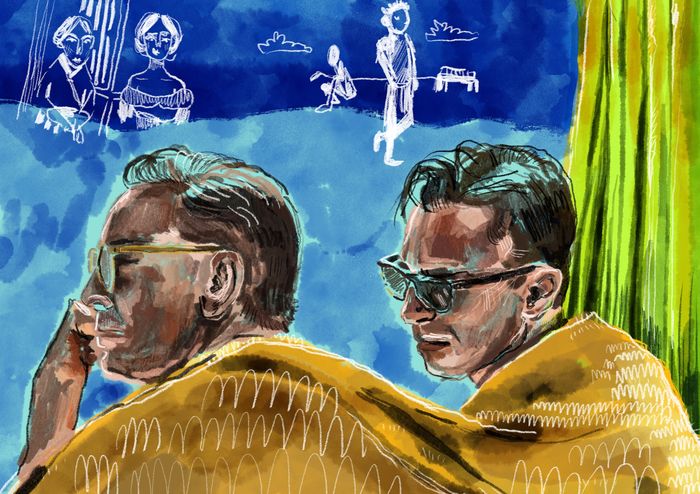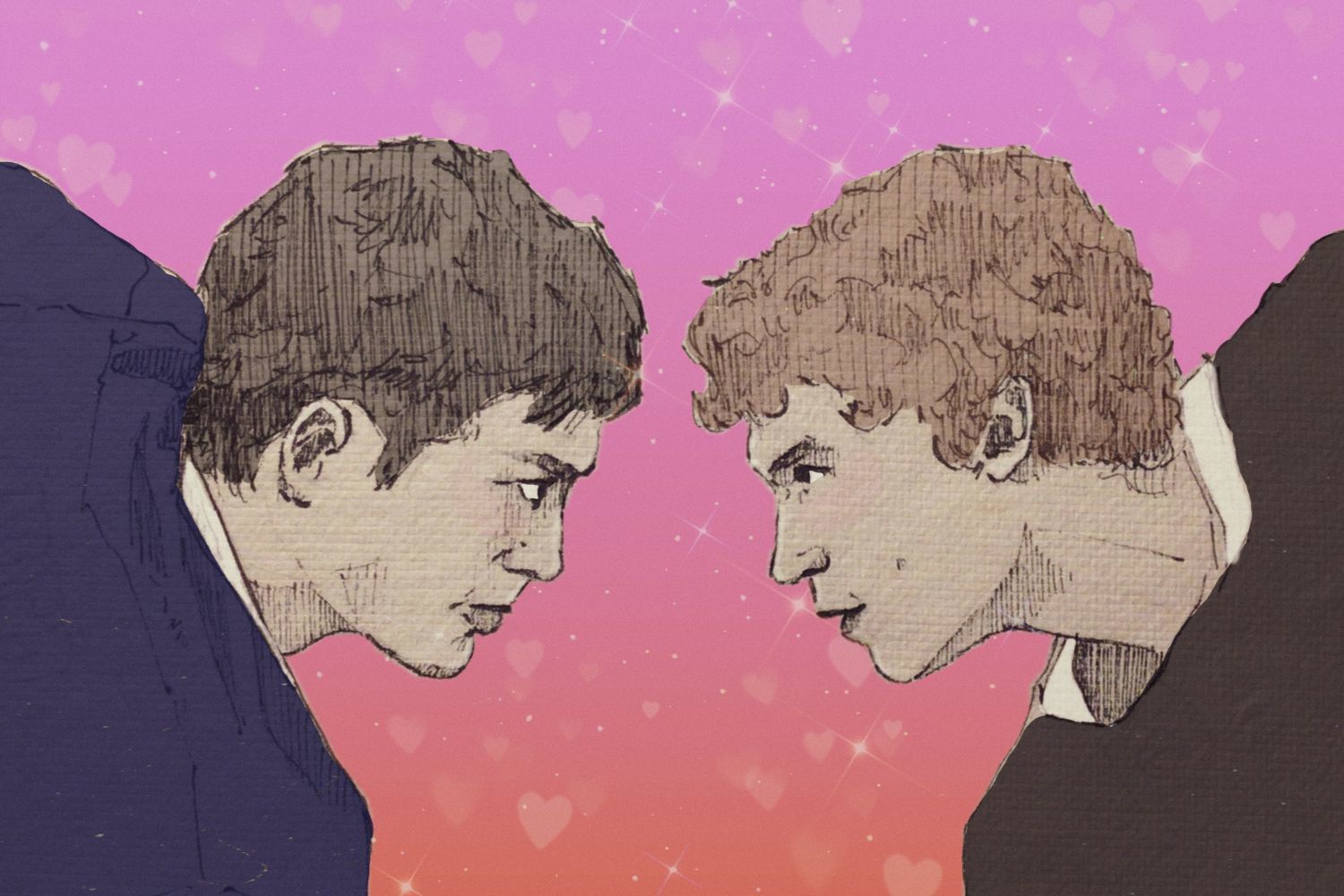
There’s a new sensation in town: premium gay smut. If you’ve somehow missed it, I’m referring to Heated Rivalry, the steamy queer hockey romance from Crave (distributed by HBO MAX). Adapted from Rachel Reid’s novel of the same name (the second in her Game Changers series), the show is written, directed and produced by Jacob Tierney.
The show chronicles the almost decade-long clandestine hookups and blossoming relationship between Russian Ilya Rozanov (played by Texas-born Connor Storrie, 25), star center of the Boston Raiders, and Shane Hollander (Canadian actor Hudson Williams, 24), team captain of the Montreal Metros.
Since its November premiere, the phenomenon has soared to become Crave’s biggest series of all time, one of the top five scripted debuts on HBO Max. The show saw viewership numbers surge by over 400% in its six-episode run, and has been renewed for a second season, to the delight of millions of fans.
Anyone familiar with women’s longstanding appetite for male-male romance and erotica will hardly be surprised. Cast back to the 1970s: Japanese female manga artists – the ‘Year 24 Group’ – pioneered shonen-ai (sweet love stories) yaoi (explicit content), centering idealised male-male relationships with and for a uniquely female gaze. These stories later exploded online with the rise of platforms like LiveJournal, Tumblr and Archive of Our Own, fuelling a female-led literary universe and feeding into mainstream hits like Special Forces and Captive Prince. Hollywood, spotting an opportunity, embraced the genre with smash hits like Heartstopper and Red, White and Royal Blue, proving its universal appeal.
“Funnily enough the show ostensibly about queer men has a target audience of predominantly women”
Author Rachel Reid believes that her texts serve as a welcome reprieve for a female readership: “A lot of my female readers prefer to not have a woman in the book because of their own, usually dark pasts with sex with men… They prefer to get lost in a fantasy where there’s nobody there that they can relate to directly. They don’t want to insert themselves into these sex scenes. It just feels safer.”
However, some queer men have been less than pleased by the show’s highly idealised depiction of queer masculinity. This is not fantasy for them. First, openly gay professional hockey player Brock McGillis praised the show’s intimacy but worried it “might have an adverse effect on a player coming out”.
Actor, writer and comedian Jordan Firstman, who stars on HBO’s I Love LA, was far less diplomatic. In an interview with Vulture, he lambasted the show’s portrayal of sex, saying that the series is designed for audiences who “want to see two straight hockey players pretending to be gay”. A scathing review in The Guardian says the show “is content to exploit gay culture without understanding it in a meaningful way”, and that it “de-sexes gay men just enough to make them palatable, like pets for young women”.
These criticisms bring up a fascinating question. Who has the right to tell these stories? Tierney waves the question off completely.
“We as queer people need to check our messaging,” he proclaimed to the Hollywood Reporter. “[Women are] allowed to write about gay men. The question should be, how are they writing about us? Is it with empathy? Is it with allyship? Is it with kindness? Why are we looking for enemies here instead of looking for allies?”
And this sentiment is one I largely agree with. As readers it is important we engage with a diverse array of narratives. Even the ones that seem foreign – especially the ones that seem foreign. This broadens our understanding of the world around us. Why wouldn’t it be just as important for artists to do the same?
Still, the show (and its source material) repeat common yaoi tropes. By casting Ilya as the dominant, masculine top (seme) and Shane as the submissive, eager-to-please bottom (uke), a problematic link between masculinity and sexual roles is reinforced. This echoes a wider issue in popular queer media, where heteronormative dynamics are simply transplanted onto same-sex relationships.
Even though I am happy to see MM romance books be adapted, I wonder why the ones that seem to generate the most buzz and acclaim are originally written for and by non-queer men instead of works of Bara, media which explores realistic aspects of queer sexuality and community. I wonder why some queer stories are universally elevated while others are left invisible.
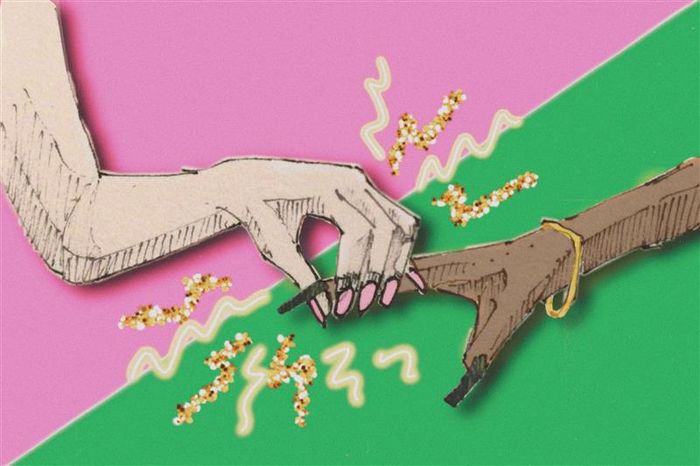
For many, the answer is desirability politics. This is where societal norms, shaped by inequities like racism, colourism and ableism, dictate who gets social power, privilege and opportunities. The social power to be centred in a narrative. The privilege to be seen on a global stage. The opportunity to present at the Golden Globes, walk in Milan Fashion Week or get a personal tennis match invite from Coco Gauff.
In Heated Rivalry, both main and secondary couples embody Eurocentric beauty ideals, exemplified in their light skin, muscular physiques, and normative presentation. On the other hand, their diverse friend groups, which feature Black, brown, plus-sized and more identifiably queer people, are relegated to supporting roles. This trend is echoed in Heartstopper and Red, White & Royal Blue.
This glaring chasm in representation sadly lines up with GLAAD’s Where We Are on TV (2024-2025) report. Across primetime broadcast, cable and streaming originals that premiered in a new season between June 1st, 2021, and May 31st, 2025, they counted 489 LGBTQ regular or recurring characters in total. Of these 489 LGBTQ characters, only 17% were Black (down by 10%), just 11% Latine and a mere eight Indigenous characters – all on streaming, with none at all on broadcast or cable.
“It is important to think about who we routinely leave out of our fantasies”
Like many yaoi productions, Heated Rivalry is a fujoshi fantasy. But our fantasies are not neutral. They shape (and are shaped by) the bodies and perspectives we place on pedestals. It is important to think about who we routinely leave out of our fantasies.
All this analysis, however, does not negate the show’s impact. In Russia, where LGBTQ content is under strict restriction and being openly gay can result in prison time, dedicated fans have used the VKontakte social media site, torrent downloads, pirated websites and Telegram channels to watch the show, share memes, artwork, collages and merchandise. And wonderfully, real-life ice hockey player Jesse Korteum came out as gay, inspired by the series.
Still, representation has its limits. While the NHL has said they hope that Heated Rivalry will act as a “unique driver for creating new fans,” time will only tell if this frenzy will lead to structural change.
Currently, there are no openly queer players in the league, and in 2022, Hockey Canada faced numerous public controversies amid reports that it paid $8.9 million for sexual abuse settlements to 21 complainants since 1989. Moreover, research has shown that there has been an erasure of Black Canadians’ contributions to the establishment of ice hockey in Canada with racialised hockey players enduring ongoing abuse from their sporting communities.
Heated Rivalry doesn’t interrogate this reality but offers a schmaltzy disruption to it. In a world that seems to be on the constant precipice of disaster, we could all do with a dose of disruption. But let’s still strive for transformation.