
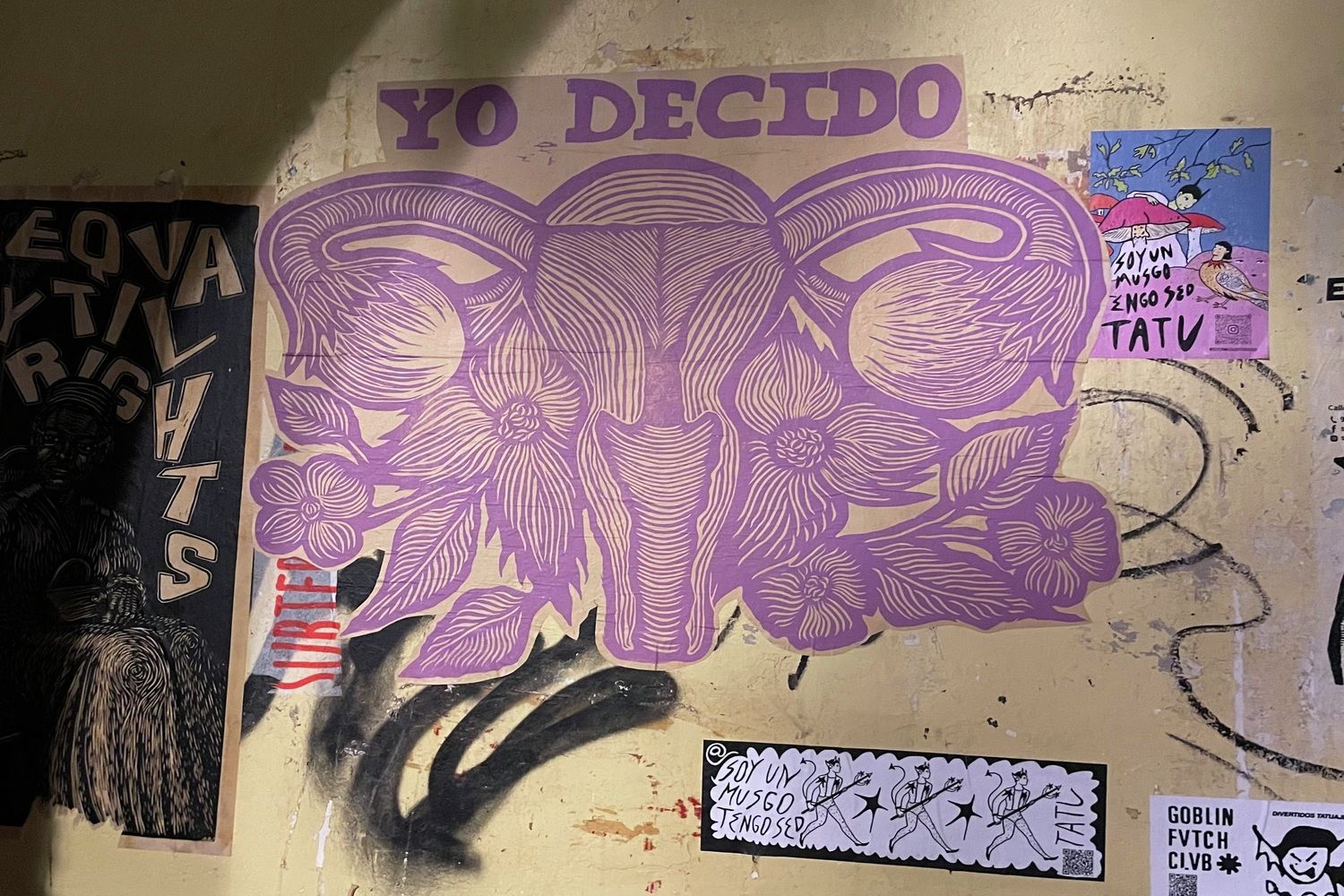
Before beginning my exchange semester in Rio de Janeiro, I hadn’t imagined that my Carnaval week would be spent in a freezing A&E cubicle, sober and surviving off banana chips. Yet, like every other Year Abroad (YA) student with a chronic illness, my endometriosis does not take my schedule into account before leaving me bedbound – or hospitalised.
Times Higher Education reports that around 20% of the UK’s student body declared having a disability or long-term health condition in 2023, though campaigners suggest the true total is much higher. This common and often silent reality that is exacerbated by the unique challenges of moving to another country.
For MMLers and HMLers, as well as a few lucky lawyers and engineers, our second year is accompanied by the looming shadow of the YA. Visas, placements, flights – the list goes on. For those with chronic illness, managing their condition adds an extra layer of complexity to the process. As Idara, a third year at Downing, told me: “my Crohn’s was the first thing I thought about when planning a Year Abroad.”
“Chronic illness is a largely unpredictable adversary, and one cannot plan for the unplannable”
“Being black, and also female has meant that I needed to ensure that I chose somewhere where I felt safe, and having Crohn’s disease added to this as it impacted the accommodation I chose, the location, the type of job where I travelled etc. I would say it has been the most prominent factor in my decision-making process.”
Idara had originally planned to intern in Mexico, but realised her condition made this impossible. Between specialised treatment and fears that “if I did have a flare up I would be very far away from my parents, and from my doctors at my local hospital who know me and my specific case very well,” she had to give up on her “ultimate dream,” settling instead for Spain.
Yet, chronic illness is a largely unpredictable adversary, and one cannot plan for the unplannable. Personally, the stress and change in environment of my first YA placement triggered a massive flare up in symptoms I had struggled with for years but had not considered a ‘make or break’ factor when I committed to a year on another continent.
Living alone in Oaxaca, Mexico, I spent days sobbing and writhing in pain, relying on UberEats for painkillers and sustenance, before I was given an appointment at a local hospital. I held back tears seeing a large black mass on the ultrasound screen and hearing scarily concrete medical terms: “ovarian cyst,” “endometriosis,” “infertility”.
My language classes had not prepared me with vocabulary for naming the internal structures of the pelvis, describing my chronic pain, or explaining the enormous toll endometriosis was taking on my life to new work colleagues.
“My language classes had not prepared me with the vocabulary for explaining the enormous toll endometriosis was taking on my life”
Audrey, a French exchange student in Brazil who also has endometriosis, recounted similar feelings. The language barrier, coupled with the lack of her usual support system, made navigating a new medical system incredibly intimidating. “When I consulted my practitioner, I was not speaking Portuguese yet, so we did have a bit of a hard time communicating to figure out what was wrong.”
Audrey dealt with “stress and anxiety that was linked with the appointments, because I was handling it on my own. Whenever they were going to do an exam or prescribe something, I did not understand 100% what the procedure or the treatment would be.”
However, her experience of Brazilian healthcare has been largely very positive. “To my surprise, when I moved to Brazil I was very fortunate to find out that the medical unit, specifically for women, is actually great! I have never received so much careful, gentle attention in the past, and I was very taken aback by the comprehension of the condition.”
Many of us are not so lucky. My first gynaecologist refused to believe me about my pain or sexual history, and even retracted her original diagnosis. She claimed in a later appointment that I did not in fact have anything wrong with my pelvic area, and should simply “deal with my anxiety” and “stop eating spicy food,” a particularly helpful piece of advice in Mexico.
“I simply felt that it wasn’t fair that other students can just up and leave to whatever country they want to go to without worrying about illness”
I was relieved to be taken seriously once I arrived in Brazil, but the cultural differences in medical approach did not end there. In my experience, Latin American health systems are quick to prescribe an abundance of strong medications, especially compared to the NHS’s cautious, economical model.
My gynaecologist offhandedly sanctioned a pick-and-mix of painkillers that a trusted family friend and GP informed me were “a bit concerning” in combination, as well as a potent hormonal medication that she said would only be used “as a last resort” in the UK. I was left scared and confused, with my conception of ‘objective’ science shattered.
Beyond treatment, the question of accessibility lies at the centre of navigating a foreign country. I did not see a single free public bathroom in Oaxaca, time off work is heavily policed and culturally frowned upon, and it seemed impossible that a wheelchair user could traverse the earthquake-cracked pavements.
Idara explained how a lack of accessibility in Valencia also worsened her fatigue, which already makes simple tasks like “shopping for food or cooking, feel like such big undertakings.” She told me about a broken lift in her apartment: “it required me to climb 16 flights of stairs just to get to my flat. What was even worse is that it broke down on a Friday, and so I had to wait until Monday for it to be fixed. Things like this sound small, but they do take it out of you.”
Emotionally, the fear of missing out runs rampant for anyone on the YA, but takes a particular toll when you feel like your own body is letting you down. Your condition can control your diet, stop you from attending events, or change your whole trajectory. Idara put it plainly: “I simply felt that it wasn’t fair that other students can just up and leave to whatever country they want to go to without worrying about illness. As much as Spain is lovely, it’s not where I wanted to go.”
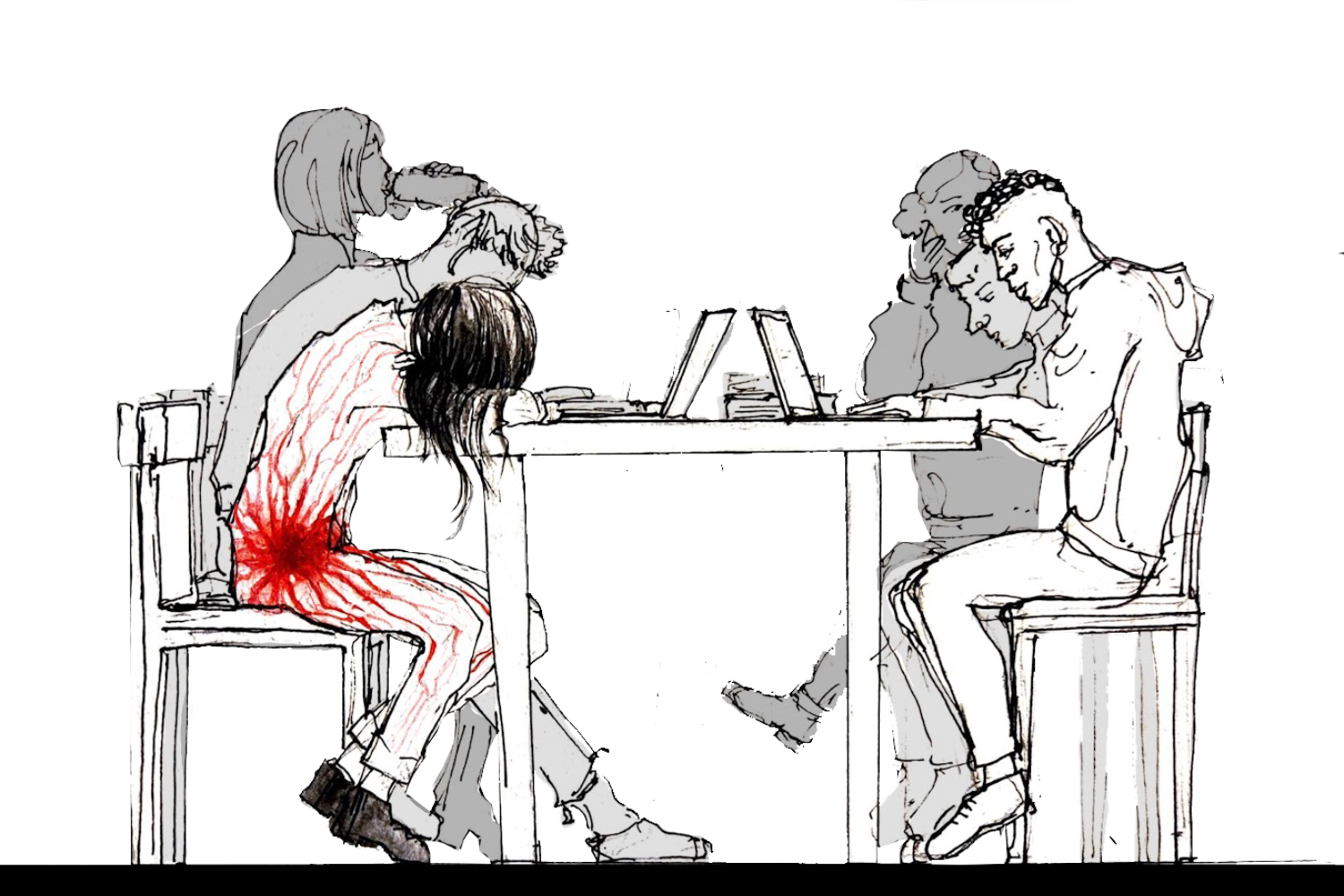
However, she found relief when she was able to let go of this way of thinking. “Eventually I worked through those emotions. It’s not necessary or healthy to harbour that kind of emotional load over something I can’t control.”
Determined to operate under a similar philosophy, I was put to the test when my Carnaval week was derailed by a huge flare up. After stumbling home blind with pain from a street party, I ended up in A&E. I was forced to trade caipirinhas and funk music for sobriety, 12 hours of sleep a night, and quiet beach days punctuated by painkillers. In the process, I started to build a local support network, learned to ask for help, and felt a new sense of pride in myself.
Dealing with chronic illness abroad is a complex, challenging and often isolating experience, but one that is peppered with moments of kindness, connection, and maybe even wisdom. Like Idara told me, “ultimately, it provides you with an opportunity to grow as a person. […] Valencia has been a dream. I’ve settled in well and am so blessed to say that I got to live here for a short time, so honestly, I wouldn’t change a thing.”
