
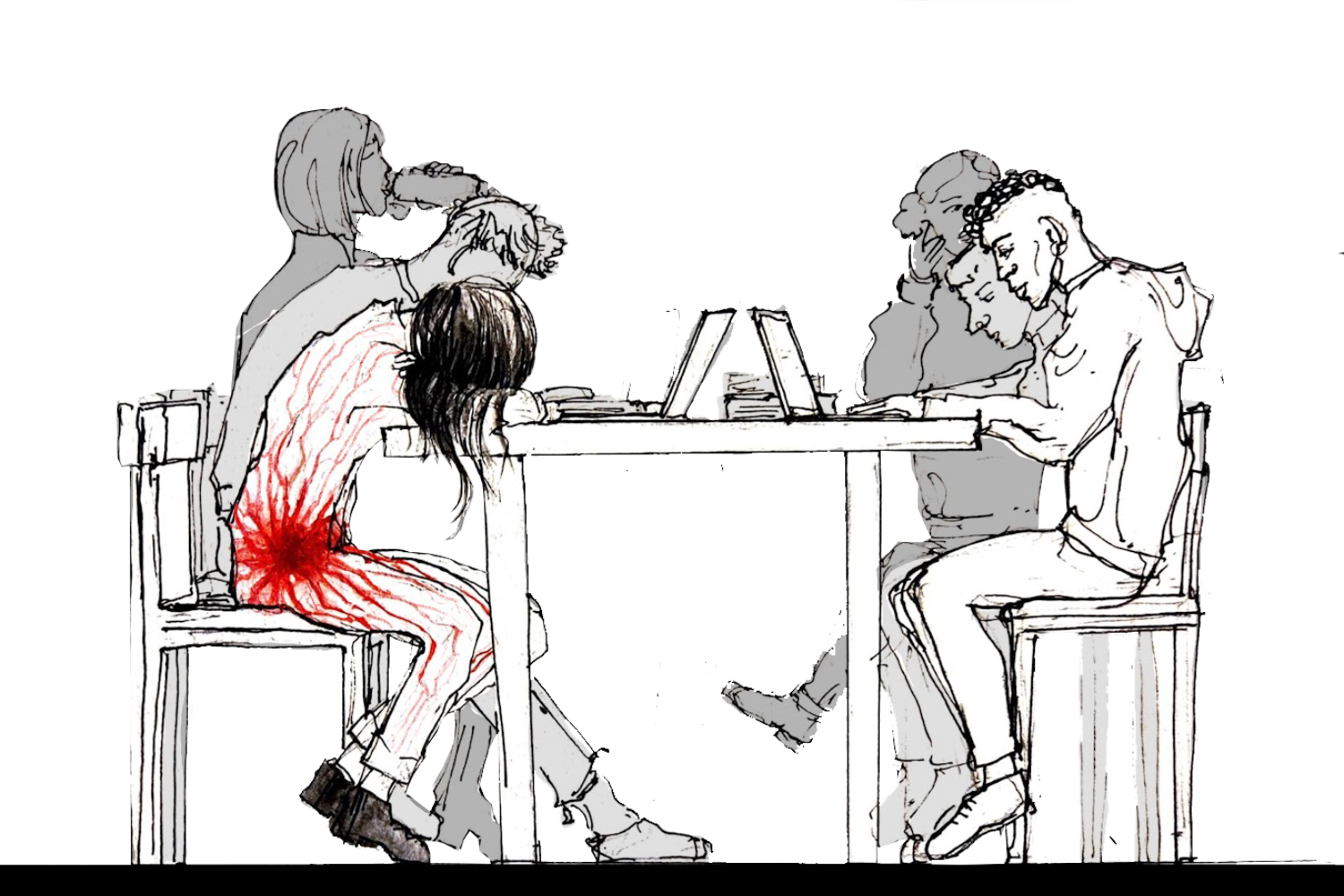
Cambridge terms are short and intense. For eight weeks, you are expected to squeeze out all your potential for productivity; extracurricular hobbies have to be tightly scheduled in, and genuine rest is often delayed until the holidays. Unfortunately, the menstrual cycle remains oblivious to this ordering of time. It’s not an assignment that can be pushed back, but an inevitability that comes crashing in and expects you to accommodate it.
For some, all this requires is a paracetamol and a hot water bottle. For others, working days have to be ripped out of the calendar as they struggle to get out of bed. Angie*, a second year at Trinity Hall, recalls: “I had an essay to write the day my period returned, but I ended up lying on the floor with my college wife wondering whether she needed to summon extra medical attention.” She describes the difficulties of “lying in your own blood and your own guilt,” worrying about how to apologise to a supervisor for missing a deadline. Zara*, a second year at John’s, also notes: “I have friends who have had such bad pain they throw up, and you just can’t work in those conditions.”
“Stories of debilitating pain are often packaged into the ‘normal female experience’”
Exam term inevitably turns up the heat. A survey by the Cambridge University Menstrual Health Society last year revealed that during exam season, only 28% of students reported no change in any symptoms. Students who reported moderate or severe symptoms in normal cycles had a 70% chance of worsening or new symptoms during exam season, while students who only reported mild symptoms in normal cycles had a 50% chance of worsening or new symptoms. Amelie*, a third year at Emmanuel College, notes: “Doctors often tell me that intense stress exacerbates my symptoms, but intense stress feels like a fact of life at Cambridge, so it’s pretty useless advice. Stressing about my period makes my period worse, and my period being worse makes me stress more.”
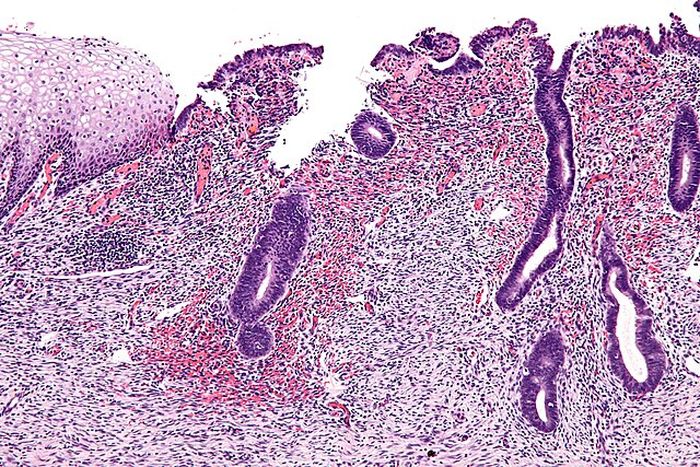
Stories of debilitating pain are often packaged into the ‘normal female experience’ but can be an undiagnosed menstrual disorder. Endometriosis, a condition in which cells similar to the lining of the uterus grow outside of the uterus, affects 10% of all AFAB (assigned female at birth) individuals. Getting effective medical attention is no straightforward path. Studies have repeatedly shown difficulties for women getting doctors to take their menstrual pain seriously. Angie describes being on birth control since she was 15 as a “sticking plaster,” and at Cambridge “I asked to talk to a GP about maybe pursuing why I was in so much pain, but I kept being assigned to the same nurse who would not entertain the idea that there might be something else wrong”. She notes: “It’s incredibly frustrating but having a medium-term solution works for me [and] means I probably won’t try again for a few years”.
The busyness of Cambridge life can further disincentivise those struggling from going through the effort of multiple appointments to get help. Lola*, a third year at Emmanuel, describes her experience with medical care as overall very positive and mentions “feeling genuinely listened to throughout the process”. Regardless, she notes that issues can arise when the “Cambridge workload makes you feel you have no time for anything.” As a result, she’s had to delay appointments to fit around deadlines and exam seasons.
Lizzie was inspired to create the Cambridge University Menstrual Health Society after her own difficulties with menstruation. She describes her difficulties with Premenstrual Dysphoric Disorder (PMDD) – a very severe form of PMS which causes a range of emotional and physical symptoms before a period. This “steadily escalating menstrual disorder” caused disruptions through her first year and the start of her second year, eventually leading her to intermit. After returning to university with a double-time arrangement and helpful accommodations from college, she founded the society to better advocate for those menstruating.
The society hosts talks from experts, self-advocacy workshops, social events, and engages in various campaigns to tackle period injustice. At Cambridge, she notes that “generally the infrastructure is there, it’s just that students don’t know about it and many staff don’t know about it”. She describes how “the medical establishment really differs on what pain is normal and what pain is abnormal,” leading many women to “gaslight” themselves that their pain isn’t “severe enough” to seek help.
But the society also advocates for further institutional change. This year, they released an open letter demanding support for menstrual health education during Freshers’ Week, improved access to the ADRC’s support – including menstrual health in gender awarding gap research – and the provision of free sanitary products across colleges, university, and faculty buildings. While colleges agreed to provide free sanitary products a few years ago, students report uneven success in distribution.
Angie claims John’s has free products that are topped up regularly, yet Zara notes that at Trinity Hall, they hadn’t been replenished in a while. Amelie notes a frustrating tendency for Emmanuel College to only provide the light pads or tampons, which are unhelpful for students who bleed heavily and are unable to use a tampon for various reasons, like Vaginismus.
“Thank god I became an oversharer when I did”
Describing reactions to the society, Lizzie notes that people don’t tend to react negatively, but “people are definitely surprised that we are talking about it in public”. Awkwardness around talking about menstruation can manifest in different ways. David*, a trans man at Girton, notes how the idea that menstruation is tied to “part of being a woman, and that sometimes makes it feel difficult to talk about without feeling like I’m taking up space I shouldn’t be”. In general, students described having open and accepting friend groups where they could comfortably talk about menstruation. Lola felt “far more awkwardness around discussing periods for sure when I was younger,” and it was only after becoming more comfortable socially that she realised that she could have endometriosis. “Thank god I became an oversharer when I did,” she exclaims. For Zara, the stigma around discussing it comes not at Cambridge but “around older or male members of my family at home. People find it weird that I can talk about pads and periods and that sort of thing at a normal volume, but we really need to normalise this”.
Talking about menstruation can also bring complications. Zara*, a second year at John’s, points out how some discussions risk veering into ‘trad-wife/divine feminine’ discourse. “Sometimes I listen to people talk about their periods and think ‘you don’t even want to know what far-right influencer you sound like right now.’” Celebrating the menstrual cycle can push back against cultural discomfort, but it can also feel condescending to those struggling. Amelie states: “I hate when people call it Mother Nature’s monthly gift. I’m in a lot of pain. I shouldn’t have to romanticise my own pain to make it acceptable to society.” It can also reinforce a bioessential view of womanhood, where biology dictates destiny. Online ‘trad-wife’ narratives cast women as unsuited for the ‘cut-throat’ world of work and should stick to baking sourdough. Discussing menstruation becomes a tightrope between ignoring pain and suggesting women are inherently less capable.
Lizzie compares the development in how we talk about menstruation to mental health. More and more people are aware and open about it, but that doesn’t necessarily mean we are ready to talk about the “messiness” of it. At Cambridge, moving beyond euphemism toward frank discussion may be essential – not just to reduce stigma, but also to enable students to advocate for the support they need.
* Names changed upon request
