
Coming to Cambridge is an overwhelming experience for everyone. From the moment you put on your gown and sign the matriculation book you’re thrust into a whole new world with its own language and traditions. Freshers’ Week is a confusing whirlwind of excitement, hangovers, and homesickness that even the most put together students struggle to process properly. A few days later you’ll be huddled in a library trying to make sense of Hobbes or Proust without the time to stop and think about the mania of the night before, or how your friends at home are doing. That’s kind of the point. You’re a Cambridge student now, your life should be contained within a three-mile radius of Great St. Mary’s. But for some students, it’s not that straightforward.
There are at least 350,000 young adults with caring responsibilities in the UK, making up about one tenth of the student-age population. But Lucy, who has looked after her mum since she was twelve, was convinced she was “literally the only carer at this entire University” when she arrived. “I remember we had an induction talk from the Senior Tutor on the first day, who talked about how we should work 40-50 hours a week to keep on top of our studies, and how we had to stay in Cambridge to make sure we ‘keep term’. I remember just thinking, shit, this isn’t going to work for me. I couldn’t think how anyone who cares for a loved one could do what colleges are asking for.”
“I remember just thinking, shit, this isn’t going to work for me”
Lucy isn’t alone in her isolation. The students I spoke to talked about a stigma around being a young carer. James, who helps care for his sister, explains how he felt “like lots of people have this idea of what caring is like that’s incompatible with Cambridge”. There’s a diversity to care that he feels is often missed in stereotypes of it being “a full time thing you couldn’t possibly juggle with a degree. I know that is a lot of people’s experience, but how care can be done from a distance, it can be helping do the grocery shopping online, or just spending an afternoon on the phone when my sister’s having a rough day.” For James, the ‘scare tactics’ of his college telling him how much he’d need to work over his first Christmas break exemplified that. “They told all the freshers to do 30 hours a week during the break. I get that it’s just done to scare us now, but at the time it just felt like having responsibilities other than my degree was banned, and that talking to my tutor or DoS about looking after my sister would land me in hot water.”
That lack of support is a serious problem across the country. Around 30% of students with caring responsibilities drop out of university to focus on their caring role. Sylvie, who looks after her mum, says she came close during Freshers’ Week. She talks of how she went on a night out for the first time with friends from her college: “It’s not the kind of thing I really got to do at home. It’s just me, my mum and my little sister Evie. I took the lead when it came to looking after Mum but Evie was picking up a lot of the slack for me when I left. Those first few days I felt like I had to be on call 24/7.” She felt guilty for not calling her sister and mum at the start of the night, but as she relaxed and “got into my full ABBA superfan mode” she started to enjoy herself. A typical Cambridge club experience followed; Lola’s until 2am then her first ever trip to Gardi’s. When she woke up in the morning “in that horrible state when you’re not quite sure if you’re hungover or still drunk” she saw five missed calls from her sister. Her mum had fallen down the stairs and was in hospital, and Evie had been calling to ask for advice about which painkillers were safe and who in the area could drive them home.
“It just felt like having responsibilities other than my degree was banned”
“When I saw those texts it just felt like someone had pulled a rug from under my feet. I’d had one night of being a ‘normal’ student and then everything just went wrong.” She decided – partly “under the influence of hangxiety” – that Cambridge wouldn’t work for her and drafted an email to her Senior Tutor asking to intermit. Her mum, now feeling much better, texted her before she sent it off saying: “Don’t ever blame yourself for having fun. I love you, please keep being the amazing, talented angel that you are.”
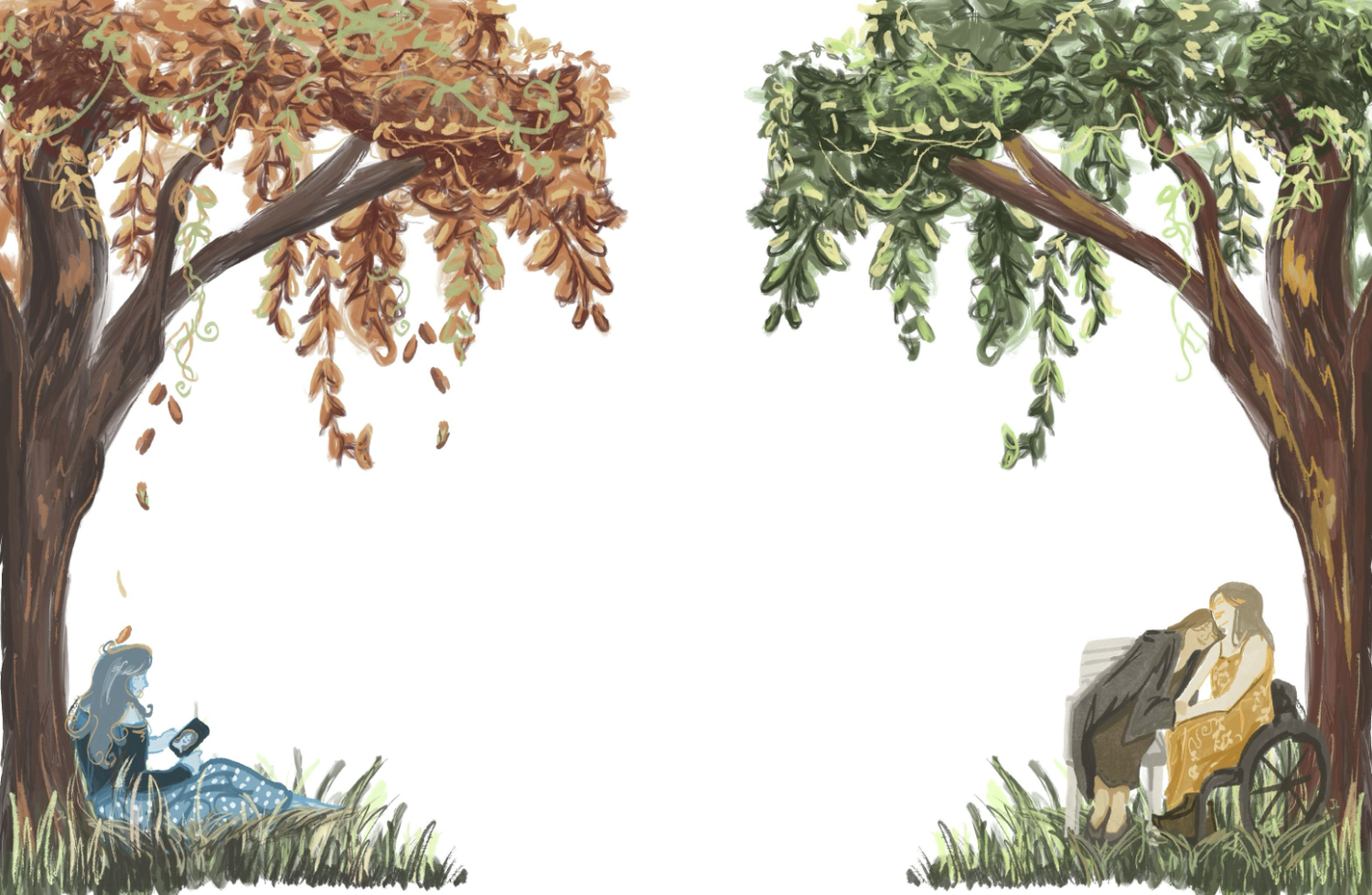
Lucy tells me of a similar experience: “I remember just being so anxious about Mum from the moment I got dropped off at college. I don’t think I’d ever been away from her for more than three days since I was twelve, and now I was five hours drive from home.” About four hours after being dropped off, during a college ‘afternoon tea’ session with all the typical icebreakers about where you live, what your parents do, it got too much. “I slinked off to a quiet patch in college, sat under this big tree and FaceTimed Mum sobbing, saying how sorry I was for leaving her, and that I’d come home if she wanted. She just smiled and said ‘I promised you I’d be fine, I want you to promise me the same thing. I want to sit and laugh about how you tried to drop out on your first day when you graduate’.” Three years later, at her graduation garden party, Lucy and her mum sat by the same tree “getting drunk on the free champagne, laughing about how I almost dropped out in less time than it takes to get home”.
“Sylvie felt like the College’s primary concern was “making sure looking after Mum didn’t mean I got a 2:ii””
Despite the guilt and isolation they all felt coming to Cambridge, all the students I spoke to were able to find support around them. “It took me like two terms to speak to my tutor about my sister, and once I actually got past that first hurdle so many doors opened up.” The issue of identifying himself as a carer was made worse for James by the opacity of it all. “I’m not your typical carer in that I’m not my sister’s primary source of support, so I figured I wouldn’t be eligible for whatever stuff the Uni offered, and that discussing it would just raise alarm bells.” This wasn’t helped by the existing disclosure system that allows carers to identify themselves to UCAS when applying for University. Cambridge only holds that data for a month, and in the experience of the carers I spoke to, it’s never communicated to colleges or the University Counselling Service. James says how his tutor was “shocked there wasn’t more explicit information about support for student carers when she did some digging, but even then the counselling and financial support I did get was an absolute lifesaver”.
Sadly, not everyone’s experience was as helpful. After discussing her caring responsibilities with her DoS, Sylvie felt like the College’s primary concern was “making sure looking after Mum didn’t mean I got a 2:ii”. While her college tried to find her support, all of the existing bodies claimed that “it was someone else’s job to deal with me. I got bounced around mental health and financial support committees where everyone insisted that I wasn’t their problem. And I had to fill out so many stupid invasive forms that I just didn’t have the bandwidth for and ended up being a bigger distraction than help. It’s such a shame because I’ve heard stories of such great support for students in other cases, but it felt like because nobody expected a young carer to actually come to Cambridge, they just didn’t know how to deal with me.” After frustration with her college, Sylvie eventually turned to friends for some support, “even just little things like letting me vent to them over a cup of tea felt so liberating. It was a bit weird at times because they didn’t have caring experiences and I was scared they wouldn’t get it. But just having that human interaction when College had just thrown bureaucracy at me was such a big step.”
“The best first step is starting a serious conversation about what it means to be a carer in Cambridge”
Sylvie wasn’t the first student carer to feel lost in Cambridge’s bureaucracy. Alice, who is the Class Act Society’s representative for carers, tells me of how when she started at Cambridge as a research assistant, and later a master’s student, found herself asking “where on Earth is all the support for students?” There was no clear guidance for students looking for support from either their college or the University, and no clear mechanism of disclosing their caring responsibilities. “So me and others decided to start something.” That something was the Student Carer Working Group, which has been trying to help develop explicit care for student carers at University. “It consists of some student voices who’ve got caring experience, and also people from across the University.” The working group has existed for over two years, and is attempting to provide “some coherence and understanding” for carers, so that adequate support can be provided. Two of the central aims of the group have emerged from experiences of isolation and misunderstanding the diversity of care, with the group advocating for an easy method of disclosing caring responsibilities without fearing consequences, and creating guidance for staff and academics so they can better understand, support and empathise with the diverse world of caring experiences.

Despite making progress, Alice admits that trying to affect major changes has “been really tough”. Cambridge’s decision-making processes and decentralised structure “make it hard to make progress”. Alice is keen to emphasise that “[it’s not] out of malice or anything. When we do manage to get through, many staff members and academics want to help and they’re really understanding and helpful. It’s just creating long-term change is difficult.” This isn’t helped by the stereotypes of carers in Cambridge. “Every carer’s experience is different,” Alice says, “and trying to navigate whether you need to speak to the UCS or the EAMC, when nobody’s ever provided you guidance on how to deal with these different bodies, is tricky.”
This is made harder by the lack of resourced support explicitly for carers: “everyone we speak to is juggling loads of different responsibilities so being able to make collaborative progress can be hard. It is frustrating, the University has done loads of great work for Widening Participation, but the support for student carers is not joined up when they’re at Cambridge.”
For Alice, as it was for everyone I spoke to, the best first step is starting a serious conversation about what it means to be a carer in Cambridge. The Class Act Society does socials for carers, which she says are “so great to just speak to someone else who gets what caring is like,” but awareness of caring experiences in the wider student body are a priority. “Just doing anything we can to start a conversation and get colleges to think more about carers and make them feel welcome and supported would be amazing.”
