
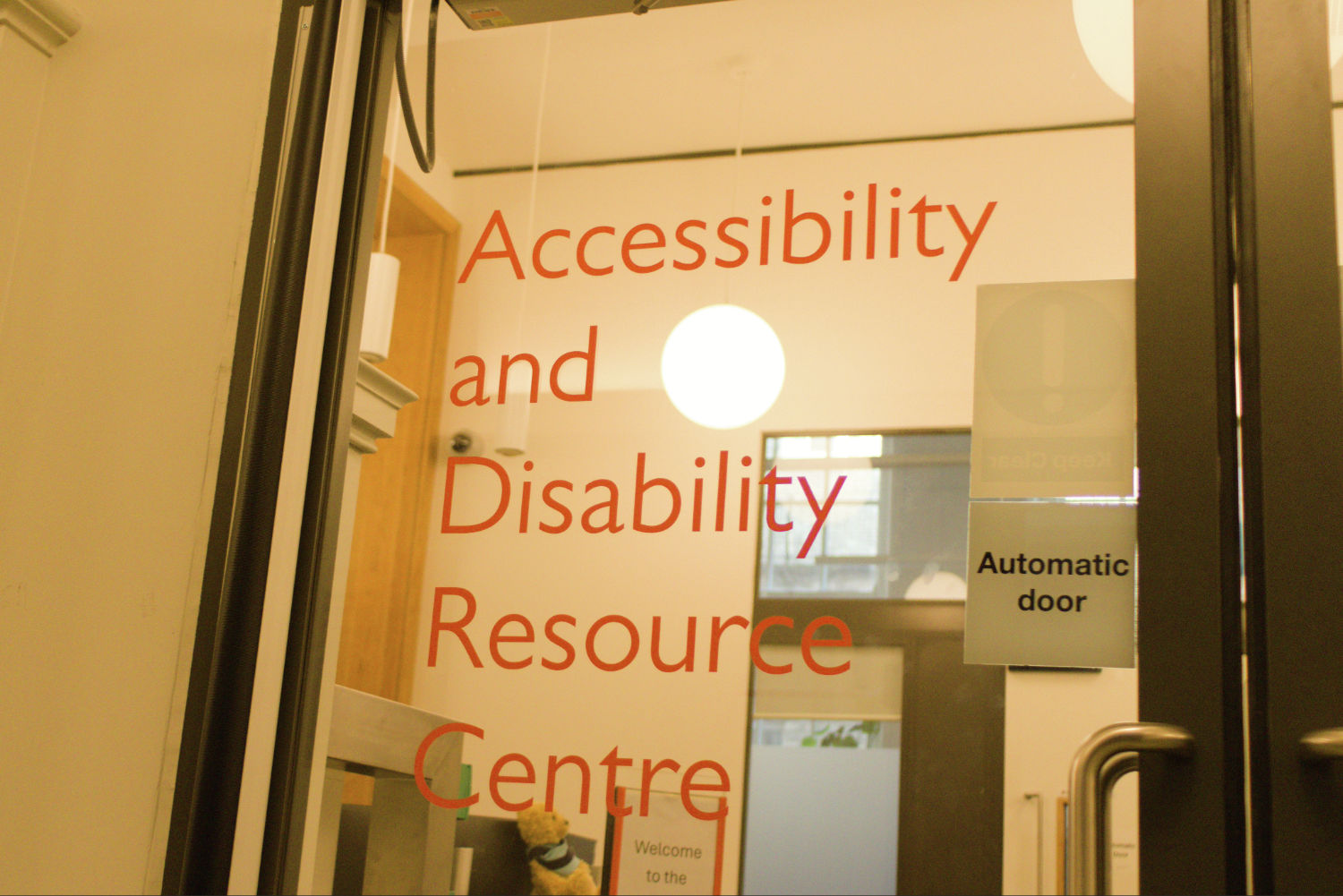
“If you’ve met one person with ADHD, then you’ve met one person with ADHD.” These are the words of Dr Helen Duncan, the Senior Neurodiversity Advisor at the University’s Access and Disability Resource Centre (ADRC), in response to: “What does it mean to have ADHD?” The NHS describes Attention Deficit Hyperactivity Disorder (ADHD) as “a condition where the brain works differently to most people”. Though broad, this definition reflects Helen’s point: it’s a condition that manifests uniquely in each individual. Nevertheless, there are common symptoms, such as difficulty focusing, feeling restless, or a predisposition to procrastination. When diagnosed, it’s often categorised as ‘inattentive’ or ‘hyperactive’, or ‘combined’ based on the dominant symptoms.
Another recurring pattern is that, on average, women with ADHD are diagnosed less and later than men. One major reason for this is the historical lack of research into women’s health, and female health being seen as more complex. Men are the clinical default. With this lack of information and diagnoses, women who have ADHD (and are struggling) are likely to “assume that the problem is them,” says Dr Rebecca Champ, adult ADHD coach and psychotherapist. This can fuel low self-esteem and, for some, mental health crises.
At Cambridge, this pattern persists. Many female students arrive unequipped to support themselves properly, only discovering their ADHD during university. Alongside Helen and Rebecca, I spoke with eight students about their experiences: five were diagnosed (or screened positive for ADHD with the ADRC) while at university, and three were diagnosed before – the earliest being age 16.
“It’s pushed me to the point where I have to just squash the procrastination. Otherwise, I’m going to be forced to intermit.”
The current diagnostic criteria typically focus on ‘externalising’ behaviour: outward expressions that set a person apart from their neurotypical peers. In an educational setting, it’s disruptive outward behaviour associated with hyperactive boys that is often picked up on. It is believed that there are both genetic and societal explanations for the gendered differences in ADHD. “Women are more tuned into what behaviour is expected and therefore [internalise these behaviours],” says Helen. This covering-up is known as ‘masking’ and can require a lot of sustained mental effort, contributing to the risk of burnout, something those with ADHD are already predisposed to. Alongside this, the typical presentation of ADHD in women: “being chatty, bubbly, scatterbrained, and in some cases more emotional tends to be more socially acceptable for women,” says Rebecca. Many women may feel like they’re not reaching their potential, which can be incredibly frustrating. This can give way to secondary symptoms of anxiety and depression. It’s often only later down the line that they discover they have ADHD. One student who was in this position doesn’t think she’d have known she’d had ADHD if it hadn’t reached a “point of crisis”.
Academic ability can further obscure symptoms. If you’re coasting through pre-university education, then typical ADHD behaviours like procrastination or lack of focus might not visibly affect your performance, like it does with others. One student felt that her constant talking and movement around the classroom was permitted and unquestioned because of her academic success. However, on arrival in Cambridge, the transformation from big-fish-small-pond to small-fish-big-pond and the struggles to balance self-care and a demanding workload can be beyond overwhelming for anyone, not least those with undiagnosed and untreated ADHD. First year was “like hell […] it was like being dropped off a cliff,” said one student. For her, the “cracks began to show” during sixth form and broke completely at university.
“If it’s inclusive for neurodiverse students, then it’s inclusive for the vast majority of students.”
Others have had similar experiences. Several students acknowledged that the intense pressure of the Cambridge timetable forces them to override issues in unhealthy ways that can lead to burnout. “[It’s] pushed me to the point where I have to just squash the procrastination. Otherwise, I’m going to be forced to intermit.” All-nighters to produce sub-par work in accordance with deadlines cropped up in several conversations. “The structure [of Cambridge] itself is quite incompatible with ADHD,” said one student, who also acknowledged that while she has found ADHD medication transformative, she doesn’t think she’d need it if she wasn’t at Cambridge. As with many systems (beyond just education), these structures are built with a neurotypical framework. Through her work at the ADRC, Helen’s main goal is access and inclusion: “If it’s inclusive for neurodiverse students, then it’s inclusive for the vast majority of students.”
Students who understand their ADHD before arriving at university are often better equipped to manage it. This is why it’s crucial to build a framework that enables underdiagnosed groups to recognise their condition. Rebecca stresses the importance of introducing the neurodivergent “lived experience” to the literature. Six out of the eight students referenced either a diagnosed family member or close friend as both an introduction to ADHD and a point of relatability. After her best friend screened positive, one student said: “if [she has] it, I almost certainly have it”. One student noted that while going through the diagnosis, it has become clear that both her parents also have ADHD. “They never noticed that I was different because I was just behaving like them.” Seeing others’ “lived experiences” often enables women to recognise in themselves what is missed by others.
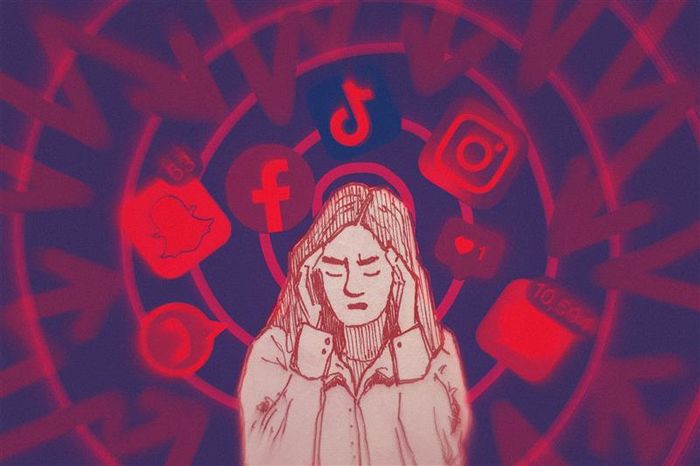
The other key sources of introductory information that the students mentioned were the internet and social media. The pandemic in 2020 removed the routine of school, allowing the characteristic traits of inattentive ADHD to shine. 2020 also saw the rise of TikTok, and while plenty of informative content about neurodiversity was posted, a culture of ‘self-diagnosis’ and its backlash followed. A few of the students referenced how this prevented them from seeking out a diagnosis, with one quoting the infamous tweet: “Omg you people can’t do anything” (in response to a claim that choosing a Halloween costume is difficult for someone with ADHD).
“I enjoy having a different brain to people, I think it gives me a different perspective”
Conversations about ADHD often focus on the negative, but several students were keen to highlight positive experiences. “I enjoy having a different brain to people, I think it gives me a different perspective,” said one, and “I’ve always had a pretty positive relationship with myself and the way that my brain works,” added another. As Helen put it, people with ADHD have “a very creative, innovative problem-solving profile,” and she’s very keen to change the narrative that it’s only detrimental. Instead she argues: “It’s a normal part of the variation of the human species […] we’re diverse because it gives us an evolutionary advantage.” She gives the analogy: “I think it’s a bit like a map of London. You’re trying to get to the same destination, which is: write that essay. It doesn’t matter which route you take. You can take a different route from someone else. There isn’t a right route. It’s the destination.” Rebecca’s work aims to reshape traditional frameworks and highlight their unintentional harm. She hopes her work will create “a self-concept to develop that doesn’t rely on a question of deficit. [It’s a] difference, not a deficit.”
The diagnosis itself can be totally transformative. “Having the diagnosis legitimises what you struggle with and allows you to understand it as part of your identity, and move towards not being ashamed of it,” said one student, “I could put a name to a feeling.” Some choose the medication pathway, but even those who haven’t (or are yet to start) recognise the benefits of understanding that what’s happening in your head is not your “fault”, and not something that can be overcome with more effort. Others said that the diagnosis didn’t mean a great deal to them, citing that they’d already realised their brain was different and needed new techniques to function efficiently. Almost all students commented on exam arrangements: “[they] literally changed my life”.
Once someone recognises that they may have ADHD, the route to seeking advice or support is not always simple. The ADRC screenings are an essential support tool for students, but are not a real diagnosis. You either have to wait months or even years to be seen through the currently inundated and underfunded NHS, or cough up and go private. This is simply not feasible for many, given that the initial assessment can easily cost £500-1000 and be followed by £100 per month for medication.
The ADRC has seen huge increases in the number of ADHD at Cambridge. When Helen first started in 2008, they had 20 students registered with ADHD, and now they have over 1,500. Cambridge is both fantastic and difficult for everyone, but for certain demographics, this can be felt to the extreme. It is essential to acknowledge and understand the interplay between misogyny and neurodivergence, not only in our institution but universally.
Information about support via the ADRC can be found here.
