
So many great writers have studied at the University of Cambridge: E. M. Forster, Christopher Isherwood, Salman Rushdie, Zadie Smith, Catherine Airey, and the list goes on. Sometimes, walking down King’s Parade, I wonder to myself, have I just walked past a future literary giant? In this article, I talk to some of the student novelists who are working hard to assure me that I have. I sit down with current students and graduates alike, asking them about their experience of novelling alongside their degree, as I try to figure out what makes Cambridge such a cauldron of writing talent.
Stan Wierzbicki, currently studying for a master’s in creative rriting, reflects on how the degree has reshaped his writing. Wierzbicki came to Cambridge with a fully drafted 80,000-word magical realist novel and a second novel-in-progress, which, ironically, has taken a backseat while he works towards his master’s. That said, he looks forward to returning to it for his extended project next year. Before Cambridge, Wierzbicki read English literature and creative writing at the University of Lancaster, where he says the pandemic got in the way of his ability to interact with fellow creatives. Now, at Cambridge, he prefers the “collaborative environment” the creative writing MSt promotes: “through the people who surround me, I have found motivation.” Students arrive from across the world with diverse skills: poets, playwrights, novelists, non-fiction writers, and even video game designers. Wierzbicki says that writing poetry as a relative beginner, alongside people for whom it is their whole focus, has “opened up” his writing.
“Cambridge has such a literary history that it would be a shame not to take part in it”
Wierzbicki is also keen to stress the “playfulness” the degree promotes. It is not as “serious” or “academic” as people might assume. Classes include short warm-up exercises – responding to prompts or inventing characters – leaving room to “experiment,” to “be silly, and for that silliness to be taken seriously.” This philosophy underpins his writing and is part of why he got into writing in the first place: “to have full power” over what is created. That being said, Wierzbicki appreciates his supervisor’s demands for new writing. Writing consistently for his assignments has been new for him, as somebody who used to write only in short bursts, around work, when inspiration struck. “I can’t even tell the difference between what I wrote in a good mood or bad mood,” he admits, suggesting that sometimes you just have to sit down and write. “Just like children need time to play, so do adults.” Writing is a chance to escape the world. Plus, Cambridge has such a literary history, he says, that it would be a shame not to take part in it.
Millie Redding, who graduated in July 2025 with a bachelor’s in English literature, agrees. She recalls drafting two novels in her final year, one of them a coming-of-age story involving Catalan triplets, inspired by a family holiday she took in her first year. The novel was complicated, and enriched, by her third-year tragedy paper. “A lot of tragedies double as family sagas too,” she says, adding that their example “informed my own thinking around family dynamics and traditions.”
“In most cases it is not about finding the time, but the time finding me”
Anne Carson’s Nox inspired the eulogy one of her triplets writes (on a square of kitchen roll), while Virginia Woolf’s To The Lighthouse brought about Redding’s “creative turn towards detailed studies of character.” And, not just her reading, but the city itself, has shaped her writing; looking back over her past drafts and documents is like reading through an archive of herself, she suggests, some mapping walks she took around the city and others mapping the psychological terrain she has traversed since her matriculation.
“Writing is my way of making sense of the world around me,” Redding tells me: that is the “essence” of why she writes. Writing has been her outlet since childhood, a way of communicating her thoughts and feelings in words. Nowadays, whenever she is bored, she finds herself opening her laptop and trying to add a few hundred words to whatever she last left off. “In most cases it is not about finding the time, but the time finding me.” Some days at Cambridge, she would wake with a scene in her head and know she couldn’t make any progress on her essays until it was “out of my system.” Other days, it was just a case of grabbing whatever free evening she could to write.
“Sometimes your creative writing skills can feed directly into your academic writing”
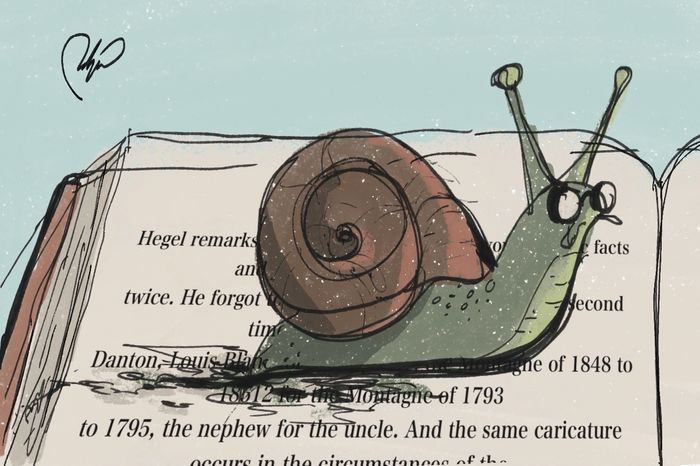
Looking back on the “chaotic” three years she spent balancing novel and essay writing, Redding is proud to have produced two half-drafted novels and achieved good marks in her finals. She’s humble about it: “someone with much better organisation than me may very well be able to finish their three years with a complete 80,000-word manuscript and a first-class degree.” She doesn’t think doing well in one means doing badly in the other – if anything, the opposite. “Sometimes your creative writing skills can feed directly into your academic writing,” and vice versa. As Wierzbicki said, thinking across forms means thinking more freely about the written word; it means finding where your voice sits between academic and creative registers.
Redding begins an English literature master’s in September, where she will no doubt keep “writing for pleasure” and dreaming of being published… “one day!” Wierzbicki, meanwhile, is weighing up a PhD, while focusing on getting his work on the shelf. In both of them, I believe I have found two more of Cambridge’s literary greats-to-be.
