
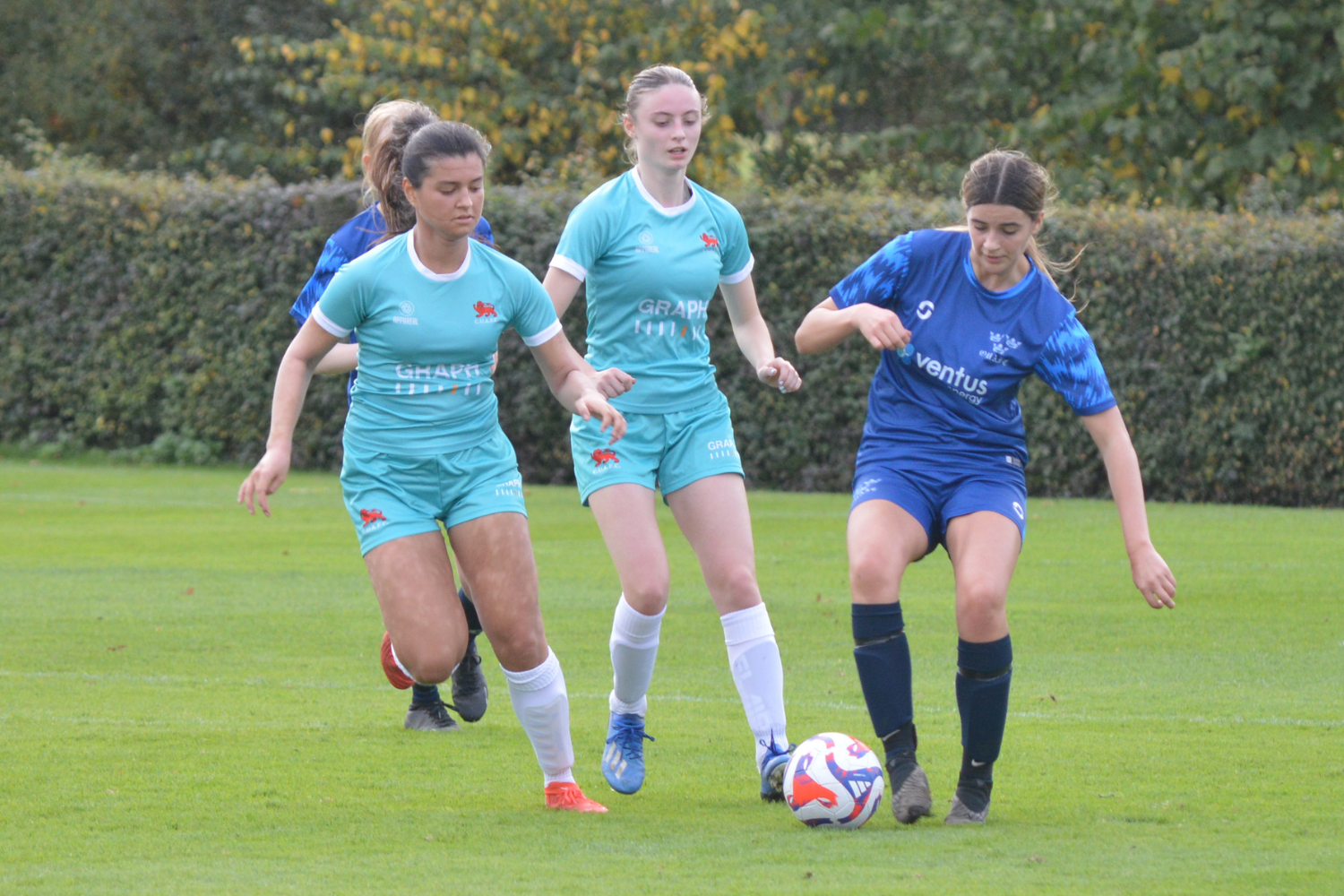
What is a woman? The answer to this question has become deeply politicised in recent years. Yet in April of last year the UK Supreme Court sought to relieve the country of the ambiguity and ruled that the legal definition of ‘woman’ resided only in biological sex. It also highlighted that transgender women would continue to be protected elsewhere in the Equality Act, but the ruling didn’t pass without controversy.
The implications of these kinds of rulings are extraordinary for the lived experience of people across the country. And there’s no better example of how this is the case than the fact that, with this ruling, the Supreme Court managed to completely reshape something as seemingly superficial and insignificant on a national scale as Cambridge college sport.
It’s been the better half of a year since that ruling, and the University’s way of navigating it hasn’t exactly been uncontroversial, nor has it been particularly clear or efficient. Amidst the unfortunate re-entry into ambiguity, therefore, I turned to some college footballers to understand how Cambridge has gone about navigating its sports scene in light of the ruling, and what the effects of this ongoing process have been on those who cherish the collegiate system as an invaluable escape from academic life.
To first understand the issue and how it was handled, I sat down with former Cambridge University Women’s Association Football League (CUWAFL) league secretary Kata Csiba. She explained that the Supreme Court decision led to a change in the league’s constitution over the summer, making only biological females eligible to play. What followed was several captains’ meetings which discussed the option of a mixed league, which would allow all genders to play.
Csiba clarified: “The mixed league option, while proposed with the best intentions to ensure no one is excluded from playing college football, did raise concerns about not being a suitable long-term solution.”
“An initial proposed vote in October came at relatively short notice,” she added, “and there were requests from captains to postpone it to ensure that both captains and players have adequate time to seek advice, including from senior members of their colleges and University.”
So, there’s some light shed on the decision-making process. Yet, as I suspected after my chat with Csiba, almost every aspect of this process seemed to fail in satisfying those involved, and for an interestingly vast array of reasons too. Speaking to members of Downing’s football team made this point pretty hard to miss.
“The WNB Football League has provided a supportive and welcoming environment for many, so it’s disheartening to see it affected”
Women’s captain Mia Lee echoed a common complaint: “The University and its legal team didn’t seem to want to speak to individuals and students; it was all mediated, which doesn’t give us much room to try to work through it.” Perhaps most interesting, however, was the agreement between Lee and captain of the male side Nim Paz, who both shared passionate views on the lack of cross-gender integration in the decision-making process.
On this point, Lee emphasised: “It felt more like the University set standards and then expected us to find a solution within that, without giving us a voice to try to sort this out more broadly. We have not had the opportunity to speak as a league of captains to the University or in collaboration with the men’s teams to find a solution. Which, given one of the proposed solutions is a mixed league, would surely be beneficial to discuss.”
Paz then commented on the “baffling differential treatment” involved from his perspective of the process. As we’ve already seen, captains on the Women and Non-Binary (WNB) side were forced into the decision-making hassle, whereas Paz shared how the men had a very different involvement. He emphasised his “surprise” over the fact that the issue was not formally on the agenda for their captains’ meeting, adding: “with us, it took a men’s captain randomly raising it for there to be a discussion on it. The discussion was disappointing, lasted roughly 10 minutes, didn’t really go anywhere, and then we moved back on to other stuff.”
Why was such differential treatment so disappointing? Paz clarified: “It feels very much like the league know the men are and will be less involved, because they’re less affected, and they’ve just tried to lean into that and hope there isn’t enough communication between us and the WNB side for us (or them) to realise how much of the weight of this is falling on them. The burden of fighting for inclusivity – and now rebellion against the league – is falling entirely on the WNB side.”
Again, it was interesting to note just how closely this perspective was mirrored by women’s captain Lee, this time moving on to complaints about the decision itself: “It feels as though this is another issue that has flushed out women’s spaces in sport by putting all the pressure on women to solve. This isn’t an issue that should only implicate the women’s teams, and with the option to move to a mixed league, this is exactly what would happen. There would be no college-level WNB-only team that is truly inclusive.”
“It seems that college football is becoming fun for just one type of woman”
It’s rather clear, then, that both the process of making the decision, as well as the decision itself, has been far from acceptable from a student satisfaction standpoint. And boy have I barely scratched the surface of the latter. The most interesting complaint, which echoed across the discussions I had, was over the decision adding an unnecessarily large amount of seriousness to an endeavour that ordinarily is anything but serious.
Mia put this point quite bluntly: “The bottom line is this: Downing has been beaten by teams with trans women before, and we have also been beaten by teams of only cis women. The end result is the same, we came, we played, we had fun, and left. Now it seems that college football is becoming fun for just one type of woman”.
Fellow college footballer Izzy Cheetham shared a similarly spirited insight: “College sport should be a safe and inclusive space where people can come together to enjoy themselves, rather than becoming a site of exclusion or politicisation. The Women and Non-Binary Football League has provided a supportive and welcoming environment for many, so it’s disheartening to see it affected by the recent Supreme Court ruling.”
In speaking to Downing’s JCR President Isabella Lawrance, I realised that this view extended beyond just college footballers themselves. “At college level,” she said, “sport is not about elite competition but about so much more, and keeping it a space where everyone feels welcome is vital […] it’s inclusive and welcoming to anybody who wants to give it a go.” It was this aspect of the issue, more than anything, that seemed to have been lost as a result of the decision.
“At college level sport is not about elite competition but about so much more, and keeping it a space where everyone feels welcome is vital”
Pretty much everyone I spoke to also raised the “difficult and sensitive questions” that the decision now seems to force out of students. There seems to be a mutual confusion as to whether players are expected to be asked about, or even to prove, their biological sex. Religious concerns were prevalent too, with some players whose religious laws restrict them from playing with men being left in a place where… well, that’s the point – they don’t know!
The number of disappointments expressed made it unsurprising for me to hear about Kata Csiba’s decision to step down as League Secretary at the end of last term. “It was a very difficult decision for me,” she remarked, although staying true to her firm stance on the issue: “I had to accept that the toll this role had taken on me was too much for me to continue.” In her resignation, she stated that she felt “unable to fulfil the role of League Secretary, due to […] the personal effects the rule changes have had. […] A league secretary’s role is not only to organise fixtures but promote the league, which I would struggle to currently do.”
Where does college football currently stand, then, in relation to this issue? At the start of this term, it was announced that the following would be held:
- A Cuppers’ competition: An 11-a-side competition for women and non-binary students assigned female at birth (AFAB), following the FA eligibility conditions for women’s football.
- A College 7’s Outdoor League: A small sided (7-a-side) mixed gender league that will take place on the new Grange Road pitch on Thursday evenings.
This is of course just the latest of potentially further updates on this topic. Yet whatever developments there have been – and will be – on this issue, what’s clear is that students are largely tired of it all. Endless emails, votes, delayed decisions, and general bureaucratic nonsense often reserved for senior committee positions have flooded the lives of those who just want to chase a ball around a field every weekend. Perhaps all that would be forgiven by students if the decision yielded satisfactory outcomes, but it’s clear that we can hardly say that either.
