
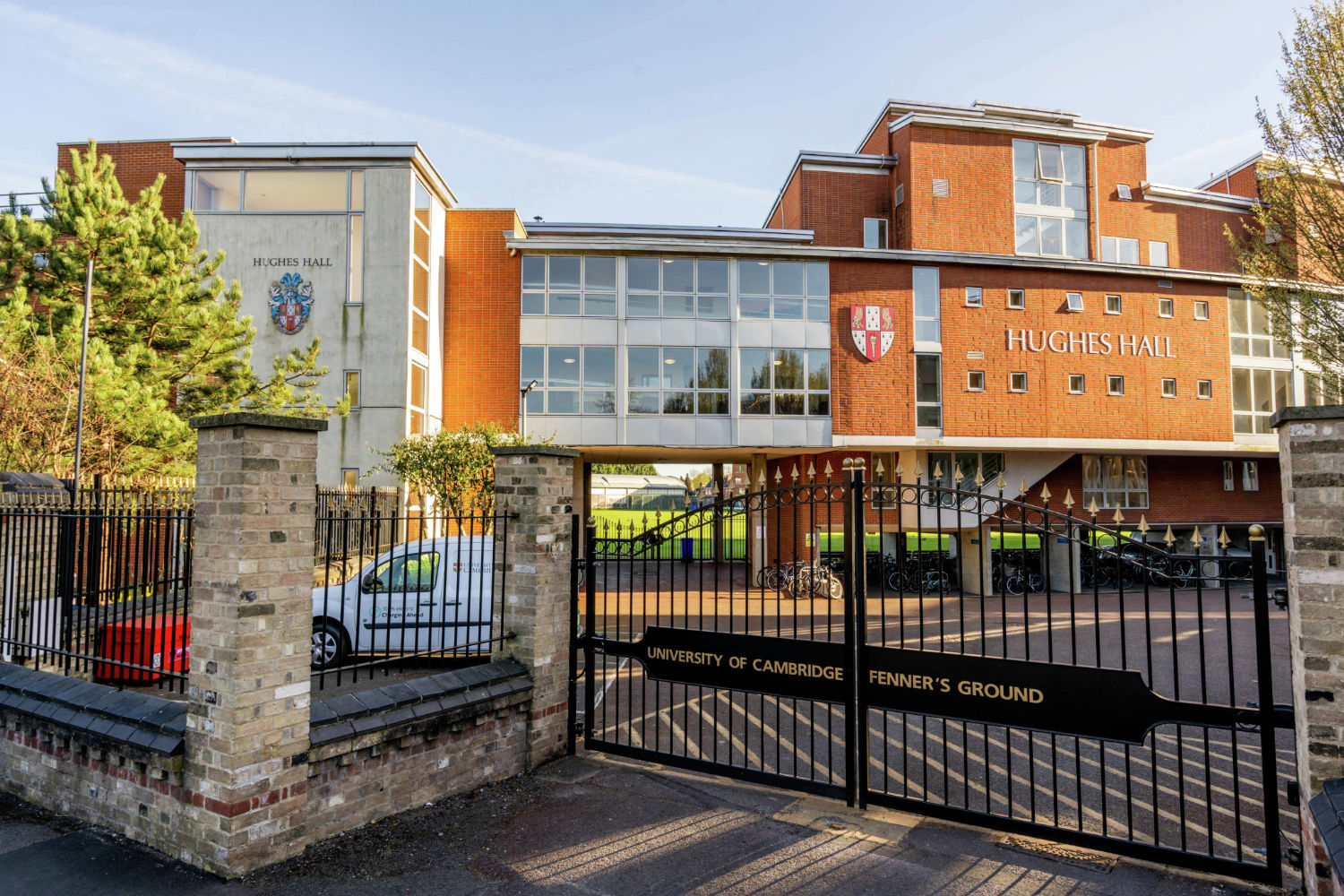
New details of Hughes Hall’s proposed development adjacent to the Fenner’s cricket have attracted concern from some local residents.
The College began consulting residents on its development plans in early 2026, with a series of drop-in events for residents to learn more about the proposals. In February, Varsity reported that some local residents and cricketers were unhappy about the proposed development, which they argued would make accessing the Fenner’s cricket ground more difficult. They also expressed concerns that the development would encroach on the cricket ground itself, which was designated as Protected Open Space (POS) in 2018, meaning it requires special permission to build on.
Another consultation event for local residents was held by the College on 31 March, at which more details were provided about the development plans – these included revisions made in response to local resident feedback at the previous drop-in sessions. Attendees were also presented with mock-ups of how each component of the proposed development would look in practice.
The changes announced include a greater concentration of development work on site one, Mortimer Court, which is located at the front of the College at the end of Mortimer Road, and site two, the current porters’ lodge – currently a shipping container, this will be replaced with a permanent three-and-a-half-storey building. The College aims for 70% of its new student accommodation to be situated on these sites, which are located on previously developed brownfield land, in order to minimise the level of development on other areas, while also meeting its goal of housing a greater proportion of its students on-site.
The College also revealed details of how its development will affect the POS surrounding Fenner’s, which is not owned by the College.
Display boards from the consultation event stated: “While we are maximising development on the two brownfield sites, a limited amount of additional development is necessary to meet the long-term needs of Hughes Hall and the operational requirements of maintaining Fenner’s Ground.” In total, the development would constitute 587 square metres of “new built form” on POS, which is 1.4% of the total POS area.
These new details have caused concern for some in the surrounding area. Michael Blackburn, a local resident, said: “Hughes Hall has now confirmed it wants to build on 587sqm of Protected Open Space at Fenner’s. Whichever way the college tries to present these figures, the fact is that a significant amount of green protected land will be lost to an oppressive development.
“Rather than scaling back its original plans, we know Hughes Hall is increasing from 100 to 120 the number of student rooms it intends to build.”
Another resident, James McNiven, said: “Planning privileges that could enable Hughes Hall to build on Protected Open Space seem to further a Town vs Gown mentality that is out of step with an integrated and progressive city. If a commercial business tried to do this, it wouldn’t be allowed.
“I am very disappointed to hear that Protected Open Space continues to be a target for development by Hughes Hall.
“While there is a stated willingness to work with the local community, it is ultimately the permanent residents of Cambridge that will suffer from the removal of green space if this development is allowed. It will set a very dangerous precedent for Cambridge, which needs more rather than less open space in the city centre.”
According to a group of local residents, of particular concern are the plans for site three of the development, which will centre on the land immediately adjacent to the Margaret Wileman Building, near Mill Road. Hughes plans to replace the existing Pavilion Building, which it says is “no longer able to support [the] College’s academic requirements,” with a new building incorporating both student accommodation and teaching spaces.
The existing Pavilion Building, as well as its planned replacement, face onto Covent Garden, a residential street off Mill Road. The new building will be taller than the houses on Covent Garden. The College’s plans include several measures designed to prevent overlooking into Covent Garden properties – windows will be angled away from the street, and will be covered with obscured glazing, while new trees will be planted next to Wileman Court to reduce the view into the residential street. Nonetheless, some residents have expressed concerns about the effect this part of the development could have on their houses.
A resident of Covent Garden, Alex Wall, told the Cambridge Independent: “We appreciate Hughes Hall providing more details regarding their plans. However, regarding Site 3 in particular, from what I ascertained at the presentation there have been no revisions to the drawings as a result of the feedback previously provided by residents.
“The model on display clearly showed the proposed building’s plans have not changed. It has a much bigger footprint than the current Pavilion building and it will encroach on Protected Open Space as a result. Furthermore, being three storeys where currently there is a one-storey building, I am hugely concerned it would appear very dominant, giving an overbearing sense of enclosure.”
An online consultation based on the information provided in the March drop-in session ran until 14 April. A briefing was also held at the Guildhall on 2 April, at which representatives for Hughes Hall delivered a presentation about the proposals to local councillors.
Professor Martin Jones, a local resident, said: “I don’t believe the college has yet made the case as to why they need as many as one hundred and twenty new student rooms on site and why the plans still need to encroach on Protected Open space. This would set a worrying precedent not just for the Petersfield area in which the college sits, with its paucity of undeveloped open space, but all Cambridge residents wherever they live in the city should be concerned.
“At a time of rapid development this could help drive a coach and horses through measures enshrined in the local plan, which was agreed just a few years ago to protect precious and irrecoverable open space.”
Part of Hughes Hall’s justification for the development is the need to increase provisions for student accommodation on-site. According to the College, currently only 34% of Hughes students are able to be accommodated on-site in college buildings, with large numbers of other students being forced to rent privately elsewhere – the College aims to increase this proportion to 49%, through the creation of various new accommodation blocks.
Since the March consultation, civic society Cambridge Past, Present & Future has sent a letter to Hughes expressing reservations about aspects of the development. The letter states: “While we appreciate the additional technical information provided, we are disappointed to note that the fundamental aspects of the masterplan remain unchanged, leaving our previous concerns largely unaddressed.”
It continues: “While we note the College’s argument that this [the planned development on POS] represents a small percentage of the total area, CPPF maintains that even minor incursions into protected land set a dangerous precedent.”
The letter calls on Hughes Hall to limit development on sites three and four to solely previously developed brownfield areas, to avoid encroaching on POS. It also argues that the height of Wileman Court could affect “the “ambience” and heritage character of the historic Fenner’s cricket ground,” and states that the College should instead consider reducing the scale of the building to maintain “the open character of the cricket ground.”
Although there is no indication that residents’ concerns will impede the completion of the project, the timeline for the development has been pushed back since the initial consultation meeting in February. The planning application for the Covent Garden Hall refurbishment, which was originally due to be submitted in March, will now be submitted in May or June. Meanwhile, planning permission for the rest of the development, originally expected to be submitted in the summer, will be sought in September, after a second full consultation meeting in June or July.
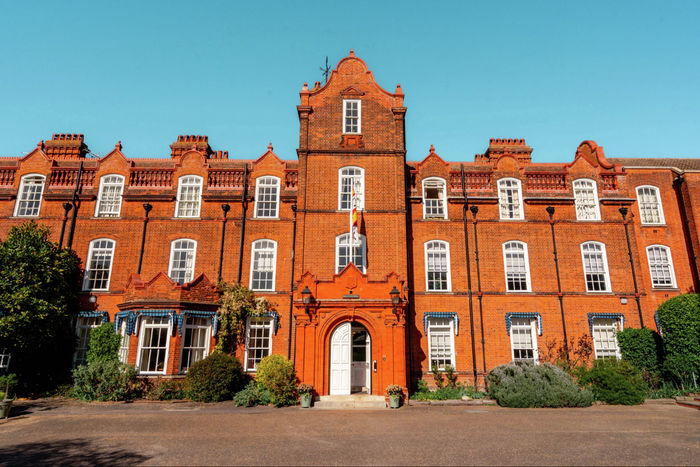
The President of Hughes Hall, Laurie Bristow, said: “This project is designed to improve and increase academic spaces and on-site student accommodation at the College so more of our students can benefit from a supportive community environment, and we reduce the need to rely on the private rental market in Cambridge. Currently, only around 34% of Hughes Hall students can be accommodated on campus.”
“We are grateful to everyone who has joined our drop-in events and shared feedback. This is part of our ongoing commitment to work closely with the local community and stakeholders, ensuring that the development benefits both the College and the wider area whilst improving the biodiversity and accessibility of the area, and safeguarding the playing and spectating of sport at Fenner’s for future generations.”
“[…] We are also proposing site-wide landscaping and gardens, and are talking to our immediate neighbours about new pedestrian access on Covent Garden. These changes will give both the College and neighbours access to more and better open spaces.”
“Overall, we have minimised building within protected open space with the amended proposals adding new buildings to just 1.41% to the total protected open space within Fenner’s.”
