
A number of students at Cambridge are involved with businesses which write essays for student clients, Varsity can reveal. Varsity has also heard that lecturers may write for such services.
Barclay Littlewood, who is the CEO of some of the largest essay writing businesses, claimed that “so, so many” lecturers and senior academics from Cambridge write for him, though Varsity was unable to independently verify this claim.
Littlewood said that their motivations were to “write and enjoy academia and be paid for it as well”.
He added: “It’s a problem with the system because […] quite often there’s far too many academics and not enough jobs for them.”
Varsity’s investigation also found that some Cambridge students pay for essay writing services, while many others work for these businesses.
Littlewood told Varsity that there are “plenty of people that write for us from Cambridge,” and can earn anywhere from £160 to £600 per essay. Again, Varsity was unable to independently verify these claims, but could verify that students were earning similar rates at other essay writing services.
Essay writing services, sometimes referred to as ‘essay mills’, offer bespoke essays which can be purchased by students. The cost of these can vary depending on size, quality, and time available to write them. Varsity understands that prices are normally between £100 and £1,500.
Varsity heard from several students who work for essay writing companies, with the majority doing so to earn money.
One of them said: “I only engage in it sparingly to avoid suspicion, and use anonymous means to make first approach.”
They added that they “had no [moral] concerns whatsoever,” and that “you have to be extremely stupid to get caught,” since “the customer should never know who you are”.
The student also claimed that “it is a myth that students who purchase these services want a top grade. They are lazy and/or incompetent and are always happy to get a middling grade that doesn’t arouse suspicion”.
Some Cambridge students also admitted to Varsity that they had used essay writing services, mainly because they were struggling with their work.
Littlewood claimed that many Cambridge students use his services, saying: “By the very virtue of the fact that they go to Cambridge anyway, so these guys are intelligent people, they want to do the best that they can.”
He added: “So for them, if they can squeeze a few extra percentage points on their grade, they’ll do it. And if they have the money to do it, you know, why wouldn’t you get an opinion from someone who’s studying in that area for 20 years as a professor or a lecturer?”
Littlewood said that a lot of his clients are international students studying at English-speaking universities. Varsity found a similar trend at other essay writing sites that it was able to access.
Many of Littlewood’s clients are “high-net-worth” individuals who will “end up spending thousands of thousands of pounds” over the course of their studies.
As of 2022, it is illegal to provide essays to students which are passed off as their own work in higher education in England. However, many essay writing businesses, including Littlewood’s, do not believe that they are breaking the law as they do not intend for students to pass the essays off as their own. Instead, they are provided as “model answers,” which students can use to help develop their own work.
Littlewood acknowledges that people “abuse” his services, but says that he bans customers who make it clear that they will be handing in the essays provided.
In the 2023-24 academic year, Cambridge’s Office of Student Conduct, Complaints and Appeals upheld 18 cases of exam “irregularities,” but it is not clear whether any of these were linked to essay writing services.
Littlewood is concerned that the new legislation is unproductive, and is advocating for more regulation in the essay writing space rather than the banning of it.
“We know there’s a demand, but if we regulate it, then we can give you all the names of people that order, we can give you the essays, and then they will lose something against their final mark because they’ve had assistance and obviously you can then check if they’ve plagiarised our work,” he said.
Littlewood added that banning essay writing services pushes students to “unscrupulous operators” and “underground” essay services. When the government announced the law change in 2022, it stated one of the reasons was that they had evidence that “some essay mills seek to blackmail students who use these services”.
Littlewood also claims that the current law is “unenforceable” due to challenges proving that clients are students at English universities who intend to pass the work off as their own. Since the law changed, there have been no prosecutions.
As AI continues to develop, more students are using it to help with their academic work. A Varsity survey from April 2025 found that 61.3% of Cambridge students had used AI tools to assist with academic work.
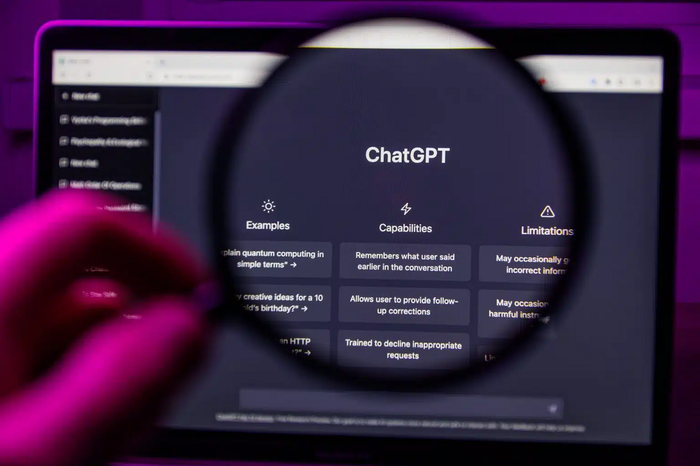
As a result, Littlewood said that PhD writing services are becoming a larger part of the business, since AI “is not quite there for dissertations, [or] for PhDs”. According to the PhD Writers’ website, which Littlewood owns, their writers can help with PhD proposals, theses, and original research.
Littlewood said an average order for PhD writing is “about $40,000”.
In response to the growing uses of AI, Littlewood has also created a new AI tool which claims to produce essays up to a first class level. Its website says that the model is “trained on over 100,000 essays and expertly programmed under the guidance of former university lecturers to deliver precise, academically robust results every time”.
Varsity was able to produce accurate, detailed, and well referenced essays, but it is unclear whether they would all achieve a first class mark at Cambridge. Obtaining a first class mark in many humanities subjects requires original thinking, or going beyond the core literature, which the AI tool has not yet perfected. For a slightly higher fee, the new service offers a “grade guarantee,” which means that it will give students a refund if the essay does not meet the selected standard.
The University of Cambridge were contacted for comment.
All students were kept anonymous to protect their identities for this article.
