
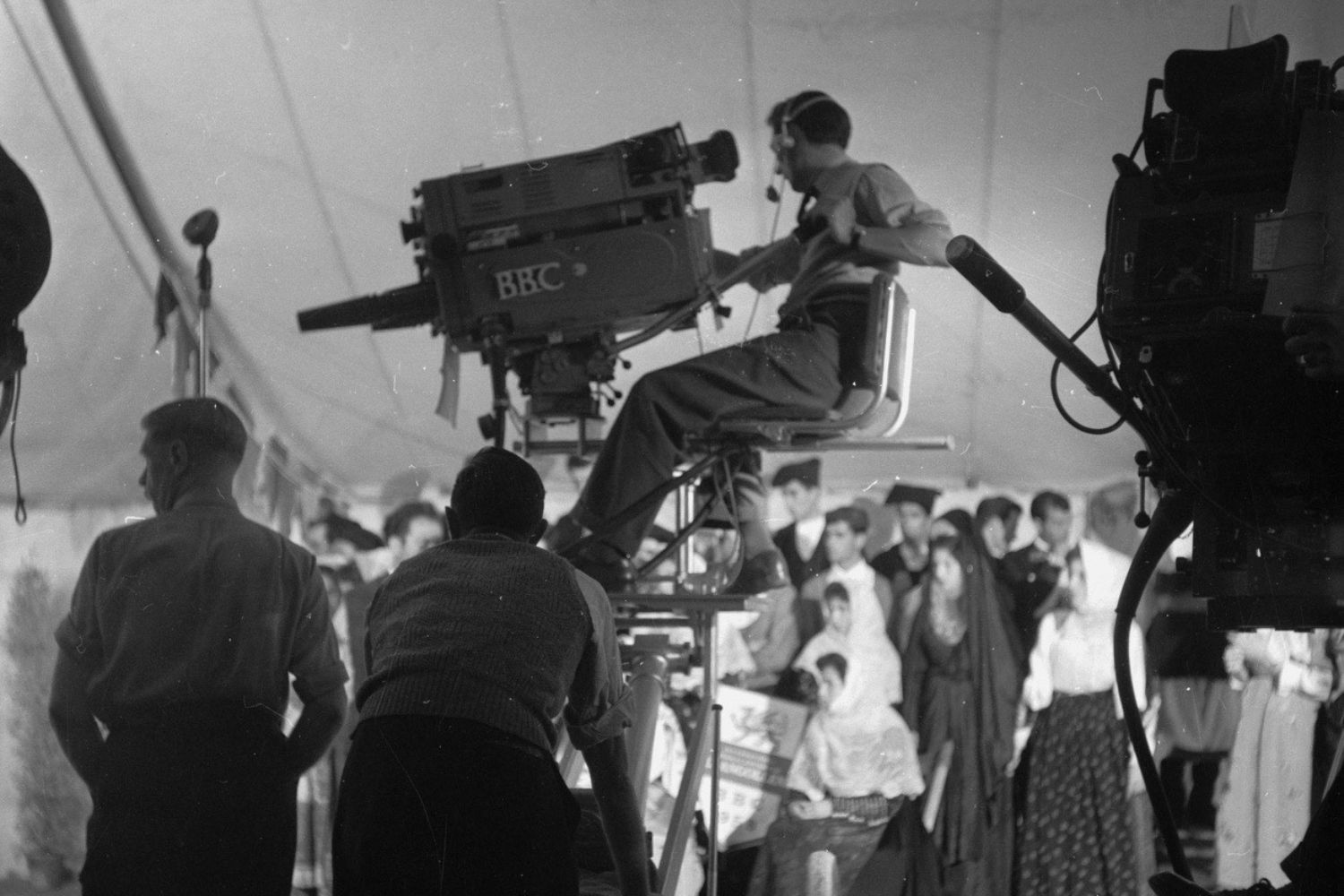
While the miasma of British values has held a somewhat ambiguous, if not downright insidious, position in contemporary discourse, one positive thread has persisted: Britain has consistently maintained a gold-standard commitment to public broadcasting and entertainment. Since its creation in 1922, the BBC has remained a staple of the British media landscape, helping to “inform, educate, and entertain” generation after generation. However, in an attempt to retain its central position amidst declining viewership and structural disorganisation, change has become necessary. It was recently announced that the BBC has entered a landmark partnership with YouTube to produce original content for the streaming platform.
On the face of it, the deal looks like a triumph for the British media channel. The BBC has faced declining viewership for decades. Evidence shows that broadcast TV viewing has declined 16% between 2019 and 2022. These results have proven even more stark for young adults (16-24), falling by nearly 47% over the same period. However, while it does appear to be largely doom and gloom for the leading pillar of legacy broadcasting, these patterns do not suggest the demise of the corporation itself but instead point towards fluctuating viewing habits. Namely, despite overall viewing volume having decreased, the connected streaming service BBC iPlayer has grown significantly. Viewing was up 20% in 2024 for iPlayer and now accounts for nearly 24% of all BBC viewership figures. Importantly, these numbers are not generated live, but at the viewer’s convenience, with 79% of iPlayer viewing now on demand. In short, the statistics are pretty conclusive: while fewer people watch the BBC as a whole, in terms of trends, it is definitively streaming in, live broadcasting out.
A media landscape in which the consumer reigns supreme should not be taken in isolation. The consumption habits of younger and older generations are increasingly diverging, making it harder for a single organisation to fulfil cross-generational demands. According to Ofcom, children between 4 and 15 are now more likely to choose subscription-video-on-demand as their first TV destination over linear broadcasting channels, and 1 in 5 opt for a video sharing platform like YouTube as soon as they turn on the telly. Whereas, for older adults, live and scheduled TV still accounts for around three-quarters (76%) of daily video consumption for over-74s and over 60 % for those aged 65–74.
“Undermining editorial autonomy, weakening public accountability, and funnelling British cultural output through platforms which prioritise global reach over local social cohesion”
The various social and parasocial pressures of participation that the entertainment industry is currently faced with should also be considered. The greater demands for representational diversity, the expectation of instant gratification cultivated by social media engagement, and the more direct form of participation offered by YouTube, all coalesce to make it even greater struggle for larger, more cumbersome, organisations to keep up. Everyone now not only chooses what they want to watch, when they want to watch it, but can even produce their own content and upload for all the world to see with the click of a button. It’s little surprise that in late 2025, YouTube even surpassed the BBC in terms of audience share with 52 million monthly viewers. Last year, Netflix struck an agreement with France’s commercial broadcaster TF1 to carry linear television within its streaming service, and it shouldn’t really come as a surprise if the BBC follow suit.
The partnership promises to satisfy these multitudinous demands. As outlined by the BBC themselves, this expansion will focus on four core areas. First, they hope it will help to build dedicated communities for children and young adults through new targeted channels. Secondly, the deal will promote key BBC programme brands to extend their reach beyond habitual audiences. Third, YouTube will liberate the BBC to deliver trusted, high-quality news in innovative formats and live global streams. Lastly, the deal hopes to drive commercial growth by deepening global communities and partnering with international creators and brands. For me, the most exciting prospective is definitely the commitment to skills development. Building on existing initiatives such as ‘BBC Creator Lab’ and ‘YouTube’s Launchpad and Accelerators’, both corporations will now support the government’s Creative Industries Sector Plan by investing in digital-first talent across the UK. This means that the National Film and Television School will introduce a new training programme that hopes to offer workshops and events for 150 media professionals, hosted both online and at BBC hubs across the country. If Director General, Tim Davie’s career was not marred by previous failing, this would not have been a bad legacy to end on.
However, with the good, you should also be made away of the bad. A few important clarifiers should be made. While the BBC has always embraced change – it would be ridiculous not to as a service industry – this transformation has always occurred within the central organisation. When the BBC has previously expanded its cultural output, it has done so by diversifying channels with the creation of BBC One, Two, Four, CBBC, etc. Even when posting on YouTube, content has still been generated from BBC studio content. Movement away from this central stream could portend worrying advancements about regulation and oversight. For example, YouTube has recently pulled out of official UK TV audience ratings measurement. Unsurprisingly, the move affords the platform to forgo certain standards of transparency and undermines comparability with traditional broadcasters. Additionally, despite partnering with a company held accountable under the Royal Charter, YouTube is not regulated in the same way as other UK broadcasters, permitting fewer safe-guards around advertising content, age-appropriateness and harmful material. It is ultimately unlikely that the BBC will overlook its high standards, even in light of the deal. But it becomes harder to see how public service content performs or how audiences engage with quality versus volume-driven content.
“As are many things in our world, the deal revolves around money”
Moreover, there should be no wool pulled over your eyes; the cloak of representational diversity and “upskilling the next generation” is a thin one. As are many things in our world, the deal revolves around money. Partnership with YouTube is reflective of deeper financial pressures rather than consumer interests. As reported by The Times, the BBC’s income falls about £1 billion short of where it was 15 years ago as a result of to inflation and licence fee freezes. Furthermore, as The Guardian notes, licence fee evasion and households opting out may be further costing the BBC over £1 billion in potential revenue annually. With the corporation current contesting a $10bn defamation lawsuit from President Trump over spliced clips erroneously urging his support for the January 6th Riot, these financial pressures are not likely to go away any time soon. But it should be known that by focusing on ad revenues rather than its core remit, the BBC is accelerating a shift away from a universal funding model that underpins a shared public media culture. Following the money towards a fractured, market-driven media environment, risks undermining editorial autonomy, weakening public accountability, and funnelling British cultural output through platforms which prioritise global reach over local social cohesion. On a broader sense, the BBC even risks becoming entangled with the strategic interests of a global corporate platform, as YouTube wields enormous power over what content is recommended, how engagement is tracked, and how creators are monetised.
Streamlining the BBC is a necessity, and many of the changes do signal positive advancements. But you should also be aware as to how these changes prove indicative of the general health of Britian’s media landscape. Calcification is one thing, but selling out is another. In a limping economy, geo-political uncertainty, leadership failures, and the ostensible death of Britian’s public institutions I get that entertainment is low down on the list of priorities. Even before you observe Culture Secretary Lisa Nandy’s incompetence this becomes clear. But this deal is definitely another piece of rubbish on the burning pile. With greater political pressures – especially by Reform – to privatise the BBC amidst structural inefficiently and accusation of “institutional bias,” I can’t help but wonder if the partnership with YouTube is yet another step on the way to the dissolution of Great British institutions.
