
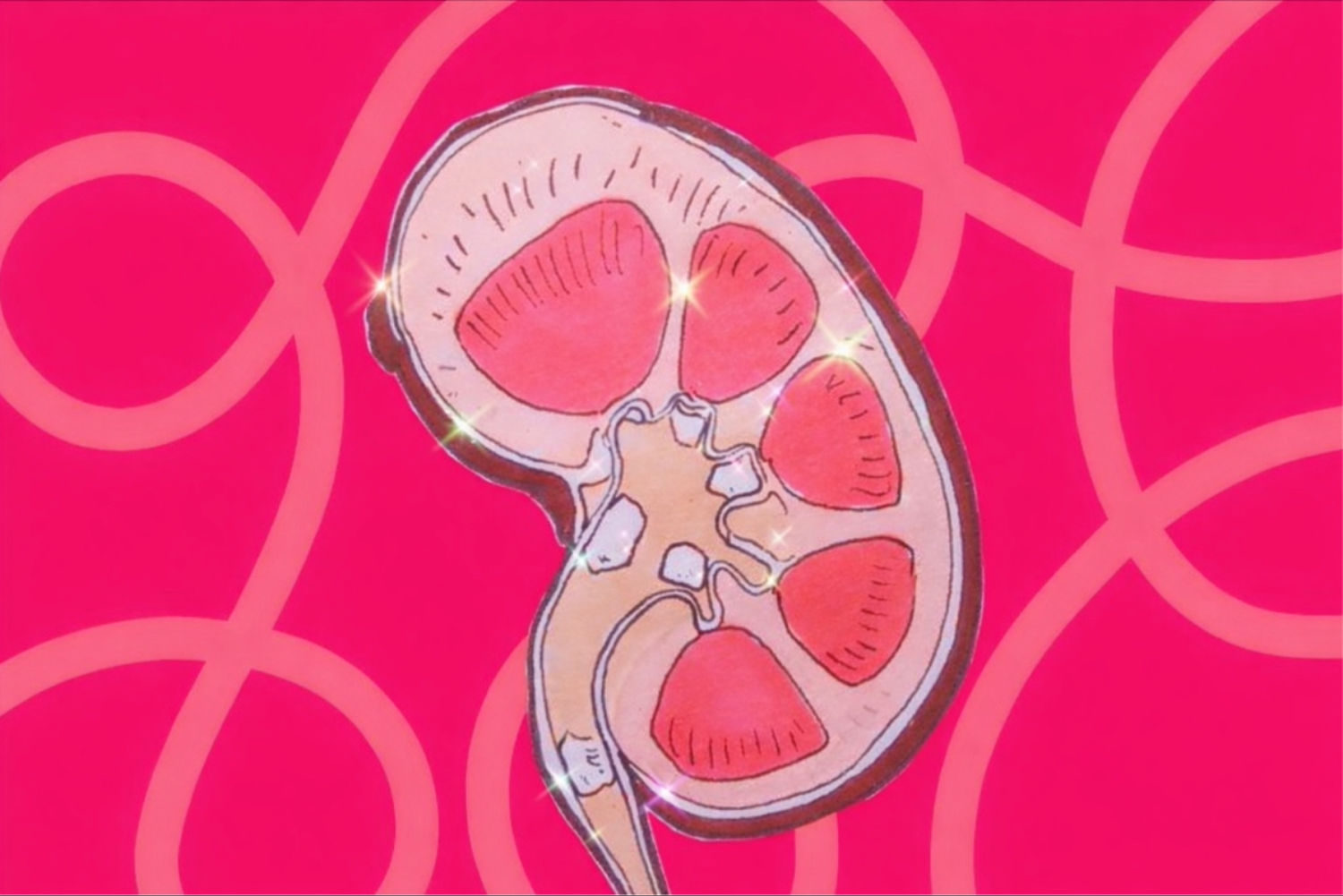
Most students are more than familiar with posters for ‘blood donation drives’ that are plastered on the back of Sidgwick Site toilet doors and leaflets left at library desks. For former PhD student Inigo Howe, donating blood became almost routine during his studies – until, that is, he began to wonder what else he could give. He settled on kidney donation as a brave next step.
A kidney donation gave me my dad back, for the short time that I had him, and thus has been a dinner table subject for as long as I can remember. My life was about dialysis schedules before it became term deadlines. It’s a conversation I’ve brought into my university experience, but this doesn’t feel like the norm. While blood and bone marrow donations are discussed on campus, the idea of receiving a whole organ – or even donating one – remains largely invisible in student conversations. For Howe, the realisation that “people don’t know it’s an option” became the catalyst for a decision that would see him navigating the rigid term structure of Cambridge not to meet supervision deadlines, but to schedule a life-altering surgery.
“Numbers without names, figures without feeling”
Statistics often feel far removed from our daily reality; numbers without names, figures without feeling. While 7000 people are on the waiting list for the operation and six die from kidney failure every week in the UK, the topic remains remote to the average student. Even a basic understanding of kidneys is lacking in the general population; a shocking 2022 survey, conducted by Kidney Research UK, reveals that 81% of people cannot identify where the kidneys are in the body. On top of this, 80% have no idea what role they play.
Our bodies are our homes, yet when it comes to the kidneys, we readily accept an ambivalence toward anatomical understanding. As Inigo Howe realised during his own journey, this widespread lack of awareness is the “biggest barrier” to donation; we cannot easily choose to give an organ we have not yet learned to value.
An anonymous survey of Cambridge students reveals a similar gap in knowledge of kidney disease, although we appear to be more knowledgeable overall than the national survey indicates. Some say they “maybe” know where the kidney is located, perhaps “higher up than the stomach”; others are entirely unsure, or “only found out recently”. Its functions remain somewhat nebulous: several students outline its functions clearly, but most can name only one. This correlates with the proportion of students who know someone with kidney disease – 12.5%, almost spot on with the national statistic of those affected by the chronic illness.
“How can we discuss when we don’t have the knowledge to articulate?”
Not one of the interviewees, however, is aware of when the disease can start. It can, against popular belief, affect an individual even in infancy, although the likelihood of its development increases with age. It rings true that 100% want to know more; when prompted, the Cambridge student population clearly recognises the biological disconnect between their academic environment and their understanding of their own internal health. So why the silence?
Talking to Communications Officer for Kidney Research UK, Rosie Loft, she argues that because “donating a kidney is more complex,” it requires a “different approach in terms of raising awareness” than blood donation. You can’t use a lunch break to either fork out or pick up a kidney; it takes months, years of waiting lists and consultations. But, like all processes, it starts with a conversation. Loft expressed a desire to see “more conversations” among students to bridge the gap in understanding the “impact of kidney disease,” in all its complexity. Health talks are not taboo, nor should they feel unnatural – they are, in fact, the most natural conversations of all. But how can we discuss when we don’t have the knowledge to articulate? Are we truly that uncomfortable with our own body’s vulnerability?
For Kidney Research, a break with this biological silence means moving the subject beyond “older generations” and into the sphere of all families. To this end, the charity has deployed peer educator teams to campuses during Freshers’ Week to encourage people to consider signing up to the organ donation register. Meanwhile, the Robert Dangoor Partnership runs different awareness initiatives aimed at all ages focused on living kidney donation, including a PR stunt featuring a live kidney donor in a shopfront amid a busy shopping centre . The aim is to turn a “significant undertaking” into a familiar topic of discourse, and ensure anyone curious about donation can find someone to talk to who has already been through the process through their ‘Buddy Support Service’. Their aim is to replace silence with informed choice, so that every student feels “heard, understood, and supported,” regardless of their final decision.
With kidney donations, there are unique considerations for young adults. Inigo Howe argues that for students, there is a trade-off: “The younger you are, the quicker you bounce back from surgery,” but you may then face “60 years of living with one kidney.” Having a healthy kidney in your youth is not a lifetime guarantee, but, having weighed the odds, Inigo took the first step and volunteered. He felt that he was at the perfect age for the procedure – a student, with fewer dependents, faced mainly with the “hard coordination problem” of a “rigid term structure.” It made sense, therefore, to wait until after graduation before going under the knife and donating his kidney. It wasn’t a decision he took lightly, but one he took nonetheless. And the anonymity of the recipient didn’t sway his decision – in fact, he argues, it was a “pretty good return on altruistic investment.” The vocalised experiences of individuals like Howe humanise the process for both the recipient and the donor.
“Surgery involves ‘taking healthy people and harming them’”
But humanising the transplant process within student conversations is not merely about attention to the why, but also to the how. An understanding of the physical transformation that occurs behind theatre doors is essential to opening up wider health discussions among the student population. This procedure takes place close to our Cambridge home, at the world-leading transplant centre, Addenbrooke’s. Dominic Summers, Consultant Transplant and Vascular Access Surgeon at the hospital, provides a view from the ward. He highlights that when a kidney fails to perform its vital functions, the symptoms are often so non-specific that many patients become “crash landers,” arriving at the hospital with end-stage disease, having never known they were ill.
For those in failure, life becomes a gruelling “part-time job” of dialysis. This is a “fog” I witnessed firsthand with my dad; the restrictive lifestyle it enforces is not for the faint-hearted. Summers notes that even after a successful transplant, the transition is complex. Some patients feel conflicted or guilty if they don’t feel “immediately brilliant” post-surgery. However, his ultimate ambition is for his patients to be “very bored” with the health service on the long road to recovery.
This restoration of normality, however, carries a heavy weight. Summers is candid about the responsibility to donors, emphasising that surgery involves “taking healthy people and harming them.” This is underscored by a real mortality risk – with one donor death occurring this year. This informs Addenbrooke’s cautious policy of generally not supporting donors under the age of 30, unless circumstances are exceptional. This ensures that young people are mature enough to handle the 60-year calculation of living with a single organ.
Ultimately, Summers shifts the focus from surgery to the power of conversation. Having attended hundreds of deaths to retrieve organs, he has seen the trauma of families forced to decide in the dark because their loved one’s wishes were never voiced. His plea to the student body is simple: “Don’t let your family have that problem.” By making a positive choice and clearly informing your family of your wishes to donate organs, you ensure that even in the face of tragedy, your decision is respected and the biological silence is finally broken.
The future of student engagement with kidney disease lies in moving toward a culture of informed, open conversation. The perspectives of Inigo Howe, Kidney Research UK, and Dr Dominic Summers converge on a single point: the silence must be broken. Ultimately, the goal is to ensure that in the face of a national health crisis, every individual feels heard, understood, and supported in their bodily awareness. Students acknowledging the ‘invisible’ kidney is the first step in ensuring fewer families have to face the same empty chair at the dinner table.
