
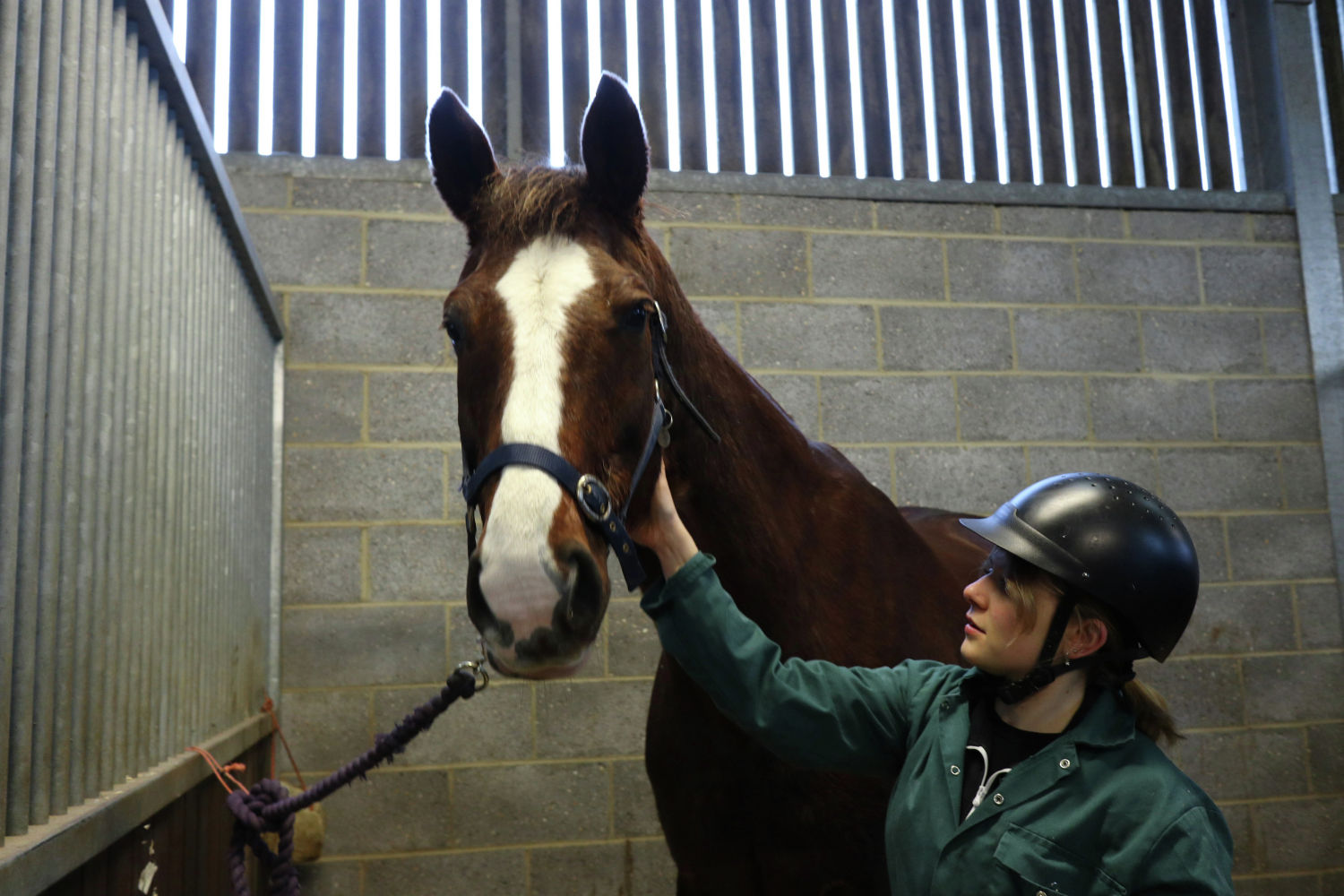
People don’t usually read their emails at the start of the Christmas holidays. The days of frantically checking deadlines and messaging your supervisor at 2am are temporarily put on hold as you try to relax and spend time with family. Cambridge’s current and prospective vets, however, were suddenly disturbed by a mid-December email informing them of the School of Biological Sciences’ intention to close the veterinary course by 2032.
If they managed to miss it, they would soon find the story plastered all over the news, not only on Varsity but the Vet Times, the BBC, The Telegraph, and on social media.
The reaction was immediate and visceral. The official statement from the Department of Veterinary Medicine condemned the recommendation as “hasty, unjustified and flawed”. The Cambridge University Veterinary Society (CUVS) echoed this sentiment, criticising the “dismissive and totalitarian approach” of the SBSC. Many felt blindsided. As one finalist put it: “I don’t think any of us expected this to happen”. The timing made it feel worse. Most vet students were away from Cambridge and so “no one had their support sources” during what she describes as a “pretty distressing time”.
“Cambridge attracts the ‘best educators and teachers we have in our profession’”
Although current students will be able to finish their studies, the future is now shadowed with uncertainty. Laurent Trepanier, a fifth year student, fears that “an abrupt closure will surely lead to many staff leaving to seek new work, thus seriously impacting the educational quality of the remaining cohorts”.
The reason for the planned closure cited by the SBSC was that there was “no viable long-term solution that guaranteed financial sustainability, educational excellence and practical implementation”. Speaking at an online discussion on the 13th January, Jon Simmons, Head of the SBS, defended the decision. He argued that while significant progress was made in terms of responding to the issues raised by the Royal College of Veterinary Surgeons (RCVS), “maintaining high-quality clinical training long into the future will be severely challenging”. He also referenced the financial viability of the hospital, which is “losing over £1 million a year”. Simmons asserted that the recommendation followed extensive consultation with a group “which included four senior vet school staff and other colleagues”.
This reasoning has largely failed to satisfy students and staff. Both are “fighting tooth and nail to keep us open,” Laurent says. Within days of the recommendation, students and staff launched the ‘Save the Vet School’ website to collect statements in support of the school. More than a thousand responses poured in from clients, students, staff, vets, and the general public.
There is no shortage of people who are eager to talk about their love for the school. One finalist recalls the thrill of a consultation where, for “the first time I properly felt like a vet”. She loved and appreciated the extensive support from supervisors and the “camaraderie” within her cohort. Those who graduated years ago and have now forged a career in veterinary medicine are no less attached to the place. Ben Simpson-Vernon, a small-animal practitioner known online as ‘Ben the Vet’, describes his years at Cambridge as “among the happiest in my life”. Less than a week before the news broke about the vet school, he was at a reunion dinner for 2015 graduates, noting that the good turnout was a “clear testament to the fondness with which we remember our time at the vet school”.
Lucy Goodwin-Grieves, an equine vet, was initially reluctant about going to Cambridge, begrudgingly accepting the offer only after her mother’s insistence that “you really can’t turn Cambridge down”. She, too, ended up loving the system and describes how, as someone with a more working-class upbringing who “didn’t have much confidence academically,” Cambridge helped her realise “the world was my oyster”.
“There is no shortage of people who are eager to talk about their love for the school”
Yet resistance to the closure goes far beyond just sentimentality. At a time of rising pet ownership and a national shortage of vets, closing one of the UK’s leading training centres feels, to quote Lucy, “absolutely bonkers”. The department is ranked first in the Times Higher Education’s rankings for veterinary courses worldwide. Ollie Bardsley – a recent Cambridge graduate and supervisor in the Physiology department – argues that while he has met plenty of professors from other universities, Cambridge attracts the “best educators and teachers we have in our profession”. Lucy believes the School imbues students with a contagious passion for their subject, producing a particular kind of graduate – one with the “desire to change the world for the better”.
Much of what makes the Cambridge vet school unique, they say, comes from its distinctive structure. In the rigorous pre-clinical years, vet students study alongside medical and natural sciences students. The mandatory intercalation year also gives students an opportunity to step fully into scientific research. This, according to Ollie, means that Cambridge “doesn’t just teach you to be a clinician but a veterinary scientist”. While he is currently working in practice, he acknowledges that the framework he gained in his pre-clinical years has often been more useful to him than his clinical training. He finds himself returning again and again to the first principles of natural sciences when struggling with a difficult case. Without it, he worries, graduates elsewhere “don’t have as strong of a pre-clinical framework,” leaving them exposed when “the case isn’t straightforward”.
That scientific grounding can also redirect careers entirely. Talking to graduates, most describe growing up with an all-consuming love of animals and recall deciding to work with them at a very young age. The common assumption was that studying Veterinary medicine led to one path and one path only: becoming a vet. Yet during their pre-clinical years, Cambridge students often develop an itch for research.
This was the case for Sarah Caddy, who at 18 assumed she would be working at a clinic after University but is now at Cornell College of Veterinary Medicine in New York studying maternal and neonatal anti-viral immunity. She notes: “If I hadn’t that spark at the vet school I would probably still be at Bury St Edmunds working at practice.” While that remains the desired career for many, she feels she is “making much more of a difference here than I am as a first opinion practitioner” and credits Cambridge for helping her reach her “dream job”. Sarah is just one example; the CUVS note that it’s “no surprise that all four of the UK-educated vets working for the UN are Cambridge graduates”.
“The department warns that another pandemic is likely and argues that veterinary research will be central in tackling it”
Cambridge veterinary research extends beyond animal welfare. The department’s unique One Health approach integrates veterinary, medical, and natural sciences, recognising the interconnectedness of human, animal, plant, and ecosystem health. Sarah’s research fully embraces this model as she studies the immune systems of babies of all species – animal or human. When vets talk about One Health, Covid-19 is never far from the conversation – a reminder of how easily disease can cross from animals to humans. The department warns that another pandemic is likely and argues that veterinary research will be central (as with Covid-19) in tackling it. Lucy worries this role is poorly understood: “We are all so detached from our food, our medicines, our vet healthcare, our own healthcare, we don’t know the background working of what happens to create those services […] people are not aware of the consequences of losing them.”
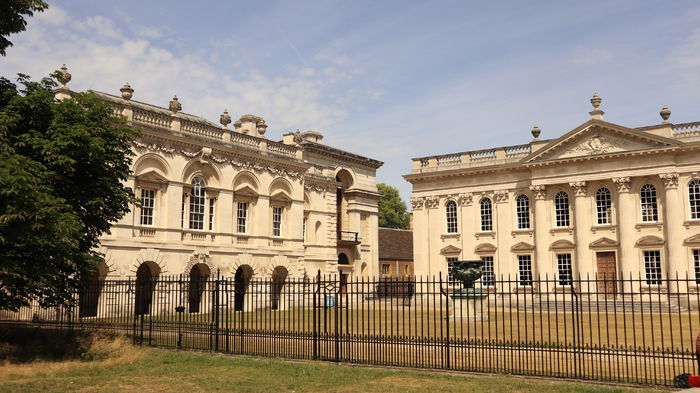
As the University deliberates, concern continues to ripple outward. On the local level, we have people like Lucie Allcutt at the Cambridge Cat Clinic, who describes herself as “deeply saddened and disappointed” by the recommendation. She notes that the vet school is her “preferred local referral center” and that the students who visit her clinic are a “reflection of what a good vet school Cambridge is”. Beyond Cambridge, a coalition of 20 vet organisations, led by the British Veterinary Association, has published an open letter opposing the closure. Further afield, Sarah recalls New York colleagues reaching out to her in disbelief when the news broke.
Browsing the ‘Save the Vet School’ website, the scale of the reaction becomes obvious. It’s palpable how much the School means to so many. With this support, Cambridge vets remain hopeful that the recommendation could be reversed. They won’t let the vet school be put down without a fight.
