
On April 10, I received an email titled “Professor Goldhill,” containing a condensed list of responses the University would take against him in light of the recent complaints. It was then that I finally opened The Times’ piece published the day before. What unsettled me most was not shock, but instead the absence of it entirely. There was no rage or horror – only an overwhelming feeling of inevitability.
It cannot be ignored that Cambridge isn’t new to controversy regarding faculty-student relations. In 2015, the University came under fire after “Dr Peter Hutchinson, a former fellow […] was the subject of sexual harassment complaints from 10 students.” Not only did he physically take advantage of his students, but it soon emerged that “he had self-published a sexually charged novel […] about academics watching students having sex.”
“Two years ago, the staff and students relationship policy was amended. Ordinances aren’t designed to address problems that don’t exist”
Sexual harassment and assault within the Cambridge environment – perpetrated by both faculty members and students alike – became such a persistent topic of conversation that the administration launched an anonymous reporting system, hoping the anonymity the system provided would encourage more students to come forward with complaints. After nine months of usage, the University released the data: 173 complaints were received, two of which were made by students against staff.
However, I find two critical flaws with the reliability of those numbers in accurately reflecting the frequency of harassment – specifically regarding the prevalence of harassment perpetrated by faculty members. First, Cambridge itself revealed that only “0.15% of the student population used the Student Complaint Procedure in 2020-21.” The University explained the small percentage of users as proof that “the vast majority of students were content with the course, facilities, services and staff behaviour.” I am hesitant to believe this justification as, above all, it ignores the fact that even anonymous reporting contains risks which may discourage some victims from using the service. But secondly, the University itself believed the threat of inappropriate relations between students and faculty was so serious that it warranted a change in its policy. Two years ago, the staff and students relationship policy was amended, overtly prohibiting intimate relations between a student and a member of staff. Ordinances aren’t designed to address problems that don’t exist; Cambridge was already aware of either the vulnerability students face in such situations, or the blatant prevalence of such relations in the first place.
“Even attempts to obtain basic data on staff-student misconduct can fail on technicalities”
Furthermore, the information Cambridge released reflects a single year; the data is completely siloed, aggregate values are incredibly hard to obtain, and the numbers are shielded by layers of bureaucratic red-tape. In 2020, the University was contacted in an attempt to acquire data regarding the prevalence of sexual violence between the 2015 and 2020 school years; the request specifically asked for “statistics of whether the perpetrator was a student or member of staff.” However, Cambridge promptly denied her request, responding that “a valid request under the Freedom of Information Act 2000 must state a requester’s real full name.” So even attempts to obtain basic data on staff-student misconduct can fail on technicalities, leaving a glaring gap in public understanding, and actively limiting scrutiny.
The pattern also remains of students being consistently dissatisfied with the University’s response to harassment: in 2020, 500 current and former students signed a letter from the Cambridge University Students’ Union Women’s Campaign calling for colleges to be stripped of their powers to investigate sexual misconduct complaints against their own members.
“The University ought to take responsibility for its role in building an environment where such behaviour can even occur”
But it is my belief that the University ought to not only respond to complaints in a more victim-centred manner, but take responsibility for its role in building an environment where such behaviour can even occur. By saying this, I do not mean that Cambridge’s structure is inherently flawed or in need of redesign, but rather that the University cannot claim the benefits of intellectual camaraderie while distancing itself from the harms.
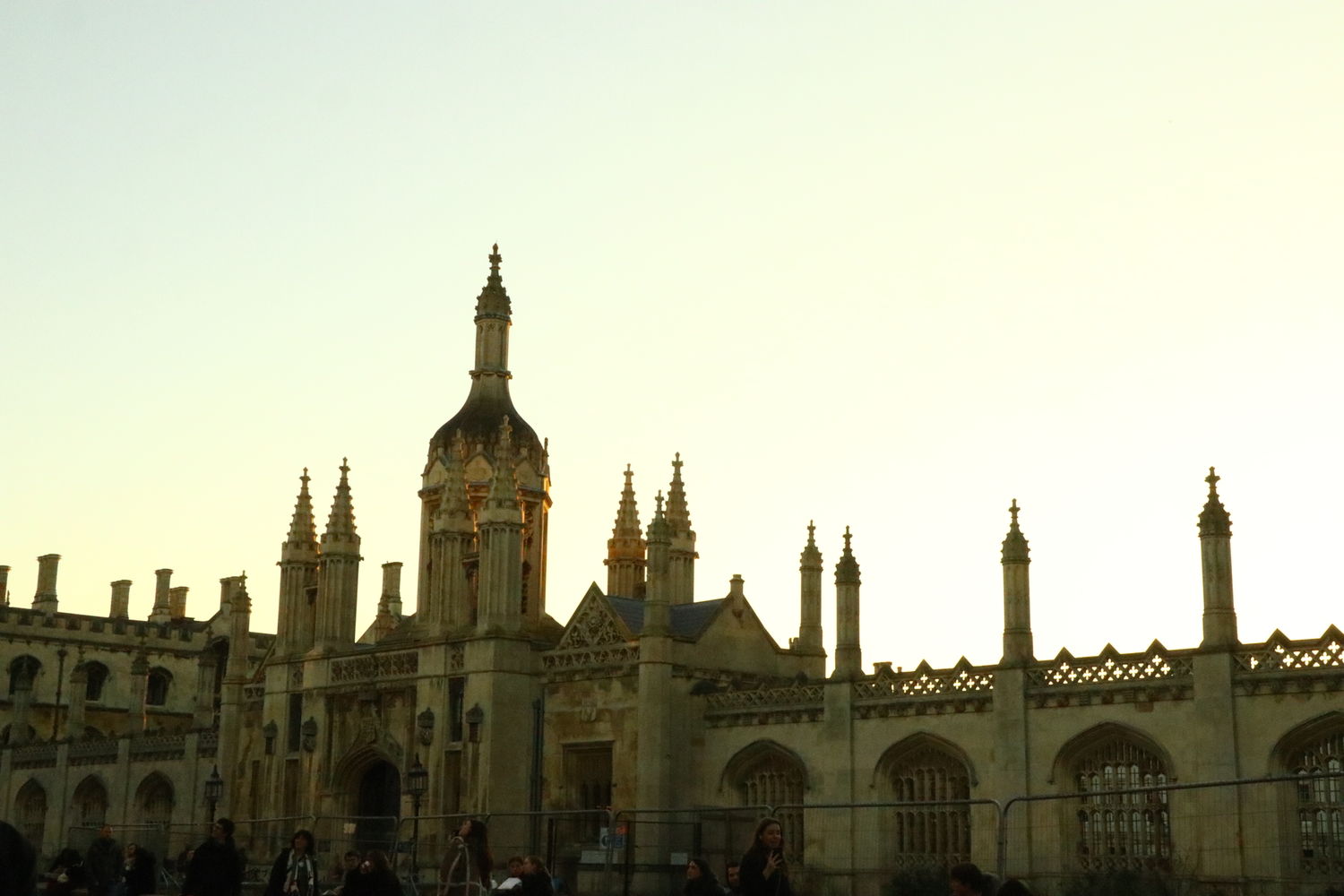
On matriculation day, King’s freshers are informed by the Senior Tutor that students will be living amongst faculty in the same accommodation buildings; in fact, some supervisions are even held within student accommodation. The intent behind the decision is respectable, and conducive to a more discourse-driven form of academic scholarship. When students share drinks with their Directors of Studies preceding the matriculation formal, refer to professors by their first name, and live in the same accommodation, a sense of egalitarianism is created – the implicit hierarchy that may discourage students from engaging vocally with their professors slowly diminishes. In my view, those decisions are largely successful: I have never felt more comfortable discussing my work with my teachers than I do at Cambridge. However, if the University takes credit for creating this environment, they are equally culpable for the consequences of opening its social floodgates.
“When boundaries between students and faculty become blurred, it takes twice as long for alarm bells to start ringing when lines are being crossed”
Goldhill justified his refusal to ask for consent through his belief that it was unnecessary; he believed “he did not need it for a goodbye kiss or ‘friendly snuggle’.” Goldhill’s confidence in presenting the snuggle as “friendly” can perhaps be because he thought it was only a step further than previous interactions he had held with students. He expressed his regret over the “exuberance” of the kiss – which leads me to believe that in his mind, even slightly reigning in the advance would have made the interaction acceptable. I am not of the belief that one’s environment can justify one’s behavior: if a professor chooses to assault his student, he does so completely of his own will and as an exercise of his own agency. But I do believe the reason it becomes difficult to punish the offenders – and oftentimes the reason assaultive actions can be explained away or modified with words like “friendly” – are because the Oxbridge structure allows for, or even enables, a certain blurring of boundaries.
We can break this down from a student’s perspective as well. When boundaries between students and faculty become blurred, it takes twice as long for alarm bells to start ringing when lines are being crossed. If a student already meets her supervisor for one-on-one supervisions, or meets her supervisor within her accommodation building – by the time she realises that her professor’s advances are bordering on inappropriate, she may feel too trapped to escape.
Actions that originally would have been flagged as abnormal take on the guise of normalcy as they’re interpreted within the larger context of a structure which produces that very normalcy. And post-Goldhill, the opposite problem manifests itself: now students may second-guess every interaction with their supervisor – creating a distrust in the intellectual intimacy an Oxbridge education is predicated on.
So, if Cambridge insists that its educational model depends on collapsing distance between students and faculty, it cannot treat the consequences of that collapse as aberrations.
